“ WILLIAM DUNBAR If it be assumed that the North Briton is, to an appreciable extent, a different creature from the Englishman, the assumption is not likely to provoke dispute. No one will deny us the prominence of our cheek-bones, and our pride in the same. ”
The North Briton
Definition and stakes
The theme of “The North Briton” has been addressed by authors such as Alexander Smith, Mary Wilson Alloway and Various. It is often associated with terms like England, Britain, great, people and states.
Quotes about “The North Briton”
Mary Wilson Alloway, Famous Firesides of French Canada
“ He says:—"To behold the North-West Company in all its grandeur it was necessary to witness the annual gathering at Fort William. On these occasions might be seen the change since the unceremonious time of the old French traders, with their roystering coureurs des bois and voyageurs gaily returning from their adventurous trading in the pathless regions of the West. Then the aristocratic character of the Briton, or rather [Pg 195] the feudal spirit of the Highlander, shone out magnificently. Every partner who had charge of an inferior post felt like the chieftain of a Highland clan. ”
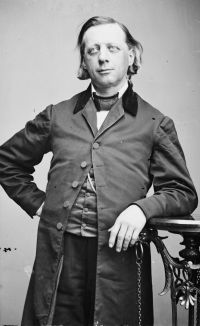 Henry Ward Beecher,
Conflict of Northern and Southern Theories of Man and Society
Henry Ward Beecher,
Conflict of Northern and Southern Theories of Man and Society
“ Do not think that all the danger lies in that bolted cloud which flashes in the Southern horizon. There is decay, and change, here in the North. Old New-England, that suckled American liberty, is now suckling wolves to devour it. ”
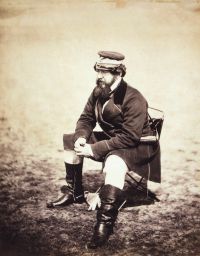 Sir William Howard Russell,
My Diary: North and South (vol…
(1863)
Sir William Howard Russell,
My Diary: North and South (vol…
(1863)
“ It is not within my power to determine whether the North is as unfair to Great Britain as the South; but I fear the history of the people, and the tendency of their institutions, are adverse to any hope of fair-play and justice to the old country. And yet it is the only power in Europe for the good opinion of which they really seem to care. Let any French, Austrian, or Russian journal write what it pleases of the United States, it is received with indifferent criticism or callous head-shaking. But let a London paper speak, and the whole American press is delighted or furious. ”
Various, Blackwood's Edinburgh Magazine…
“ Is it that the North brings forth a bolder race of men than the South, and that, other things being equal, the people in a more rigorous climate will vanquish those in a more genial? Is it that the free spirit which, in every age, has distinguished the English people, has communicated a degree of vigour and resolution to their warlike 49 operations, which has rendered them so often victorious in land fights, albeit nautical and commercial in their ideas, over their military neighbours? ”
“ And for the North to have lain down like a spaniel, to have given up the land that every child in America is taught, as every child in Britain is taught, to regard as his sacred right and his trust, to have given up the mouths of our own rivers and our mountain citadels without a blow, would have marked the North in all future history as craven and mean. ”
 Theodore Parker,
The Collected Works of Theodore Parker
(1863)
Theodore Parker,
The Collected Works of Theodore Parker
(1863)
“ The North said so, and the South; they feared such a war with such a foe. Everybody knows the effect which this fear had on southern politicians in the beginning of this century, and how gladly they made peace with England soon as she was at liberty to turn her fleet and her army against the most vulnerable part of the nation. I am not blind to the wickedness of England more than ignorant of the good things she has done and is doing ; a Paradise for the rich and strong, she is still a Purgatory for the wise and the good, and the Hell of the poor and the weak. ”
Various, The Atlantic Monthly, Volume 08…
“ We have in view graver and more comprehensive facts,—facts, too, more significant of feelings and opinion. Stating our point in general terms, which we shall reduce to some particulars before we close, we affirm frankly and emphatically, that the North, we might even say this Nation, as a government standing in solemn treaty relations with Great Britain, has just cause of complaint and offence at the prevailing tone and spirit of the English people, and press, and mercantile classes, towards us, in view of the rebellion which is convulsing our land. ”
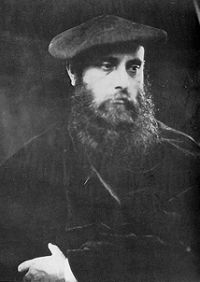 William Michael Rossetti,
The Atlantic Monthly
(1866)
William Michael Rossetti,
The Atlantic Monthly
(1866)
“ Many, of course, believed in the right of the North, and in one or other of these items of sincerity; few, I think, in the right, in the sincerity throughout, and in the success as well. The delusion, that the North, after using up its Irish and German population and its incoming immigrants, would quail before the necessity of hazarding also a large proportion of its own settled Anglo-Saxon population, was extremely prevalent. ”
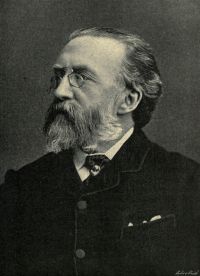 Justin McCarthy,
Modern Leaders: Being a Series of Biographical Sketches
Justin McCarthy,
Modern Leaders: Being a Series of Biographical Sketches
“ Looking back a few years, I can remember that almost, if not quite, every man I have alluded to was a fearless and outspoken advocate of the cause of the North, at a time when it was de rigueur among men of "culture" in London to champion the cause of the South. ”
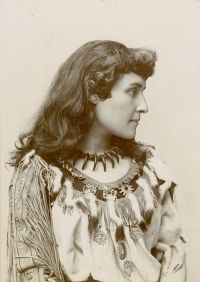 E. Pauline Johnson,
Flint and Feather: Collected Verse
E. Pauline Johnson,
Flint and Feather: Collected Verse
“ These are the famed that the North has named the "Riders of the Plains," And theirs is the might and the meaning and the strength of the bulldog's jaw, While they keep the peace of the people and the honour of British law.These are the men of action, who need not the world's renown, For their valour is known to England's throne as a gem in the British crown; These are the men who face the front, whose courage the world may scan, The men who are feared by the felon, but are loved by the honest man ”
John Richard Green, History of the English People, Volume I
“ The black boats of the northmen were so many wedges that split up the fabric of the roughly-built realm. But the very agency which destroyed the new England was destined to bring it back again, and to breathe into it a life that made its union real. The peoples who had so long looked on each other as enemies found themselves fronted by a common foe. They were thrown together by a common danger and the need of a common defence. Their common faith grew into a national bond as religion struggled hand in hand with England itself against the heathen of the north. ”
Henry Ward Beecher,
Conflict of Northern and Southern Theories of Man and Society
“ By all the love that I bear to the cause of God, and the glory of his Church, by the yearnings which I have for the welfare of the human kind, by all the prophetic expectations which I have of the destiny of this land, God's Almoner of Liberty to the World, I desire to see Old Representative New-England, and the affiliated North, rouse up and do their first works. ”
D. H. Montgomery, The Leading Facts of English History
“ The population was sparse, ignorant, and unprosperous. It was in the south that improvements originated. In the reign of Henry VIII, the North fought against the dissolution of the monasteries (SS352, 357) ; in Elizabeth's reign it resisted Protestantism; in that of George I it sided with the so-called "Pretender" (S535) .But steam transformed an immense area. Factories were built, population increased, cities sprang up, and wealth grew apace. Birmingham, Manchester, Leeds, Nottingham, Leicester, Sheffield, and Liverpool made the North a new country. (See Industrial Map of England, p.10.) ”
 James Anthony Froude,
The English in the West Indies…
James Anthony Froude,
The English in the West Indies…
“ Let it be known that England considers only her immediate interests and will not exert herself, and the other colonies will know what they have to count upon, and the British Empire will dwindle down before long into a single insignificant island in the North Sea. ”
 Edward Payson Roe,
An Original Belle
Edward Payson Roe,
An Original Belle
“ The men of the North, who are right, should be as ready to sacrifice everything as the men of the South, who are wrong; and so also should Northern women. I am proud of the fact that my father is employed and trusted by his government. ”
Henry Ward Beecher,
Conflict of Northern and Southern Theories of Man and Society
“ For the last fifty years, upon the national platform have stood arrayed two champions in mortal antagonism—New-England and the near North—representing personal freedom, civil liberty, universal education, and a religious spirit which always sympathises with men more than with Governments. ”
Various, The American Missionary — Volume 42…
“ The English race, which still represents the heart and brain of the nation, confronts these four problems. The problem on the North and South we brought on ourselves, as results on the one hand of our neglect and injustice, and on the other of our cupidity and cruelty. The troubles that come to us through our Eastern and Western ports, are drawn to us by the attractive influence of our free institutions and our material prosperity. ”
 Harriet Beecher Stowe,
The Atlantic Monthly
(1866)
Harriet Beecher Stowe,
The Atlantic Monthly
(1866)
“ We of the North, who know the dignity of labor, who know the value of free and equal institutions, who have enjoyed advantages for seeing their operation, ought, in true brotherliness, to exercise the power given us by the present position of the people of the Southern States, and put things thoroughly right for them, well knowing, that, though they may not like it at the moment, they will like it in the end, and that it will bring them peace, plenty, and settled prosperity, such as they have long envied here in the North. ”
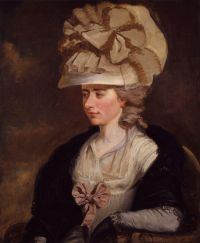 Fanny Burney,
Brief Reflections relative to the Emigrant French Clergy
Fanny Burney,
Brief Reflections relative to the Emigrant French Clergy
“ No land of barbarians has been insensible to their worth, no ruthless region of the north has blighted sensibility for their misfortunes from ignorance [Pg 17] of milder life: the land to which they sailed was Great Britain; in the fulness of its felicity, in the meridian of its glory, not more celebrated for arts and arms, than beloved for indulgent benevolence, and admired for munificence of liberality. ”
Theodore Parker,
Speeches, Addresses, and Occasional Sermons…
“ The talent of the North is blinded, deafened, gagged with its own cotton. The North clamored loudly when the nation's treasure was removed from the United States Bank; it is almost silent at the annexation of a slave territory big as the kingdom of France, encumbered with debts, loaded with the entailment of war! Northern Governors call for soldiers; our men volunteer to fight in a most infamous war for the extension of slavery! Tell it not in Boston, whisper it not in Faneuil Hall, lest you weaken the slumbers of your fathers, and they curse you as cowards and traitors unto men! ”
Frank A. Rollin, Life and public services of Martin R. Delany
“ The social polity of the North being based upon labor, and that of the South on leisure, depending on slave labor for maintenance, as an almost natural consequence, the North neglected as much as possible places of honor in the nation,—the army, and navy,—conceding these, as a matter of course, in all good faith, to its brethren of the South. ”
Charles Whiting Baker, Monopolies and the People
“ It glowed with all fervor when, a quarter of a century ago, the North fought to sustain what the fathers had created, and the rank and file of the South gave their lives and all they had for what they deemed a righteous and noble cause. ”
J. N. Larned, History for ready reference, Volume 5… (1895)
“ They had not only a respect, but an affection for Great Britain, for its laws, its customs and manners, and even a fondness for its fashions, that greatly increased the commerce. Natives of Britain were always treated with particular regard; to be an Old-England man was, of itself, a character of some respect, and gave a kind of rank among us. ”
“ Far from assuming an attitude of conquerors, which would most certainly have estranged the sympathies of the patriotic inhabitants of North-West France, the British have rigorously respected our manners and customs. ”
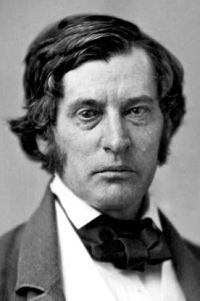 Charles Sumner,
The Landmark of Freedom
(1854)
Charles Sumner,
The Landmark of Freedom
(1854)
“ Alas! too often those principles, which give consistency, individuality, and form to the northern character, which render it staunch, strong, and seaworthy, which bind it together as with iron, are drawn out, one by one, like the bolts of the ill-fated vessel, and from the miserable, loosened fragments is formed that human anomaly—a northern man with southern principles. Sir,—No such man can speak for the North. ”
Sir William Howard Russell,
My Diary: North and South (vol…
“ The most vehement Northerners in the steamer are Germans, who are going to the States for the first time, or returning there. They have become satisfied, no doubt, by long process of reasoning, that there is some anomaly in the condition of a country which calls itself the land of liberty, and is at the same time the potent palladium of serfdom and human chattelry. ”
Marie Carmichael Stopes, Conquest; Or, A Piece of Jade; a New Play in Three Acts
“ What race are we? Britons! Why, lads, the British over there aren’t as British as we are; They are English and Scotch and Irish and Welsh—but what are we? All these British strains mixed! Most of us have some Scotch blood and some English blood and some Irish blood mixed in our veins, many of us have been to other parts of Britain and got a touch of Canada, or Australia, or South Africa into us. I say lads we are more British than the folks in the Old Dart. We are a fine blend of all the flavours of different Britons, we are the very essence of Britain! We are epitomes of Empire. ”
Harriet Beecher Stowe,
A reply to "The affectionate and Christian address of many thousands of women of Great Britain and Ireland…
(1863)
“ They are, alas, too few to be easily forgotten. False statements have blinded the minds of your [Pg 49] community, and turned the most generous sentiments of the British heart against us. The North are fighting for supremacy and the South for independence, has been the voice. ”
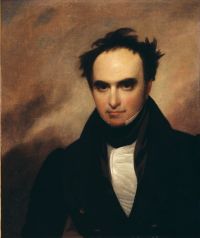 Daniel Webster,
The Great Speeches and Orations of Daniel Webster
Daniel Webster,
The Great Speeches and Orations of Daniel Webster
“ Why, who are the laboring people of the North? They are the whole North. They are the people who till their own farms with their own hands; freeholders, educated men, independent men. Let me say, Sir, that five sixths of the whole property of the North is in the hands of the laborers of the North; they cultivate their farms, they educate their children, they provide the means of independence. ”
Various, The Continental Monthly, Vol. 2…
“ With the exception of Bright and his friends, no one in England seems to comprehend that our North has in itself the vital, progressive energy which must give it victory—the same spirit which enables English civilization to gain on the Hindoo or the New-Zealander—the spirit of science and intelligence, which conquers ignorance. ”
“ It was a curious characteristic of the press comments and magazine articles and book studies of the War during these months that while varied fighting was going on in the various Colonies of these Powers and in the case of Great Britain, notably, countries like Canada, Australia, New Zealand and India were pouring out men and gifts to aid the Empire, statistical calculations usually rated Great Britain as not an Empire but simply a nation with the wealth and population of its two little islands in the North Sea. ”
 Georg Brandes,
Recollections of My Childhood and Youth
Georg Brandes,
Recollections of My Childhood and Youth
“ It seemed like a bad dream that the peoples of the North had for so many centuries demolished and laid waste each other, tapped one another for blood and gold, rendered it impossible for the North to assert herself and spread her influence in Europe. ”
 Agnes Deans Cameron,
The New North
Agnes Deans Cameron,
The New North
“ To the people who live within the North, the North is their world, and to them the news of who is to be appointed to the charge of the next post down the river is of more, importance than the partition of Turkey or a possible redistribution of the thrones of Europe. ”
 Lydia Maria Child,
An Appeal in Favor of that Class of Americans Called Africans
(1833)
Lydia Maria Child,
An Appeal in Favor of that Class of Americans Called Africans
(1833)
“ The Northerners adopted it with sincere views to economy, and more perfect independence. The duties were so adjusted as to embarrass commerce, and to guard the interests of a few in the North, who, from patriotism, party spirit, or private interest, had established manufactures on a considerable scale. ”
 Charles Dudley Warner,
Studies in the South and West, with Comments on Canada
Charles Dudley Warner,
Studies in the South and West, with Comments on Canada
“ Inquiries in the South as to the feeling of the North show that there is still left some misapprehension of the spirit in which the North sent out its armies, though it is beginning to be widely understood that the North was not animated by hatred of the South, but by intense love of the Union. ”
 James Harvey Robinson,
An Introduction to the History of Western Europe
James Harvey Robinson,
An Introduction to the History of Western Europe
“ The map of Great Britain at the accession of William the Conqueror has the same three great divisions which exist to-day. The little kingdoms had disappeared and England extended north to the Tweed, which separated it, as it now does, from the kingdom of Scotland. On the west was Wales, inhabited then, as it is still, by descendants of the native Britons, of whom only a small remnant had survived the German invasions. The Danes had been absorbed into the mass of the population and all England recognized a single king. ”
William John Robertson, Public School History of England and Canada (1892)
“ Not less interesting to us has been the marvellous growth of Britain’s empire in the last hundred years. Her colonies and possessions are found on every continent, and her flag floats on every sea. She is still “Mistress of the Sea,” and her navy carries British goods and manufactures to every land. Her commerce is great beyond comparison, and her language and civilization are finding a sure foothold in every nation. But better than all, England’s influence for truth, justice, and righteousness, is greater than ever. ”
