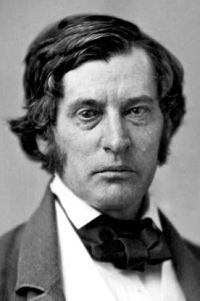
Charles Sumner

Charles Sumner

Summary

Portrait of Charles Sumner Charles Sumner The Landmark of Freedom (1854)

The whole social fabric is disorganized; labor loses its dignity; industry sickens; education finds no schools, and all the land of slavery is impoverished. And now, Sir, when the conscience of mankind is at last aroused to these things; when, throughout the civilized world, a slave-dealer is a byword and a reproach, we, as a nation, are about to open a new market to the traffickers in flesh, that haunt the shambles of the South. Such an act, at this time, is removed from all reach of that palliation often vouchsafed to slavery.
Source: Wikisource

Portrait of Charles Sumner Charles Sumner The Landmark of Freedom (1854)

To every man in the land it says, with clear, penetrating voice, "Are you for freedom, or are you for slavery?" And every man in the land must answer this question when he votes.
Pass this bill, and it will be in vain that you say, the slavery question is settled. Sir, nothing can be settled which is not right. Nothing can be settled which is adverse to freedom. God, nature, and all the holy sentiments of the heart, repudiate any such false seeming settlement.
Source: Wikisource

Portrait of Charles Sumner Charles Sumner The Landmark of Freedom (1854)

I am unwilling to admit, Sir, that the prohibition of slavery in the Territories is, in any just sense, an infringement of the local sovereignty. Slavery is an infraction of the immutable law of nature, and, as such, cannot be considered a natural incident to any sovereignty, especially in a country which has solemnly declared, in its Declaration of Independence, the inalienable right of all men to life, liberty, and the pursuit of happiness.
Source: Wikisource

Get perspective with Kwize: daily news enlightened by great literature