Thomas Bale

Definition and stakes

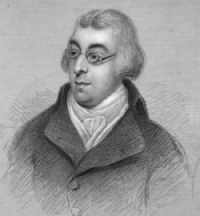
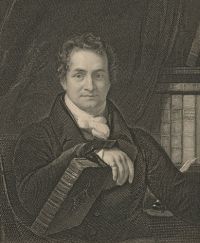
Portrait of Thomas Frognall Dibdin Thomas Frognall Dibdin,  Bibliomania; or Book-Madness

“ Like all men, who desert a religion which they once enthusiastically profess, Bale, after being zealous for the papal superstitions, holding up his hands to rotten posts, and calling them his "fathers in heaven," (according to his own confession) became a zealous Protestant, and abused the church of Rome with a virulence almost unknown in the writings of his predecessors. But in spite of his coarseness, positiveness, and severity, he merits the great praise of having done much in behalf of the cause of literature. His attachment to Leland is, unquestionably, highly to his honour ”
Source: Gutenberg

Thomas Andrew Archer,  Dictionary of National Biography… (1885)

“ BASTON, ROBERT (fl. 1300) , a Carmelite monk and prior of the abbey of Scarborough, was born, according to Pits, of an illustrious race, and not far from Nottingham, where Bale tells us he was buried. He seems to have acquired a great reputation in his own age for elegant verses. At Oxford, says Pits, he was not unworthily crowned with laurel as a rhetorician and a poet. He is said to have been taken to Scotland by Edward I to sing his praises at the siege of Stirling (1304) ; and, according to Bale, he is Trivet's authority for his story of Edward's rash approach to the beleaguered garrison. ”
Source: Wikisource

C. C. Stopes,  Shakespeare's environment (1914)

“ VIII. All her other goods, movable and immovable, she left to her husband, William Hunnis, whom also she named her executor. This testament was proved by Thomas Willot for William Hunnis, 12th October 1559. Her will in Somerset House is strangely involved with that of her husband, and clears up much.
Chalmers’ “Biographies” and Wood’s “Athenæ Oxonienses” say that “Nicholas Brigham died in his prime in December, 1559, at Westminster, leaving some MSS.: (1) ‘De Venationibus Rerum Memorabilium,’ a collection of notices of characters and events of which Bale has made much use
”
Source: Gutenberg

Get perspective with Kwize: daily news enlightened by great literature