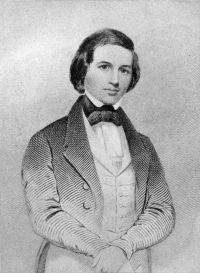
Thomas Hammond

Definition and stakes

C. Hammond,  Light from the spirit world (1852)

“ Thou knowest, Thomas, that no such motives control the infinite Mind. Thou knowest that his gifts are bestowed upon minds, not because he fears or hopes any thing to be taken from, or added to, his happiness. Thou knowest that wisdom, which comes from that Being, must agree with the character of its cause; and thou knowest that all wisdom, which does not seek, without hope or fear, the good of mind, is not of God, but is selfish and wrong. ”
Source: Gutenberg

C. Hammond,  Light from the spirit world (1852)

“ No mind can will what is seen will produce its own unhappiness, because it seeks its own good. To seek unhappiness would be inconsistent with its nature. To do wrong is to seek misery, because wrong induces misery. Ignorance is the father of misery, for it guides the possessor in the path of folly. When national or individual rights are invaded, it can only occur as ignorance misleads the invader. When human duty is not neglected, the invasion can not be made. Thou knowest, Thomas, that nature is good and just. Thou seest a chord of sympathy binding all minds together. ”
Source: Gutenberg

C. Hammond,  Light from the spirit world (1852)

“ My wisdom sees only that force must repel force, when individual or national rights are invaded. I will admit that kindness has great power over some minds, but not to overcome the selfishness of despots and tyrants.
W. Thou wilt see, Thomas, that what is nature, is not contradictory. I see that nature is just and true to all. I see that minds are not just and true to nature, because they are improperly cultivated. It is not natural for minds to fight each other. It is inconsistent with nature for one mind to control another, so as to wrong him—wrong [30] both. Nature is well
”
Source: Gutenberg

Get perspective with Kwize: daily news enlightened by great literature