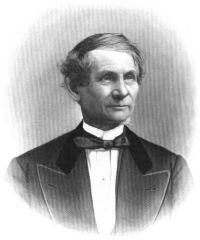
“ Among the patriots no one [Pg 7] was more deeply imbued with this sublime spirit, nor partook more largely of the generous enthusiasm it excited, than Henry Ireton, whose inflexible virtue, after the apparent defection of Cromwell, formed the basis on which rested the darling hopes of all the virtuous and enlightened reformers of his day. ”
Thomas Ireton
Definition and stakes
Thomas Ireton (1610–1651) was an English Parliamentarian general and a key figure in the English Civil War, renowned for his military leadership and unwavering Puritan convictions. Authors such as Thomas Bailey praised his "inflexible virtue" and role as a reformer, while Edmund Goldsmid offered biographical details, noting his command at Naseby and marriage to Cromwell’s daughter.
Richard Bagwell portrayed him as a staunchly pious leader in Ireland, whereas Marjorie Bowen connected him to Cromwell’s growing political influence. These differing depictions highlight Ireton’s complex legacy as both a military strategist and a symbol of Puritan determination, reflecting his lasting importance in 17th-century English history.
Quotes about “Thomas Ireton”
Edmund Goldsmid, Explanatory Notes of a Pack of Cavalier Playing Cards…
“ Ireton was born in 1610, and commanded the left wing of the Parliamentarians at Naseby. He married a daughter of Oliver Cromwell, whom he succeeded as Commander-in-Chief in Ireland, where he died in 1651. ”
 Wilkie Collins,
The Lazy Tour of Two Idle Apprentices
“ Play!’ exclaimed Thomas Idle, scornfully contemplating his one boot in the air. ‘You can’t play. You don’t know what it is. You make work of everything.’The bright Goodchild amiably smiled.‘So you do,’ said Thomas. ‘I mean it. To me you are an absolutely terrible fellow. You do nothing like another man. Where another fellow would fall into a footbath of action or emotion, you fall into a mine. Where any other fellow would be a painted butterfly, you are a fiery dragon. Where another man would stake a sixpence, you stake your existence. ”
 Marjorie Bowen,
The Governor of England
“ Is not His hand truly visible amongst us? Surely it would be a very atheist to doubt it. And for what I was about to say, Harry, coming to a plainer matter, my daughter Bridget is marriageable and full of piety and fear of the Lord—a thrifty maiden and one well-exercised in household ways, and if thou hast a mind to this alliance we may celebrate a marriage with the peace."Ireton flushed with pleasure at this undoubted honour; for Oliver Cromwell had become already a considerable man, and after the splendour of to-day's achievements was like to become more considerable still ”
Wilkie Collins,
The Lazy Tour of Two Idle Apprentices
“ Ask me to look at anything you like, except an assemblage of people all animated by feelings of a friendly and admiring nature towards the horse. You are a remarkably well-informed man, and you have heard of hermits. Look upon me as a member of that ancient fraternity, and you will sensibly add to the many obligations which Thomas Idle is proud to owe to Francis Goodchild.’Here, fatigued by the effort of excessive talking, disputatious Thomas waved one hand languidly, laid his head back on the sofa-pillow, and calmly closed his eyes. ”
Richard Bagwell, Ireland under the Stuarts and During the Interregnum…
“ At first the English soldiers were nearly exempt, but suffered equally afterwards; as a punishment, Ireton thought, for trusting in the carnal arm and not giving God the glory. The bishops and the clerical politicians generally do not show to advantage in their disputes with Ormonde, and the narrative of a poor friar is much better worth reading. Having visited in disguise Kilkenny, Ross, and many other places he came to Waterford, where many were dying of the plague. ”
Richard Bagwell, Ireland under the Stuarts and During the Interregnum…
“ It was easy for Preston to answer that he fought in a good cause and that Ireton was risking men’s lives in a bad one, while his head and those of his friends were as ‘unsettled on their shoulders as any in the town.’ The mayor and aldermen answered in the same strain; and Ireton died a fortnight after the date of their letter. Ludlow was in Dublin at the moment, and the Commissioners made him commander-in-chief until the pleasure of Parliament should be further known. ”
Lowell Thomas, Count Luckner, the sea devil (1927)
“ Of course, there was no such name as Irma listed with Lloyd's, and all any British officer would have to do would be to consult his Register and the jig would be up. But somehow I had a premonition that the name Irma would bring us through. When we applied eraser and ink to our shipping papers and wrote in the name of Irma—disaster. Two erasures were too much. The ink blotted. If we should be stupid enough to take the British for fools, then we ourselves would be the real fools. Where was our luck now? ”
Various, The Catholic World, Vol. 02, October…
“ This wretch was named Fennell; and, for his treason in selling the passes of the Shannon at Killaloe, their commander-in-chief Cromwell had promised him and his descendants many a fair acre in Tipperary. By this pass Ireton and his myrmidons crossed the river into Clare; and with them passed Walter Herbert. Still his heart was full of hope of saving all he held dear in the leaguered city. Spring passed away, and summer again came; and still the assailing host made no progress toward the capture of the town which Ireton and his father-in-law regarded as the key of all the Munster territories. ”
Charles Harding Firth, Dictionary of National Biography… (1892)
“ Twenty-four persons were excepted from mercy, some on account of their influence in prolonging the resistance, others as ‘original incendiaries of the rebellion, or prime engagers therein’ (ib. p. 267) . Seven of the excepted were immediately hanged, and others reserved for future trial by civil or military courts. Ireton's severity, however, was not indiscriminate. His ‘noble care’ of Hugh O'Neill, the governor of Limerick, is praised by the author of the ‘Aphorismical Discovery’ (iii. 21) . ”
Mary Louisa Boyle, Biographical Notices of the Portraits at Hinchingbrook
“ Ireton was held in great esteem by his party and his comrades, and it was said of him that [236] he grafted the soldier on the lawyer, and the statesman on the saint. Cromwell was much affected at his death, and caused the body to be brought over, and deposited with great pomp in Westminster Abbey, in Henry VII.’s Chapel. ”
Mrs. A. T. Thomson, The Wits and Beaux of Society. Volume 1
“ A still more daring adventure was contemplated also by this young, irresistible duke. Bridget Cromwell, the eldest daughter of Oliver, was, at that time, a bride of twenty-six years of age; having married, in 1647, the saintly Henry Ireton, Lord Deputy of Ireland. Bridget was the pattern heroine of the 'unco guid,' the quintessence of all propriety; the impersonation of sanctity; an ultra republican, who scarcely accorded to her father the modest title of Protector. She was esteemed by her party a 'personage of sublime growth:' 'humbled, not exalted,' according to Mrs. ”
Charles Harding Firth, Dictionary of National Biography… (1885)
“ In spite of the ill success of his overtures, he was urged to persist in them by many leading independents. Ireton wrote from Ireland expressing to Cromwell the fear that he had not been sufficiently forbearing and long suffering with the Scots. St. John reminded him that while the Irish were a people of atheists and papists, to be ruled with a rod of iron, the Scots were many of them truly children of God. ”
Richard Bagwell, Ireland under the Stuarts and During the Interregnum…
“ Soldiers and citizens were allowed to go free, and time was given to remove personal property, but without any guarantee for lands or houses; and Ireton evidently contemplated a partial colonisation. The garrison of 2000 had been reduced to about 1200, who marched out after giving up their arms, and the city contained about 4000 other men capable of bearing arms, though about 5000 persons had perished ‘by the sword without and the famine and plague within.’ He was inclined to spare those who had not shown themselves irreconcilable; but there would still be plenty of room for settlers. ”
 George Eliot,
Adam Bede
(1859)
“ Irwine. “Oh, that must not be; and Poyser is such a good tenant that Donnithorne is likely to think twice, and digest his spleen rather than turn them out. But if he should give them notice at Lady Day, Arthur and I must move heaven and earth to mollify him. Such old parishioners as they are must not go.” “Ah, there's no knowing what may happen before Lady day,” said Mrs. Irwine. “It struck me on Arthur's birthday that the old man was a little shaken: he's eighty-three, you know. It's really an unconscionable age. It's only women who have a right to live as long as that.” ”
George Eliot,
Adam Bede
(1859)
“ You suspect at once that the inhabitants of this room have inherited more blood than wealth, and would not be surprised to find that Mr Irwine had a finely-cut nostril and upper lip; but at present we can only see that he has a broad flat back and an abundance of powdered hair, all thrown backward and tied behind with a black ribbon—a bit of conservatism in costume which tells you that he is not a young man. ”
“ Irwine thinks so too. And Mr. Irwine is to have the chief authority on the estate—he has consented to undertake that. They will really be under no man but one whom they respect and like. It would be the same with you, Adam, and it could be nothing but a desire to give me worse pain that could incline you to go.” Arthur was silent again for a little while, and then said, with some agitation in his voice, “I wouldn’t act so towards you, I know. If you were in my place and I in yours, I should try to help you to do the best.” ”
 Józef Ignacy Kraszewski,
Iermola
“ The peasants, whose children, early accustomed to rough work, grow slowly and seem with difficulty to get away from the earth, looked upon Iermola's adopted son with astonishment, and shook their heads, saying that he must owe all his strength, elegance, and beauty to the vigorous blood and strong constitution which he inherited by birth. None of his little companions in the village could be compared to him; and it was certain that none of them had such a father as his, or had been, like him, surrounded from the cradle by constant care and tender love. ”
 Epes Sargent,
Peculiar: A Tale of the Great Transition
(1863)
“ To this fund Madame Volney not only added from her own legacy, but she went back to New Orleans to superintend the initiation of the humane and important enterprise.“Into each life some rain must fall.” The day after the dinner to the Maloneys intelligence came of the death of Captain Ireton. He had been hung by the fierce slaveocracy at Richmond as a spy. It was asserted that he had joined the Rebel Engineer Corps, at Island Number Ten, to obtain information for the United States. ”
“ The smile that flitted across Arthur’s face was a faint one, and instead of following Mr. Irwine’s playful lead, he said, quite seriously—“Yes, that’s the worst of it. It’s a desperately vexatious thing, that after all one’s reflections and quiet determinations, we should be ruled by moods that one can’t calculate on beforehand. I don’t think a man ought to be blamed so much if he is betrayed into doing things in that way, in spite of his resolutions.” ”
Józef Ignacy Kraszewski,
Iermola
“ The people said that nothing one might put into them would stain them, as is the case with other kinds, and also that it is much less trouble to keep them clean. Now, father, why should not we make them also?""Good Lord! what sort of an idea have you taken into your head?" cried Iermola, with a sigh, for he was content with his present life, and desired no other. "You do not know, my child, how difficult it is. As for me, it is too late for me to learn new things; and for you, it is too soon. If you desire it very much, you can learn when you are a man." ”
James Kennedy, Modern Poets and Poetry of Spain (1852)
“ Of this also an edition has been published in London by Boosey, and a translation into English. Iriarte's industry appears to have been of the most practical character, and his endeavours were as wisely as they were unremittingly directed to make his countrymen wiser and better in their future generations. If a man's worth may be estimated by such labours, few persons have ever lived who were so entitled to the gratitude of posterity, as few have ever effected so much as he did in the short career that was afforded him. ”
Richard Bagwell, Ireland under the Stuarts and During the Interregnum…
“ Starvation had not done its work as Ireton had expected, but no horses were found in Limerick at its surrender, and they had probably been eaten. The besiegers commanded the estuary, and were in no want of provisions, but the waste among the men must have been considerable, less by actual fighting than by hardship and sickness. Reinforcements had, however, been poured into Ireland during the summer, and Ireton makes no complaint of insufficient numbers. An Act passed in April authorised the impressment of 10,000 men, and was not suffered to remain a dead letter. ”
“ Irwine satisfied himself with standing still and nodding at a distance, that no one’s attention might be disturbed from the young squire, the hero of the day. Arthur did not venture to stop near Hetty, but merely bowed to her as he passed along the opposite side. The foolish child felt her heart swelling with discontent; for what woman was ever satisfied with apparent neglect, even when she knows it to be the mask of love? ”
George Eliot,
Adam Bede — Chapter XVII
(1859)
“ But I am not sure of that; at least I know that the people in Broxton and Hayslope would have been very sorry to part with their clergyman, and that most faces brightened at his approach; and until it can be proved that hatred is a better thing for the soul than love, I must believe that Mr Irwine's influence in his parish was a more wholesome one than that of the zealous Mr Ryde, who came there twenty years afterwards, when Mr Irwine had been gathered to his fathers. ”
Richard Bagwell, Ireland under the Stuarts and During the Interregnum…
“ Private property of all kinds was protected, and two months given to carry it away. Civilians were to be disarmed, but not otherwise interfered with in any way, and the soldiers might go where they pleased on promising not to serve against the Parliament in England or Ireland. No obstacle was placed in the way of taking service under any foreign government. These terms were rejected, and a further summons was sent after the surrender of Carlow. Preston or his son, Sir James, then made a sporting offer to admit Ireton’s infantry and let them do what they could inside the town. ”
Edmund Goldsmid, Explanatory notes of a pack of Cavalier playing cards (1886)
“ Cromwell, Ireton and Hudson all in ye same boate. In 1650, Cromwell was named Commander-in-Chief in Ireland; Ireton, his son-in-law, his deputy; and Hewson or Huson (here misprinted Hudson) governor of Dublin. In the plate they are sailing away from the sun of loyalty towards the night of treason. The portrait of Cromwell at the stern is not to be mistaken. Next to him is Hewson distinguished from Ireton by his older features. ”
Richard Bagwell, Ireland under the Stuarts and During the Interregnum…
“ At last Ireton’s preparations were complete, and seventeen heavy shot were discharged with great effect against one spot in the wall, whereupon a drum was sent out and negotiations began in earnest. Two hundred ‘redcoats’ were admitted by Fennell into the gate-tower, and on October 27 the articles of capitulation were signed. According to one account, Fennell even threatened O’Neill with a pistol, when that brave soldier rode out alone and delivered [Pg 273] his sword to Ireton himself, who treated him honourably. ”
Józef Ignacy Kraszewski,
Iermola
“ Thus it happened to Iermola, whom the mere presence of this unknown child had regenerated and revived, and who, to the great astonishment of the widow, the people of the village, and all who had formerly known him, not only acquitted himself without difficulty of the care necessary to be bestowed upon his nursling, but became quite another man. He always had been considered one of the most good-for-nothing and insignificant beings in the world, silent, humble, timid, and ignorant. ”
Margaret L. Woods, The Invader: A Novel
“ They were highly irritating, too, to Sir John Ireton, who had believed himself at one time able to tame and tutor the tricksy young politician.The late Lord Ipswich had been a "sport" in the Barthop family; a black sheep, but clever, and a well known collector. Accidental circumstances had greatly enriched him, and as he detested his brother and successor, he had left his pictures to the nation and all of his fortune which he could dispose of—which happened to be the bulk—to his natural son, George Goring. ”
George Eliot,
Adam Bede
(1859)
“ As for Arthur, he rushed back through the wood, as if he wanted to put a wide space between himself and Hetty. He would not go to the Hermitage again; he remembered how he had debated with himself there before dinner, and it had all come to nothing—worse than nothing. He walked right on into the Chase, glad to get out of the Grove, which surely was haunted by his evil genius. Those beeches and smooth limes—there was something enervating in the very sight of them; but the strong knotted old oaks had no bending languor in them—the sight of them would give a man some energy. ”