Thomas Watson

Definition and stakes

Portrait of G. T. Bettany G. T. Bettany,  Eminent doctors: Their lives and their work… (1885)

“ Thomas Watson was born on March 7th, 1792, at Montrath (now Dulford) House, near Cullompton, Devonshire, where his father, Joseph Watson, a Northumbrian by family, was then living. He was educated at Bury St. Edmund’s Grammar School, where he was a schoolfellow with Blomfield, afterwards Bishop of London, and a great friend of Watson’s. In 1811 he entered at St. John’s College, Cambridge, and became tenth wrangler and [Pg 149] fellow of his college. At that time only two fellows of St. John’s could retain their fellowships without taking orders, and one of these must study medicine. ”
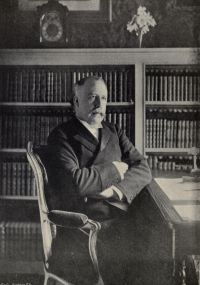
Source: Gutenberg

A Dictionary of Music and Musicians (1900)

“ Watson is conjectured to have been identical with Thomas Watson, a native of London, who after studying poetry for some time at Oxford, returned to London to study law, and died about 1592. A collection of sonnets by him entitled 'Hecatompathia, or Passionate Centurie of Love,' was licensed in 1581, and some poems by him were inserted in the collection called England's Helicon,' 1614. ”
Source: Wikisource

Sara Ware Bassett,  Ted and the Telephone

“ But too many of these schemes, alas, proved worthless and as their common fate was the rubbish heap, it is strange that the indefatigable Thomas Watson did not have his faith in pioneer work entirely destroyed. But youth is buoyed up by perpetual hope; and paradoxical as it may seem, his enthusiasm never lagged. Each time he felt, with the inventor, that they might be standing on the brink of gigantic unfoldings and he toiled with energy to bring something practical out of the chaos. ”
Source: Gutenberg

Get perspective with Kwize: daily news enlightened by great literature