Thomas Watts

Definition and stakes

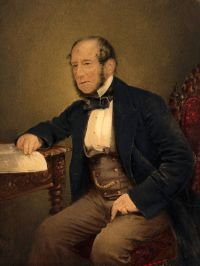
Portrait of Edwin Paxton Hood Edwin Paxton Hood,  Isaac Watts; his life and writings… (1875)

“ A life of Watts would be quite incomplete which did not give some account of his very eminent but now almost forgotten assailant and enemy, Thomas Bradbury. Born at Wakefield, in Yorkshire, he had all the characteristics of a typical Yorkshireman; he was a bold and hearty, and possibly, whatever that may be worth, well-meaning man; he possessed a considerable amount of natural genius, especially for doubtful drollery and expletive. ”
Source: Gutenberg

Portrait of Edwin Paxton Hood Edwin Paxton Hood,  Isaac Watts; his life and writings… (1875)

“ Watts’ biographers have hitherto not nicely discriminated the periods of his residence; reading Southey, it might be supposed he had passed all his life at Stoke Newington; reading Milner, it might be supposed he not only passed the greater part of his life, but closed his days at Theobalds. The truth is, that Thomas Gunston, the brother of Lady Abney, purchased a house and twenty-five acres of land with the Manor of Stoke Newington. ”
Source: Gutenberg

Portrait of Leslie Stephen Leslie Stephen,  Dictionary of National Biography… (1899)

“ By his will, dated 5 Sept. (proved 5 Nov.) 1657, Watts left to Lincoln College ‘soe many bookes as cost me threescore pounds,’ to be chosen and valued by Thomas Barlow [q. v.] , then librarian of the Bodleian. Watts was a good preacher and an excellent linguist. Wood says he had ‘so smooth a pen in Latin or English that no man of his time exceeded him.’
Watts translated Bacon's ‘De Augmentis Scientiarum,’ and his rendering called ‘Of the Advancement and Proficience of Learning, of the Partitions of Sciences,’ Oxford, 1640, fol., was highly praised on its appearance.
”
Source: Wikisource

Get perspective with Kwize: daily news enlightened by great literature