Tintern Abbey

Definition and stakes

Fürst von Hermann Pückler-Muskau,  Tour in England, Ireland, and France…

“ In the centre of a deep basin, encompassed by mountains of various forms, we descried immediately above the silver stream the celebrated ruins of Tintern Abbey. It would be difficult to imagine a more favourable situation, or a more sublime ruin. The entrance to it seems as if contrived by the hand of some skilful scene-painter to produce the most striking effect. The church, which is large, is still almost perfect: the roof alone and a few of the pillars are wanting. ”
Source: Gutenberg

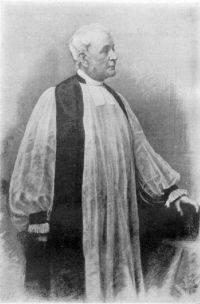
Portrait of A. Cleveland Coxe A. Cleveland Coxe,  Impressions of England; or, Sketches of English Scenery and Society

“ Two miles more of delightful scenery, and I stood again in Tintern Abbey, and wandered through its holy aisles, and climbed to its venerable summit. Here, over the lofty arches of the transept, I walked, as in a path through a wood, the shrubbery growing wildly on both sides, as on the brow of a natural cliff. White roses flourish there in abundance; and it is only at intervals that you can get a glimpse of the Abbey-floor beneath. Around you is a beautiful prospect of the river, and of an amphitheatre of hills ”
Source: Gutenberg

1911 Encyclopædia Britannica, Volume 26… (1911)

“ TINTERN ABBEY, in Monmouthshire, one of the most famous ecclesiastical ruins in England. It is beautifully situated on the right bank of the river Wye. The abbey was founded by Walter de Clare in 1151 for Cistercian monks. The existing church, however, dates from the later part of the 13th century; it is unroofed, and the nave is imperfect, but many of the finest details of a style transitional from Early English to Decorated are preserved. The church is cruciform. ”
Source: Wikisource

Get perspective with Kwize: daily news enlightened by great literature