Vulcan (mythology)

Definition and stakes

Louie M. Bell,  Mythology in Marble

“ Vulcan.
“The Crippled Artist God.”
“He made the gods their golden shoes,
And shod their steeds with brass.” STORY.
THE GOD OF FIRE.
“Those who labor
The sweaty forge, who edge the crooked scythe,
Bend stubborn steel, and harden gleaming armor,
Acknowledge Vulcan’s aid.”
—Prior.
Vulcan, the son of Jupiter, was born lame. He was flung from Olympus by his mother, Juno, who hated him for his deformity, and he fell into the sea, where the mother of Achilles found him. He made for her son a shield, which was a wonderfully clever piece of handiwork.
”
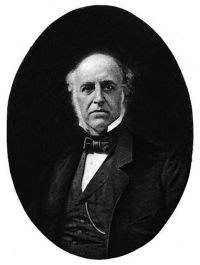
Source: Gutenberg

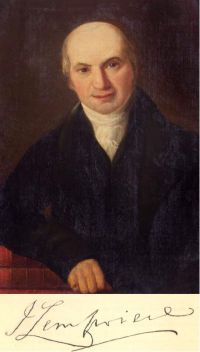
Portrait of Thomas Bulfinch Thomas Bulfinch,  Bulfinch's Mythology

“ Vulcan was architect, smith, armorer, chariot builder, and artist of all work in Olympus. He built of brass the houses of the gods; he made for them the golden shoes with which they trod the air or the water, and moved from place to place with the speed of the wind, or even of thought. He also shod with brass the celestial steeds, which whirled the chariots of the gods through the air, or along the surface of the sea. He was able to bestow on his workmanship self-motion, so that the tripods (chairs and tables) could move of themselves in and out of the celestial hall. ”
Source: Gutenberg

Charles K. Dillaway,  Roman Antiquities, and Ancient Mythology

“ He afterwards became the husband of Venus.
He was reckoned among the gods presiding over marriage, from the torches lighted by him to grace that solemnity. It was the custom in several nations, after gaining a victory, to pile the arms of the enemy in a heap on the field of battle, and make a sacrifice of them to Vulcan. As to his worship, Vulcan had an altar in common with Prometheus, who first invented fire, as did Vulcan the use of it, in making arms and utensils. His principal temple was in a consecrated grove at the foot of mount Ætna, in which was a fire continually burning.
”
Source: Gutenberg

Get perspective with Kwize: daily news enlightened by great literature