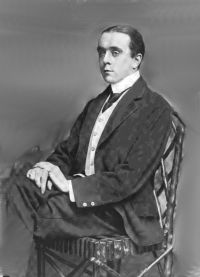
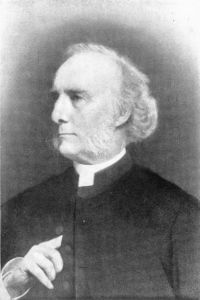
“ It has been a feature of the history of Oxford that every college has, from time to time, come to the front as the special home and source of some movement. There has never been the overshadowing concentration of men and of wealth, which has given a more one-sided direction to the history of Cambridge. Hence the strength of the college system; every college has its traditions to live up to, its great names to cherish, and Wadham is, certainly, by no means last or least in these respects. ”
Wadham College, Oxford
Definition and stakes
Quotes about “Wadham College, Oxford”
Albert Frederick Pollard,
Dictionary of National Biography…
(1899)
“ Ultimately Wadham determined to found a college at Oxford, and he drew up statutes for the proposed establishment. These anticipated some modern reforms by providing that fellowships should be tenable only for a certain number of years, and that neither for them nor for the wardenship should holy orders be a necessary qualification. But before any steps were taken to acquire a site, Wadham died at Merefield on 20 Oct. 1609, and was buried in Ilminster church, where he is commemorated by a monument and brass; his portrait, painted in 1595, hangs in the warden's lodgings at Wadham College. ”
“ Mary’s Hall; the east end of Jesus College chapel, which was just finished when Henry Vaughan arrived; and the front quadrangle of Pembroke College, converted from Broadgates Hall by a clothier, the Earl of Pembroke, and James I., and opened with ceremonies which included a fantastic Latin oration by Sir Thomas Browne, as senior undergraduate. The architecture of Wadham is a remarkable proof of the influence of antiquity upon men and things in Oxford. The founders, in 1609, were Nicholas Wadham and Dorothy, his wife, of Merifield in Somerset. ”
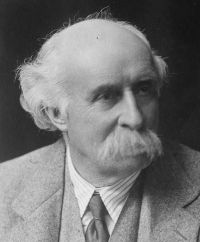
Douglas Brooke Wheelton Sladen,
Twenty Years of My Life
“ Some of them remembered too, that he was a Scholar of his College, and got a First. None of them, I am quite sure, knew that he would have been unable to go to Oxford at all, because he had no money to go on, except his scholarship at Wadham, if he had not borrowed the money, and repaid it out of his own earnings after he left the university. Could anything be more magnificent than that the man who holds the record of all Englishmen, and for that matter, that of all recorded men, for achievements in games, should have paid for himself at the university? ”
Arthur Henry Bullen, Dictionary of National Biography… (1885)
“ He became a commoner of Wadham College, Oxford, in 1652, took his B.A. degree in 1656, and afterwards migrated to Cambridge. At Oxford he made a laughing-stock of himself by his inordinate self-conceit. Wood is very severe on him: 'Such was the vanity of this person that he, being extremely conceited of his own worth, and overvaluing his poetical fancy more than that of Cleveland, who was then accounted the "hectoring prince of poets," fell into the hands of the satyrical wits of this university, who, having got some of his prose and poetry, served him as the wits did Tho. ”
David Samuel Margoliouth,
Dictionary of National Biography…
(1900)
“ His talents and attainments, however, attracted the notice of some wealthy neighbours, who enabled him to pursue his studies at Ruscomb, and again at Gloucester, and the liberality of John Moore (1730-1805) [q. v.] (afterwards bishop of Bangor and archbishop of Canterbury) enabled him to enter Wadham College, Oxford, as a commoner on 6 June 1765. In September of that year he became scholar of his college, where he shortly afterwards obtained the Hody exhibition for Hebrew, as well as other prizes. He was fellow from 1771 until 1788, and filled various college offices. ”
1911 Encyclopædia Britannica (1910)
“ He was educated at Wadham College, Oxford, which may be regarded as the original centre of the English positivist movement. Richard Congreve (q.v.) was tutor at Wadham from 1849 to 1854, and three men of that time, Frederic Harrison (q.v.) , Beesly and John Henry Bridges (1832–1906) , became the leaders of Comtism in England. Beesly left Oxford in 1854 to become assistant-master at Marlborough College. In 1859 he was appointed professor of history at University College, London, and of Latin at Bedford College, London, in 1860. ”
C. A. Dawson Scott, Nooks and Corners of Cornwall
“ How queer it all is and how little human nature changes.The corporation at Liskeard has some interesting [Pg 158] silver, and in the church is a monument to Joseph Wadham said to have been "the last of that family whose ancestors were the founders of Wadham College, Oxford." This church is unique in Cornwall in having thirteen fifteenth-century consecration crosses cut on the north and south aisles. ”
Leslie Stephen,
Dictionary of National Biography…
(1894)
“ Entering Wadham College, Oxford, as a gentleman-commoner in 1652, but not matriculating in the university till 1655, he soon displayed mathematical genius, which was developed by the instructions of Dr. ”
“ The permanence of Gothic in Oxford is a point for professional students; the studied simplicity, which is the great secret of Wadham's beauty, concerns everyone. The effect of the garden front is produced simply by the long lines of the string-courses and by the procession of the beautifully proportioned gables. Neither here nor in any part of the college is there a piece of carved work, except in the classical screen, which marks the entry to the hall. It may be noted that at Wadham and at Clare, Cambridge, the same effect is produced by the same means ”
Laurence Hutton,
Literary Landmarks of Oxford
(1903)
“ One of the most far-reaching of the Literary Landmarks of Wadham is the fact that it was the cradle of the Royal Society. Mr. J. Wells, a Fellow of Wadham, quotes Bishop Sprat as telling how "the first meetings were made in 1649 in Dr. Wilkins's lodgings, in Wadham College, which was then the place of resort for virtuous and learned men; "and Mr. Wells places these meetings" by tradition in the great room over the Gateway, although this," he considers, "more than doubtful." ”
Joel Cook,
England, Picturesque and Descriptive…
“ Not far away is Wadham College, founded in 1613 by Nicholas Wadham and Dorothy his wife. It has [Pg 154] excellent buildings and a most beautiful garden. There is a new Museum of Natural History in the park near by, and also Keble College, founded in 1868 as a memorial of Rev. John Keble, the author of the Christian Year. Its buildings are of variegated brick, the chapel being the loftiest, most costly, and finest of its style in Oxford. The building is a perfect glare of coloring. TRINITY COLLEGE CHAPEL. Trinity College was founded in 1554 by Sir Thomas Pope. ”
Osbert John Radcliffe Howarth, 1911 Encyclopædia Britannica, Volume 20… (1911)
“ The buildings of Wadham have remained practically unchanged since the foundation, either by alteration of the existing fabric or by addition. Beautiful gardens lie to the east and north of them; the warden’s garden is especially fine. In the quadrangle is a clock designed by Christopher Wren, who entered the college in 1649. It was in this year that John Wilkins, warden (1648–1659) , initiated a weekly philosophical club, out of the meetings of which grew the Royal Society, which received its charter in 1662. ”
Lionel Henry Cust, Dictionary of National Biography… (1891)
“ HOLT, THOMAS (1578?–1624) , architect, a native of York, born about 1578, is noteworthy for the important works in Renaissance architecture executed by him at Oxford. In 1613 and the following years he designed the great quadrangle of the examination schools there, now part of the Bodleian Library, introducing some new architectural features. He also designed the whole structure of Wadham College, which was built between 1610 and 1613. Other buildings at Oxford are ascribed to him with less certainty, though he probably prepared designs for many of them. ”
Flora Masson, Robert Boyle (1914)
“ Wilkins of Wadham. This was the weekly meeting of the Invisibles; the “learned Junto,” as Evelyn has dubbed them; a society which may be described as non-militant and non-party, and was certainly non-sectarian—the Oxford branch of the original Invisible or Philosophical College, begun in London in 1645, before Wilkins and Wallis and Goddard removed to Oxford. The Oxford branch kept up a regular correspondence with the London Society; and after a time, when Wilkins forsook Oxford for Cambridge, the weekly meetings of the Invisibles were transferred from Wadham to Robert Boyle’s own rooms. ”
P. A. Wright Henderson, The Life and Times of John Wilkins
“ It is probable that till the depletion of Oxford, when the Civil War began—i.e., during the first thirty years of its life—Wadham numbered on an average between eighty and ninety undergraduates, all of them resident in College, as was then required by the Statutes of the University. This estimate is based on imperfect data, and Mr Gardiner has pronounced that materials for any accurate [Pg 19] calculation are not to be found. We do not know what was the usual length of undergraduates' residence at that time; some resided only for a year, some proceeded to a degree. ”
Nicholas Amhurst,
Terræ-filius: or, the Secret History of the University of Oxford
(1726)
“ WHereas I have frequently declared, according to the full intention of my heart, that I should be always ready to correct any mistakes, which I have inadvertently fallen into, through the course of these papers, I think my self obliged to acknowledge, that I have received intelligence from a gentleman, whose veracity I can never distrust, that I gave too much credit to a letter dated from Wadham college, concerning the publick lecturers at Oxford, there being two or three of those gentlemen, besides those whom I have mentioned, who ought to be excepted out of the general censure. ”
Leslie Stephen,
Dictionary of National Biography…
(1896)
“ About the same time he was joined at Wadham by his elder brother Robert, and the two brothers, both of whom left without taking degrees, presented to the college two fine silver tankards, which were sacrificed to the royal cause on 26 Jan. 1643. After leaving Oxford he was entered of the Inner Temple. Subsequently he travelled in the south of Europe, and, according to Wood, ‘became a gent. ”
“ It may be said to be laid out on Bacon's rule: "There ought to be gardens for all months in the year, in which severally things of beauty may be then in season"; only for "year" we naturally must read "academic year." If Bacon is right, that a garden is the "purest of human pleasures," then, indeed, St. John's should be the Oxford paradise. WADHAM COLLEGE (1) THE BUILDINGS"Here did Wren make himself a student home, Or e'er he made a name that England loves ”
Lucy Phillimore, Sir Christopher Wren: His Family and His Times
“ The very same have stopped the mouth of all learning (following herein the example of their elder brother the Turk) , lest any should be wiser than themselves, or posterity know what a world of wickedness they have committed.”’ [47] PHILOSOPHICAL MEETINGS.Wadham College probably suffered less than many, as its head, Dr. Wilkins, who had married Cromwell’s sister, was very submissive to the then Government. As matters settled down somewhat at Oxford towards 1648, Dr. Wilkins, Dr. Jonathan Goddard, Dr. Wallis, Mr. ”
P. A. Wright Henderson, The Life and Times of John Wilkins
“ The estimate, which can neither be confirmed nor disproved, is worth making only as helping us to imagine the condition of the College in its early days. One thing is certain, that Wadham was popular and fashionable, to use a modern curious name, as is shown by the record of admissions.Life, both for graduates and undergraduates, was harder then than it is now. The Fellows were required to reside for forty-six weeks, the Scholars, and probably the Commoners, for forty-eight weeks in each year. All undergraduates had to attend lectures or disputations for twenty-four hours in every week. ”
“ If Oxford thus, to some extent, moulded to her pattern men who, welcome as they were, were only accidental, surely the college spirit may be trusted to assimilate whatever material the changed conditions of social or of political life furnish to it. The hope of many at Oxford is that there will be a great development and a great change. On one side it will be good if Oxford becomes to a much greater extent not only an all-British, but also a world university; on another side it is to be hoped that far more than ever before men of all classes in England will come to Oxford. ”
“ The ordinary English man or woman, unconnected with Oxford, has never heard of them. The undergraduate and the ordinary don has seen some part just now and then, when some enthusiastic guests have had to be taken round the sights.And yet a book of many volumes might be written to tell of the things both rare and exquisite that Oxford hugs most close to her breast. He who cares to look may find them everywhere. There is not a college in all the University that does not possess something precious, either for its intrinsic beauty or for its historical interest. ”
“ In this great foundation then the three characteristic features of a college are found—a common life, powers of self-government, with the right of choosing future members, and endowments that enable religion and learning to flourish, free from more pressing cares. It is these features which distinguish the colleges of Oxford and Cambridge, and which have determined their history. ”
Cecil Headlam, Oxford and Its Story
“ They were to study in some University where they were to hire a hall and live together as a community. It was in the very year of the secession to Northampton that the statutes were issued, and it would have been obviously inexpedient to bind the students to one University or one town. The Studium might be removed from Oxford or the scholar might find it desirable to migrate from that University, to Stamford, Cambridge, or even Paris. The founder, indeed, in view of such a possibility did acquire a house at Cambridge for his college (Pythagoras Hall) . ”
P. A. Wright Henderson, The Life and Times of John Wilkins
“ It was a nursery of bishops, contributing to the bench no less than six, including Wilkins himself; a nursery also of Fellows of the Royal Society,—Wilkins, Ward, Rooke, Wren, Sprat, and Pope were original [Pg 73] members of the "invisible college." Not only to the Church and to Science did Wadham do good service, but more directly to the State, by educating together impartially the youth of both the great parties. "When the hurly-burly's done, when the battle's lost and won," it is above all things desirable to allay bitter feelings, and bring the former combatants together. ”
Cecil Headlam, Oxford and Its Story
“ The broad-minded founder accepted this view. He drew up statutes, by means of which he hoped to train men who should help the Church to recognise, to lead and to control the New Movement. The verdict of his contemporaries with regard to his work and intentions is expressed by Erasmus, who wrote that “Just as Rhodes was once famous for the Colossus, and Caria for the tomb of Mausolus, so the new College at Oxford dedicated to the most profitable literature would be recognised throughout the civilised world as one of the chief ornaments of Britain.” ”
Ralph Waldo Emerson,
English Traits — Universities
(1856)
“ The number of students and of residents, the dignity of the authorities, the value of the foundations, the history and the architecture, the known sympathy of entire Britain in what is done there, justify a dedication to study in the undergraduate, such as cannot easily be in America, where his college is half suspected by the Freshman to be insignificant in the scale beside trade and politics. Oxford is a little aristocracy in itself, numerous and dignified enough to rank with other estates in the realm ”
Various, The Cornhill Magazine (vol. XLI, no… (1860)
“ The Working Men’s College was largely, perhaps mainly, the product of Oxford and Cambridge, in the sense that most of its founders and first teachers had belonged to one or other of the two Universities, and their object was to impart to others the College spirit as they had felt and known it and realised its value; to give to poor men, to manual workers, something, if it were ever so little, of the atmosphere which had brightened and broadened and sweetened their own lives. The College, accordingly, has always taken Oxford and Cambridge for its models. ”