Waltham, Massachusetts

Definition and stakes

1911 Encyclopedia Britannica (1911)

“ He co-operated with Francis C. Lowell and others in introducing the power-loom and the manufacture of cotton on a large scale into the United States, a factory being established at Waltham, Massachusetts, in 1814, and another in 1822 at Lowell, Massachusetts, of which city he was one of the founders. He was a member of the general court of Massachusetts in 1816, 1821, 1822, 1824 and 1827, and in 1831–1833 and 1842 of the national House of Representatives, in which he was prominent as an advocate of protective duties. He died in Boston on the 14th of July 1861. ”
Source: Wikisource

Appletons' Cyclopædia of American Biography (1900)

“ He was ambitious to fit himself for a wider field of work, and studied diligently during his leisure hours, securing engagements to lecture before meetings and assemblies at an early age. He became editor of the local paper at Waltham, studied law, was admitted to the bar, and in 1849 was selected to represent his native town in the legislature of Massachusetts. At this time the ancient power of the whig party was waning in New England, and the free-soil party was making its influence felt. ”
Source: Wikisource

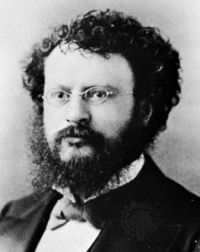
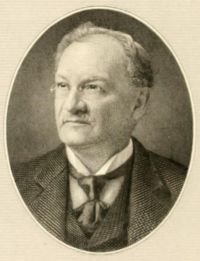
Portrait of Joel Cook Joel Cook,  America, Volume 5 (of 6)

“ LEXINGTON AND CONCORD.
Following up the Charles River, about ten miles west of Boston is Waltham, with twenty-two thousand people, noted for the works of the American Waltham Watch Company, the largest in the world, producing nearly six hundred thousand watches and movements in a year. The extensive factory buildings spread along the river, and there are also large cotton mills.
”
Source: Gutenberg

Get perspective with Kwize: daily news enlightened by great literature