William de Braose

Definition and stakes

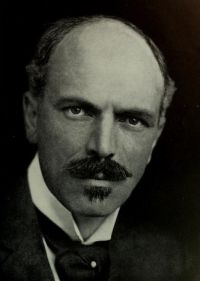
Portrait of Leslie Stephen Leslie Stephen,  Dictionary of National Biography… (1893)

“ At the close of 1208 William de Braose [q. v.] fled to Ireland, and landing at Wicklow was well received by Marshal, who, despite the new justiciar, John de Grey [q. v.] , escorted him in safety to Walter de Lacy. Marshal had already been acting in conjunction with the De Lacys (Four Masters, iii. 155) , and this harbouring of William de Braose led to John's Irish expedition in June 1210 (Sweetman, i. 408) . Marshal had come over to England earlier in the year at John's bidding, and apparently recrossed with the king. ”
Source: Wikisource

Portrait of Leslie Stephen Leslie Stephen,  Dictionary of National Biography… (1896)

“ He made his peace with the king in 1180, submitting to a fine of a thousand marks, and receiving back his paternal lands, together with those that he held in Normandy in right of his second wife, Mabil; the lands that he had held in Herefordshire remained forfeited, and were described as ‘feodum Adæ de Port fugitivi;’ they appear to have passed to William de Braose in right of his mother Bertha, a daughter of Sibilla by Miles of Gloucester, for in 1194 he paid 22l. 13s. for Adam's fee. ”
Source: Wikisource

1911 Encyclopædia Britannica (1911)

“ William was accordingly careful to secure the lines of communication with London by placing the lands in the hands of men bound by close ties to himself, such as his half-brother, the count of Mortain,- who held Pevensey, and his son-in-law, William de Warenne, who held Lewes. With the exception of lands held by the Church and the Crown, the five rapes of Sussex were held by these and three other Norman tenants-in-chief: William de Braose, the count of Eu, and Roger, earl of Montgomery, who held respectively Bramber, Hastings and Arundel. ”
Source: Wikisource

Get perspective with Kwize: daily news enlightened by great literature