“ An ambulance-train arrived one night, bringing an unusually large number of sick and wounded men, whose piteous moans filled the air as they were brought up the hill on "stretchers" or alighted at the door of the hospital from ambulances, which, jolting over the rough, country road, had tortured them inexpressibly. Occasionally a scream of agony would arise, but more frequently suppressed groans bespoke strong men's suffering manfully borne. ”
Ambulance train
Definition and stakes
Quotes about “ambulance train”
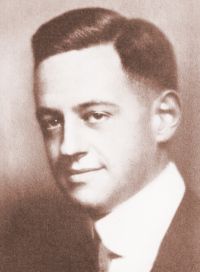
Eric Fisher Wood,
The Note-Book of an Attaché: Seven Months in the War Zone
“ I reported to the Ambulance Headquarters this morning and found that I had been assigned to duty in assisting Captain Kipling with the executive details of the organization of the new ambulance trains. In future every train is to be composed of five ambulances, one repair car, and one scout car, and is to be manned by an officer and thirteen men. Each such unit is to be complete in itself and is called a “squad.” As such it will be assigned to duty with the Paris Hospital, with field hospitals, or with the French, British, or Belgian armies. ”
Ernest Nathaniel Bennett,
With Methuen's Column on an Ambulance Train
“ The run from De Aar to Belmont is about 100 miles. The ambulance train arrived there on the evening of the battle, and the staff on board found plenty of work ready for them. The wounded men were all placed together in a large goods' shed at the station. They lay as they were taken from the field by the stretcher-bearers. Lint and bandages had been applied, but, of course, uniforms, bodies and even the floor were saturated with blood. Such spectacles are not pleasing, but nobody ever thinks about the unaesthetic side of the picture when busily engaged in helping the wounded. ”
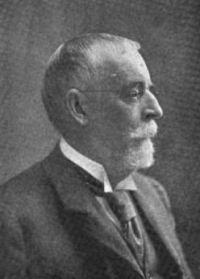
Fred Arthur McKenzie, British Railways and the War (1917)
“ The absence of vibration, the ease with which cases could be taken in and out, the facilities for carrying patients to the treatment room, and the arrangements for the staff excited the greatest admiration in the numerous places where the train was put on show before it was brought into service. Not that the Brighton Railway was exceptional in this. All the great English railway works devoted their utmost skill and care to the ambulance trains, and each pitted itself against the others in providing the best for our wounded men. ”
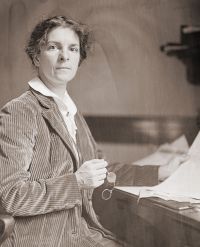
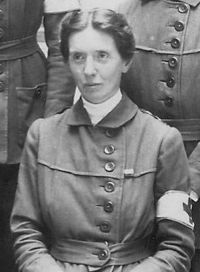
Violetta Thurstan,
Field Hospital and Flying Column
“ When the last ambulance train came up about 2 P. M. the patients were first put in, and then every portable object that could be removed was packed into the train too. At the last moment, when the train was just about to start, one of the sanitars ran back and triumphantly brought out a pile of dirty soup plates to add to the collection. Nothing was left in the hospital but two dead men we had not time to bury.The wounded were all going to Warsaw and the other Russian Sisters went on in the train with them. But our destination was Zyradow, only the next station but one down the line. ”
Horace Wyatt, Motor Transports in War
“ Once the patients have been taken as far back as the field hospital at railhead, their subsequent conveyance to the Red Cross hospitals, or any other required points, can be carried out by train supplemented by local motor ambulance services from the termini to the hospitals. ”
Ernest Nathaniel Bennett,
With Methuen's Column on an Ambulance Train
“ The sufferer is raised carefully upon a stretcher or carried off in an ambulance waggon to a "dressing-station" somewhere in the rear. If there are not enough stretchers, or the wound is merely a slight one, the disabled soldier is borne away on a seat made of the joined hands of two bearers. A second row of ambulance waggons is loaded from the dressing-station—each waggon holds nine—and goes lumbering off to the field hospital. Here the men are laid on the ground with perhaps a waterproof sheet under them and a blanket over them. ”
Various, History of Ambulance Company Number 139
“ The morning was spent in finishing up little odds and ends of work, and in rolling packs. At 1 P. M. "Fall in," the last one at Doniphan, sounded, and soon afterwards the Sanitary Train started its march to the railroad yards. Again it was hot and dusty, just as it had been when the company marched into camp, and it was with a feeling of relief that the troop train came into view. Pullman cars? No, the Sanitary Train couldn't be as fortunate as that, so the men had to be content with chair cars. ”
Charles Edward Ryan, With an Ambulance During the Franco-German War
“ By 4th January I had removed all my worst cases into private quarters in the town; leaving only about a dozen in the church, all of which were now on the high road to convalescence, and [310] fit to be removed to Germany by the next ambulance train. On this happy disposal of my patients I had greatly to congratulate myself; for just now pyæmia and hospital gangrene of the worst type, showed themselves in the church; and we knew from our experiences at Sedan and the railway station how sure they were to be attended by terrible results, where such a number of wounded were kept together. ”
Mary Elvira Elliott,
Representative Women of New England
(1904)
“ At four in the afternoon two German officers came and took the little hand on stretchers to the ambulance train, which was waiting a quarter of a mile away. For fear of the mob, gendarmes walked beside the wounded, and they reached the train in safety. ”
Pat Beauchamp Washington, Fanny Goes to War
“ The French inhabitants would turn out en masse to see us pass, and were rather proud of us on the whole, I think. Arrived at the big railway siding, we all formed up into a straight line to await the train. After many false alarms, and answering groans from the waiting F.A.N.Y.s, it would come slowly creaking along and draw up. The ambulances were then reversed right up to the doors, and the stretcher bearers soon filled them up with four lying cases. At the exit stood Boss and the E.M.O., directing each ambulance which hospital the cases were to go to. ”
Eric Fisher Wood,
The Note-Book of an Attaché: Seven Months in the War Zone
“ It is from this station that the American Hospital receives its patients, invariably cases whose condition is so grave that they are thought to be incapable of enduring further travel without fatal results.Upon entering the service of the Ambulance all volunteers, no matter what their ultimate position is to be, are required to attain a certain efficiency and practical knowledge in the actual handling of wounded. I am now taking my turn at this service. One train of ambulances is always stationed in Paris and carries wounded from the Aubervilliers station to the various city hospitals. ”
Various, History of Ambulance Company Number 139
“ About a thousand men from the division were to make the trip, so that it required a good-sized train. The Sanitary Train men were lucky in loading, as they drew a second-class coach, but French coaches, even second class, were never intended for sleeping purposes. All of the men were loaded with rations, issued for the trip, and of course the jam disappeared first, as it usually does under like circumstances.Next morning a strangely peaceful country and welcome sunshine greeted their vision. Hot coffee was served by a Red Cross canteen for breakfast. ”
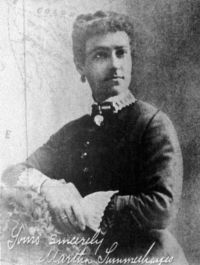
Martha Summerhayes,
Vanished Arizona: Recollections of the Army Life by a New England Woman
“ The roads had now become so difficult that our wagon-train could not move as fast as the lighter vehicles or the troops. Sometimes at a critical place in the road, where the ascent was not only dangerous, but doubtful, or there was, perhaps, a sharp turn, the ambulances waited to see the wagons safely over the pass. Each wagon had its six mules; each ambulance had also its quota of six. ”
George Gallie Nasmith, On the Fringe of the Great Fight
“ From the field ambulance the sick and wounded are cleared by motor ambulance convoy to the casualty clearing station, or possibly in cases of tired or slightly shell-shocked officers and men, to the rest stations or convalescent hospitals, of which there are a number well behind the firing line.At the casualty clearing station the men are checked over, their wounds redressed, operations performed, and all the work done necessary to enable the men to be passed on to the base hospital by hospital train or barge. ”
Rheta Childe Dorr,
A soldier's mother in France
(1918)
“ From there to where I am now has been a series of more or less painful transfers through first aid posts, dressing stations and French hospitals, with a Red Cross train and a ninety kilometer ride in an ambulance. I don’t think you have ever known the joy of a ninety K. ride on the upper deck of a pitching [117] ambulance. It’s an experience. I appreciated the sensations of a pup with a tin can tied to his tail. ”
Mordaunt Hall, Some Naval Yarns
“ If the surgeon in charge of the train decides that he has a case which [56] should be hastened to a hospital he wires ahead, so that when he reaches that point the surgeon or the agent there is on hand with an ambulance to rush the patient to a local hospital.Where it is possible, red tape has been eliminated. The cots in which the patients are carried are sent with the patient from a hospital or ship, and the patient is only taken out when he arrives at the hospital of his destination. For the cot bearing the patient, the train surgeon receives in exchange a clean cot. ”
John R. Raynes, Engines and Men — Chapter XIX (1921)
“ Every company had its specially built ambulance trains, splendidly fitted as complete hospitals of eight wards, including isolation wards, to carry the wounded from Dover, Southampton, and Newhaven to the great military hospitals in all parts of the country. ”
Ernest Nathaniel Bennett,
With Methuen's Column on an Ambulance Train
“ I have already spoken of the risks incurred by stretcher-bearers and ambulance waggons which approach close to the firing line. Wounded men have told me again and again that the Boers at Magersfontein did not fire wilfully on our ambulance waggons, except when our troops got behind them in their retreat. Moreover, excitable people in England, who greedily swallow any story about such alleged occurrences, have probably the vaguest idea of what a modern battle-field looks like, and of the enormous area now covered by military operations. ”
Various, History of Ambulance Company Number 139
“ About 11 P. M. the column was formed and began to move on the long and never-to-be-forgotten hike to Benney. Ambulance Company 139 was the last marching company, with Ambulance Company 140 bringing up the rear. The orders were no lights, and only men tagged sick would be allowed to ride in the twelve mule ambulances.Major Salisbury was in command of the train, and at 1 A. M. ordered a halt of two hours. Some of the men unrolled their packs and wrapped themselves in their blankets, while others laid down in the mud and managed to get a little sleep, covered only by their raincoats. ”
Ernest Nathaniel Bennett,
With Methuen's Column on an Ambulance Train
“ It is no easy task in the dark or in a fading light to find the khaki-clad figures lying prone upon the brown sand. But when the wounded are discovered the ambulance man finds out as quickly as he can the position and nature of the wound, and a "first aid" bandage or a rough splint is applied. ”
Ernest Nathaniel Bennett,
With Methuen's Column on an Ambulance Train
“ Train after train lumbered by with stores and guns and ammunition for the front, the whole of this enormous traffic being run on a single line of rails. Amongst the most troublesome items to deal with were the mules. Sometimes a mule would suddenly produce a violent uproar in a waggon by beginning to kick, his hoof against every mule and every mule's hoof against him. Even if these beasties were taken out of the waggon to be watered their behaviour was unseemly. A soldier would with infinite patience marshal the mules in line with himself, their halters all tied together. ”
Charles Edward Ryan, With an Ambulance During the Franco-German War
“ At six o'clock next morning Dr. Sherwell and I were at the Railway Station, where we found that a train full of wounded was to be put under our charge as far as Corbeil. Our way of getting on was a novel one, for we were to be drawn by horses the whole distance. After much confusion and waiting we started. The entire train was composed of goods trucks, in which the wounded were laid on straw, using their rugs to cover them. There were many officers among them who took pot luck with the men, for there was no special accommodation. ”
Ernest Nathaniel Bennett,
With Methuen's Column on an Ambulance Train
“ It may be extremely difficult to see a small white or Red Cross flag a long way off. At Ladysmith, e.g., one of our guns put a shell clean through a Boer ambulance, and Sir George White, of course, at once sent an apology for the mistake. If mistakes occur on one side they may occur on the other. Reuter's agent at Frere Camp reports on 4th December:—"After the evacuation of Dundee the Boers shelled the hospital and the ambulance until the white flag was hoisted, when their firing ceased. ”
Ernest Nathaniel Bennett,
With Methuen's Column on an Ambulance Train
“ The hail of bullets comes whistling along—ispt, ispt, ispt—and everywhere little jets of sand are spurting up. Can we wonder if now and then a stretcher-bearer is struck down? To put the case frankly—he is doing a brave work, but he has no business to be where he is. It is easy to see why the usages of war do not permit the presence of ambulance men in the firing line. Quite apart from the serious losses incurred by so valuable a corps, advantage might be taken by an unscrupulous enemy to bring up ammunition under cover of the Red Cross. ”
Various, History of Ambulance Company Number 139
“ All were in gay spirits as they hurried here and there, gathering together the miscellaneous articles and other things, which make up a soldier's equipment. Packs were rolled, the camp tidied up, and our overseas boxes loaded on trucks. At last after everything was ready we fell in line and marched across the camp, to the train that would carry us to the ferry. The old world seemed to hold a different meaning for everyone that morning. We were about to step into the greatest adventure of our lives, and one that would never be forgotten. ”
Various, History of Ambulance Company Number 139
“ That is, there were about seventy of the company to go to Camp Funston, for the company was separated at Camp Stuart, and each man was sent to the demobilization camp nearest his home. The homes of many of our replacements were in the East. The trip across the states in that fast American train was an enjoyable one, especially so because of the reception given us by the people at the cities where we stopped. At each large city a Red Cross canteen entertained us with homemade sandwiches, coffee and pie. ”
Various, History of Ambulance Company Number 139
“ Arriving at La Haussiere about 1 P. M., the sanitary train boarded the box cars. A previous train carrying troops on this route had been attacked by Boche airplanes, so we had machine guns mounted on a flat car to be prepared for any which might attack us. Fortunately, or unfortunately, we saw none and so missed what would have been an interesting experience.The destination of this trip was to be Benney. The trucks carrying the kitchen and supplies went overland, and the intention was that there should be a hot supper waiting for us on our arrival. ”
Ernest Alfred Vizetelly, My Days of Adventure
“ Vivent les Américains!" resounding upon every side.The train by which the ambulance quitted Paris did not start until a very late hour in the evening. Prior to its departure most of us dined at a restaurant near the railway-station. No little champagne was consumed at this repast, and, unaccustomed as I was to the sparkling wine of the Marne, it got, I fear, slightly into my head. However, my services as interpreter were requisitioned more than once by some members of the ambulance in connection with certain inquiries which they wished to make of the railway officials ”
Edwin A. Pratt,
The Rise of Rail-Power in War and Conquest…
“ Permanent hospital trains, specially constructed for the purpose; (2) temporary hospital trains, made up either entirely of converted ordinary vehicles or partly of converted and partly of specially-constructed [97] rolling stock, their use for this purpose continuing for the duration of the war; (3) ambulance trains improvised at railhead out of rolling stock bringing troops, supplies and stores to the front, the internal fittings for "lying-down" cases being of such a kind that they can be readily fixed or dismantled ”
Charles Edward Ryan, With an Ambulance During the Franco-German War
“ When, therefore, the negro heard that his master had joined the Ambulance, although he had a good salary as courier in an American Bank in Paris, he packed up his traps, and, without saying a word, landed himself into the train by which we arrived at Sedan. He was a wonderful cook, and knew how to serve up horseflesh soup and steaks so as to defy detection. He was also a wit of quite a brilliant type, a great rider and judge of horses, and as a liar beat all records. ”