Amniote

Definition and stakes

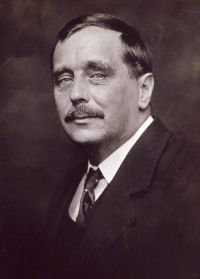
Portrait of Ernst Haeckel Ernst Haeckel,  The Riddle of the Universe at the close of the nineteenth century

“ Usually this has an important part to play for a long time as the respiratory organ of the embryo, a number of large blood-vessels spreading out over its inner surface. The formation of the membranes, the amnion and the serolemma, and of the allantois, is just the same, and is effected by the same complicated process of growth, in man as in all the other amniotes; man is a true amniote. ”
Source: Gutenberg

Portrait of Ernst Haeckel Ernst Haeckel,  The Evolution of Man

“ At a very early stage we notice in the embryo of man and the other amniotes, at each side of the head, the remarkable and important structures which we call the gill-arches and gill-clefts (Figs. 167–170 f) . They belong to the characteristic and inalienable organs of the amniote-embryo, and are found always in the same spot and with the same arrangement and structure. There are formed to the right and left in the lateral wall of the fore-gut cavity, in its foremost part, first a pair and then several pairs of sac-shaped inlets, that pierce the whole thickness of the lateral wall of the head. ”
Source: Gutenberg

Portrait of Ernst Haeckel Ernst Haeckel,  The Riddle of the Universe at the close of the nineteenth century

“ I. Embryonic Psychogeny.—The human fœtus, or embryo, normally takes nine months (or two hundred and seventy days) to develop in the uterus. During this time it is entirely cut off from the outer world, and protected, not only by the thick muscular wall of the womb, but also by the special fœtal membranes (embryolemmata) which are common to all the three higher classes of vertebrates—reptiles, birds, and mammals. In all the classes of amniotes these membranes (the amnion and the serolemma) develop in just the same fashion. ”
Source: Gutenberg

Get perspective with Kwize: daily news enlightened by great literature