Artillery barrages

Definition and stakes

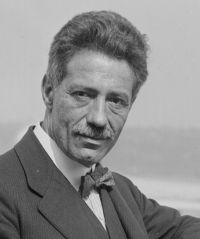
Portrait of Frederick Palmer Frederick Palmer,  Our Greatest Battle (The Meuse-Argonne…

“ If ever infantry needed powerful barrages to protect its swift charges, it was on the morning of the 9th. Any failure to go home at any point might be fatal to the whole movement. As supple as the enemy, the 1st was using roving, or tramp, guns to counter his roving guns. The remainder of the divisional artillery was entirely concentrated in making shields in turn for the right, left, and center, which advanced successively instead of at the same time. ”
Source: Gutenberg

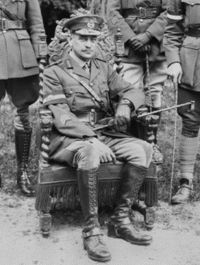
Portrait of Sir John Monash Sir John Monash,  The Australian Victories in France in 1918

“ A great illumination lights up the Eastern horizon; and instantly the whole complex organization, extending far back to areas almost beyond earshot of the guns, begins to move forward; every man, every unit, every vehicle and every Tank on their appointed tasks and to their designated goals; sweeping onward relentlessly and irresistibly. Viewed from a high vantage point and in the glimmer of the breaking day, a great Artillery barrage surely surpasses in dynamic splendour any other manifestation of collective human effort. ”
Source: Gutenberg

Cyril Falls,  The History of the 36th (Ulster…

“ If both could not be accomplished, the artillery covering the front of assault should be strengthened at the expense of counter-battery groups. The creeping barrage, he suggested, might be slightly reduced to one 18-pounder per twenty-five yards, and augmented by a sweeping barrage, concentrated to cover about ten yards a gun, each group sweeping right and left along the front allotted to it, with a higher burst and greater searching effect upon shell-holes. The pace of the creeping barrage must be reduced, and there must be more frequent pauses. ”
Source: Gutenberg

Get perspective with Kwize: daily news enlightened by great literature