Astronomical distance

Definition and stakes

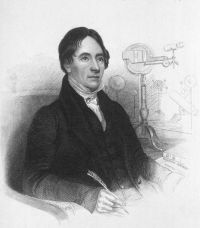
Portrait of Robert Stawell Ball Robert Stawell Ball,  In the High Heavens (1910)

“ Latitude is, in fact, at every moment employed as an important factor in many astronomical determinations: to take one of the most simple cases, suppose that we are finding the place of a planet, we deduce its position by measuring its zenith distance, and then to obtain the declination the latitude of the observatory has, of course, to be considered. Now, astronomers have hitherto been in the habit of accepting the determination of their latitude which has been established by a protracted series of observations, and treating it as if it were a constant. ”

Source: Wikisource

J. Ellard Gore,  Astronomical Curiosities: Facts and Fallacies

“ Their distance from the earth is therefore unknown, and perhaps likely to remain so for many years to come. It is possible that they may not be farther from us than some of the stars visible in their vicinity. On the other hand, they may lie far beyond them in space. But whatever their distance from the earth may be, it may be easily shown that their attraction on the sun is directly proportioned to their distance—that is, the greater their distance, the greater the attraction! ”
Source: Gutenberg

William George Hooper,  Aether and Gravitation

“ In making astronomical calculations, the distances of the planets are generally obtained by means of Kepler's Third Law, as the periodic time of the planet is a calculation that may be made by astronomers with great certainty, and when once the periodic times are found, and the mean distance of a planet, as our earth for example, is known, the mean distances of all the other planets in the solar system may soon be obtained. ”
Source: Gutenberg

Get perspective with Kwize: daily news enlightened by great literature