Battle axe

Definition and stakes

Florence Gay,  The Druidess: A Story for Boys and Others (1908)

“ Pipe, and harp, and clash of battle-axe accompanied the war-songs of the warriors as they rode past in the rain; prancing stallions often added their notes to the din. There was a continual glitter of sword, pike, and javelin; a glare of saffron robes and purple cloaks—woaded limbs and faces. Here and there bronze lance-heads and bronze axes showed themselves, mingled with primitive, leaf-shaped swords of bronze, stone hammers, and hide-covered shields of wicker. Horse and man bristled with tough yew-bows and sheaves of arrows ”
Source: Gutenberg

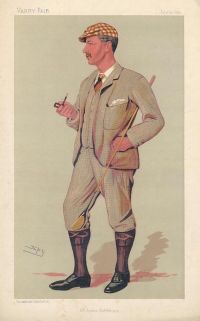
Portrait of Horace G. Hutchinson Horace G. Hutchinson,  The greatest story in the world…

“ The battle-axe was a very common weapon; and a short sword and a club, sometimes with a stone fixed in its head to give weight to the blow, are also shown. The long spear appears to have come into common use only gradually, and is not seen in the earliest pictures of the fighting, though we do see short spears, for throwing. ”
Source: Gutenberg

The Boy Mechanic, Volume 1: 700 Things for Boys to Do

“ In Fig. 10 is shown a Sclavonic horseman's battle-axe which has a handle of wood painted dark gray or light brown; the axe is of steel. The blade is cut from a piece of 1/4-in. wood with a keyhole saw. The round part is made thin and sharp on the edge. The thick hammer side of the axe is built up to the necessary thickness to cover the handle by gluing on pieces of wood the same thickness as used for the blade, and gradually shaping off to the middle of the axe by the use of a chisel, finishing with sandpaper and covering with tinfoil. ”
Source: Gutenberg

Get perspective with Kwize: daily news enlightened by great literature