Beacon (navigation)

Definition and stakes

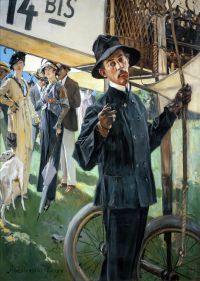
Portrait of Alberto Santos-Dumont Alberto Santos-Dumont,  My Airships (1904)

“ As my air-ship ploughed ahead the wind struck my face and fluttered my coat, as on the deck of a transatlantic liner, though in other respects it will be more accurate to liken aerial to river navigation with a steamboat. It is not like sail navigation, and all talk about "tacking " is meaningless. If there is any wind at all it is in a given direction, so that the analogy with a river current is complete. When there is no wind at all we may liken it to the navigation of a smooth lake or pond. ”
Source: Wikisource

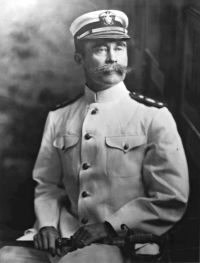
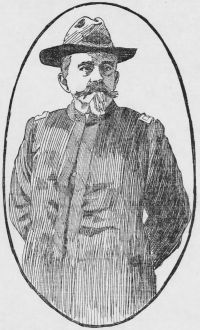
Portrait of John M. Bacon John M. Bacon,  The Dominion of the Air: The Story of Aerial Navigation

“ The physical exertion demanded of the mountaineer is entirely absent in the case of an aeronaut who is sailing at perfect ease in a free balloon. Moreover, it must be remembered that—a most important consideration—the aerial voyager, necessarily travelling with the wind, is unconscious, save at exceptional moments, of any breeze whatever, and it is a well-established fact that a degree of cold which might be insupportable when a breeze is stirring may be but little felt in dead calm. ”
Source: Gutenberg

Portrait of John M. Bacon John M. Bacon,  The Dominion of the Air: The Story of Aerial Navigation

“ We can picture the earliest sea voyager taking his first lesson astride of a log with one foot on the bottom, and thus proceeding by sure stages till he had built his coracle and learned to paddle it in shoal water. But the case was wholly different when the first frail air ship stood at her moorings with straining gear and fiercely burning furnace, and when the sky sailor knew that no course was left him but to dive boldly up into an element whence there was no stepping back, and separated from earth by a gulf which man instinctively dreads to look down upon. ”
Source: Gutenberg

Get perspective with Kwize: daily news enlightened by great literature