“ London was not London, life was not worth having, without Vauxhall. Like Mrs. Cornelys's masquerades and assemblies, Vauxhall was the great leveller of the eighteenth century. A man might be an earl or a prince: he would get no more enjoyment out of Vauxhall than a 'prentice who had a little money to spare. ”
Vauxhall
Definition and stakes
Vauxhall, a historic London pleasure garden, epitomized 18th-century social and cultural life, celebrated for its egalitarian charm and lively entertainments. Authors like Walter Besant highlighted its role as a "great leveller," where aristocrats and commoners mingled, while Max Schlesinger noted its enduring appeal despite modernization. J.
Ewing Ritchie critiqued its shallowness, contrasting it with life’s "stern reality," whereas Austin Dobson evoked its golden age, linking it to figures like Horace Walpole. Henry C. Shelley observed its decline as changing tastes rendered its attractions outdated. These varied perspectives underscore Vauxhall’s dual legacy: a symbol of fleeting enjoyment and a reflection of societal change.
Quotes about “Vauxhall”
Max Schlesinger, Saunterings in and about London
“ In this manner have the people of London of late months been invited to Vauxhall—to that same Vauxhall, which, under the Regency, attracted all the wealth, beauty, and fashion in England—which, to this very day, still attracts hundreds of thousands; whose good and ill fame has crossed the ocean. Even Vauxhall—the old and famous—makes no exception to the common lot; it is compelled to have its posters, its newspaper advertisements, and its advertising vans. ”
J. Ewing Ritchie, Here and There in London
“ If a man is to be known by the company he keeps, what are we to think of the habitués of Vauxhall? for after all life is, or ought to be, to us all a stern reality—a battle-field—a victory—not a pleasure garden, or a Vanity Fair; and even in London you may mix with better society than that of painted Traviatas or tipsy men. Smoking, dancing, drinking, is not all life; yet for such purposes Vauxhall solely exists. I much question, if London alone were concerned, so great is the rivalry in this particular style of amusement, whether Vauxhall would be a success ”
Austin Dobson,
Eighteenth Century Vignettes
“ But it was Vauxhall 'with a difference,' and the Vauxhall here intended is Vauxhall in its prime, between 1750 and 1790,—the Vauxhall of Horace Walpole and the 'Connoisseur,'—of Beau Tibbs and the pawnbroker's widow,—of Fielding's 'Amelia' and Fanny Burney's 'Evelina.' In 1750, the customary approach to this earthly paradise was still along that silent highway of the Thames over which, nearly forty years before, Sir Roger de Coverley and Mr. Spectator had been rowed by the wooden-legged waterman who had fought at La Hogue. There was, indeed, a bridge built or being built at Westminster ”
J. Ewing Ritchie, Here and There in London
“ Vauxhall is alive. At one time it was thought dead, and people affirmed the fact to be an evidence of the improved state of the metropolis. (Moralists are too prone to be thankful for small mercies.) Had the fact been so, the inference was a fallacy; but we need not trouble ourselves about that, as the fact is otherwise. It is a mistake to suppose that progress is made only in one direction. Vauxhall is associated with the fast life of centuries. ”
Karl Philipp Moritz,
Travels in England in 1782
“ He is married to an amiable Englishwoman. I wish him all possible happiness. And now let me tell you something of the so often imitated, but perhaps inimitableVauxhall.I yesterday visited Vauxhall for the first time. I had not far to go from my lodgings, in the Adelphi Buildings, to Westminster Bridge, where you always find a great number of boats on the Thames, which are ready on the least signal to serve those who will pay them a shilling or sixpence, or according to the distance. ”
William Dean Howells,
London Films
“ It may be nearer or farther, as related to one's own abode, but it has not the positive remoteness from the great centres, by force of which, for instance, Waterloo seems in a peripheral whirl of non-arrival, and Vauxhall lost somewhere in a rude borderland, and King's Cross bewildered in a roar of tormented streets beyond darkest Bloomsbury. ”
Henry C. Shelley, Inns and Taverns of Old London
“ As has been seen in an earlier chapter, the great prototype of the pleasure gardens of old London, Vauxhall, outlived all its competitors for half a century. But upon even that favourite resort the changing manners of a new time had fatal effect. As knowledge grew and taste became more diversified, it became less and less easy to cater for the amusement of the many. ”
Austin Dobson,
Horace Walpole: A memoir
“ Among the occurrences of 1742 which find fitting record in the correspondence, is the opening of that formidable rival to Vauxhall, Ranelagh Gardens. All through the spring the great Rotunda, with its encircling tiers of galleries and supper-boxes,—the coup d'œil of which Johnson thought was the finest thing he had ever seen,—had been rising slowly at the side of Chelsea Hospital. In April it was practically completed, and almost ready for visitors. Walpole, of course, breakfasts there, like the rest of the beau monde. ”
Arthur Edgar Wroth, The London pleasure gardens of the eighteenth century (1896)
“ There were sometimes scenes and affrays in the gardens, and Vauxhall and Cuper’s were favourite hunting-grounds of the London pickpocket. At the opening Ridotto at Vauxhall (1732) a man stole fifty guineas from a masquerader, but here the watchman was equal to the occasion, and “the rogue was taken in the fact.” At Cuper’s on a firework night a pickpocket or two might be caught, but it was ten to one that they would be rescued on their way to justice by their confederates in St. George’s Fields. ”
Henry C. Shelley, Inns and Taverns of Old London
“ The building and disposition of the gardens cost sixteen thousand pounds. Twice a week there are to be ridottos at guinea tickets, for which you are to have a supper and music. I was there last night, but did not feel the joy of it. Vauxhall is a little better, for the garden is pleasanter, and one goes by water." In time, however, Walpole was converted to the superior attractions of the new resort. Two years later he confessed that he went every night to Ranelagh, that it had totally beaten Vauxhall, and that it had the patronage of everybody who was anybody. ”
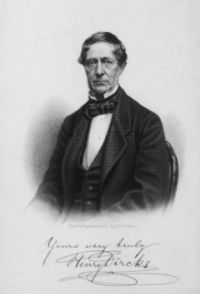
Henry Dircks,
The Life, Times, and Scientific Labours of the Second Marquis of Worcester
“ Vauxhall, as it is now called, was variously designated Fox-hall, Faukeshall, Fulke’s Hall, corruptions of a derivation from Fulke de Breauté, who built a mansion in the manor of South Lambeth, long known as Fulke’s-hall. [94] In 1652, the Parliament having determined that Vauxhall-house, which had been reserved by a former order, should be sold, it was purchased by John Trenchard of Westminster. After the Restoration it was leased to Henry Lord Moore, afterwards Earl of Drogheda, together with the demesne lands of Kennington for 31 years ”
Frank E. Smedley, Mirth and metre (1855)
“ Thou shalt hear his feigned ecstatics, thou shalt hear his curses deep: Let them fall on gay Vauxhall, that scene to me of deepest woe,But—the waiters are departing, and perhaps I’d better go! Such is the noble ballad of Vauxhall! but Rivers was master of all styles. The following exquisite picture of the joys and sorrows of modern domestic life presents an example of that happy blending [99] of the real and the romantic with which the head of Rivers overflowed. ”
William Le Queux,
The Golden Face: A Great 'Crook' Romance
“ About a month passed uneventfully, save that I spent many delightful hours in Lola’s company. Her father had purchased another two-seater car—a “sports model” Vauxhall—and on several occasions I took him for runs in it about Yorkshire. Naturally he knew little about cars himself, but relied upon my knowledge and judgment. In addition to the Rolls and the Vauxhall I also had an “Indian” motor-cycle for my own personal use, and found it very useful in going on certain rapid missions to York and elsewhere. ”
Joseph Grego, Rowlandson the Caricaturist; a Selection from His Works…
“ A farewell incident of Vauxhall, and we will leave for good the precincts memorable in the history of the past. This time we are carried to the rendezvous with Angelo and his friends in company with the most incorrigible blades of the town.'Lord Barrymore's fondness for eccentricities ever engaged his mind. Whether in London or Wargrave 'twas all the same—always in high spirits, thinking of what fun he should have during the day. Seated, after dinner, at eleven o'clock, on one of the hottest evenings in July, he proposed that the whole party should go to Vauxhall. ”
Henry C. Shelley, Inns and Taverns of Old London
“ The vocalists included Sophia Snow, afterwards as Mrs. Baddeley to become notorious for her beauty and frailty, and Thomas Lowe, the one-time favourite of Vauxhall, whose financial failure at Marylebone made him thankful to accept an engagement at this more lowly resort. But Finch's Grotto Gardens were not destined to a long life. Perhaps they were too near Vauxhall to succeed; perhaps the policy, of engaging had-been favourites was as little likely to bring prosperity in the eighteenth as in the twentieth century. ”
Max Schlesinger, Saunterings in and about London
“ The entrance to Vauxhall is dismally dark and prison-like. Dr. Keif objects to the place.“It’s a trap,” says he; “the real road to ruin! I am sure the Chevalier Bunsen and that fellow Buol-Schauenstein lie in ambush in some of those dark holes; they will pounce upon me, and seize me, and take me back to Germany, where they have no brown stout, and where I must needs get famous, or die with ennui. Lasciate ogni speranza, voi che entrate!”Just at that moment a German refugee goes by. He bids us good evening, and is lost in the darkness. ”
Arthur Freeling, The Grand Junction Railway Companion to Liverpool… (1837)
“ The public amusements in this town are not on a very extensive scale, nor indeed are they much patronised. The Theatre is a handsome erection, situated in New-street, opposite the Post-office. Vauxhal Gardens are at Vauxhall, near the Birmingham and Liverpool Railway Station, and are open in the summer months. ”
Arthur Edgar Wroth, The London pleasure gardens of the eighteenth century (1896)
“ Vauxhall, Marylebone, Cuper’s, and Ranelagh often numbered among their frequenters people of rank and fashion, who subscribed for season-tickets, but (with the possible exception of Ranelagh) were by no means exclusive or select. The Tea-gardens, and, as a rule, the Wells, had an aristocracy of aldermen and merchants, young ensigns and templars, and were the chosen resorts of the prentice, the sempstress, and the small shop-keeper. ”
Max Schlesinger, Saunterings in and about London
“ Englishmen care more for live horses than they do for pasteboard chargers, fraught though they be with national reminiscences.The productions of horsemanship at Vauxhall are exactly on a par with similar exhibitions on the other side of the Channel. Britons are more at home on horseback, or on board a ship, than on the strings of the fiddle, or on the ivory keys of the pianoforte. And thus, then, do the men and women dance on unsaddled horses, play with balls and knives, and jump through paper and over boards; half a dozen of old and young clowns distort their joints ”
“ Situated in such a neighborhood as this, Vauxhall Walk gains by comparison, and establishes claims to respectability which no impartial observation can fail to recognize. A large proportion of the Walk is still composed of private houses. In the scattered situations where shops appear, those shops are not besieged by the crowds of more populous thoroughfares. Commerce is not turbulent, nor is the public consumer besieged by loud invitations to “buy.” Bird-fanciers have sought the congenial tranquillity of the scene; and pigeons coo, and canaries twitter, in Vauxhall Walk. ”
Henry C. Shelley, Inns and Taverns of Old London
“ It's a pity," he added, "so good a piece of ground is no better employed;" but, apart from two or three places of that character, his al fresco amusements were exceedingly limited. It should not be forgotten, however, that the ale-houses of those days frequently had a plot of land attached to them, wherein a game of bowls might be enjoyed.But the object-lesson of Vauxhall changed all that. From the date when that resort passed into the energetic management of Jonathan Tyers, smaller pleasure gardens sprang into existence all over London. ”
“ Some day, he said to himself, he would in this way overlook Great Britain—would have her statistics at his finger-ends, would change here, confirm there, guide everywhere. In the meantime he satisfied himself with this section. He knew what was going on in workmen's clubs, in places of amusement, in the market streets. There is a pleasure in surveying from a height the doing and driving of ordinary mortals; a member for Vauxhall studying his borough in this spirit naturally comes to feel himself a sort of Grand Duke. It was one o'clock. ”
William Hone,
The Every-day Book and Table Book…
“ Postponing a few particulars of this visitation of Vauxhall by “The Ærial” for a minute or two, we proceed to state that he declares himself “an Adonis;” that to glad the eyes of artists with a view of his uncommon person, he condescended to leave the good town of Manchester by the common stage coach, and that assuming the disguise of common dress, like Apollo in “Midas” after expulsion from the celestials, he arrived in London on the day of June. ”
Arthur Edgar Wroth, The London pleasure gardens of the eighteenth century (1896)
“ He was succeeded at Vauxhall by his two sons, Thomas and Jonathan. ‘Tom’ Tyers, as he was called by Dr. Johnson, with whom he was a favourite, had been bred to the law, but he was too eccentric and vivacious to confine himself to practice. “He, therefore (says Boswell) , ran about the world with a pleasant carelessness,” amusing everybody by his desultory talk and abundance of anecdote. He furnished many songs for the gardens, but in 1785, sold his interest to his brother Jonathan’s family. Jonathan was manager of Vauxhall from 1785 till his death in 1792. ”
Henry C. Shelley, Inns and Taverns of Old London
“ This was the poet Gray, who, three years after the resort was opened declared that he had no intention of following the crowd to Ranelagh."I have never been at Ranelagh Gardens since they were opened," is his confession to a friend. "They do not succeed: people see it once, or twice, and so they go to Vauxhall." ”
Thomas Babington Macaulay,
The History of England from the Accession of James II…
“ At every town along the road the trainbands of the neighbourhood had been mustered under the command of the principal gentry. The march lasted three days, and terminated at Vauxhall, where a regiment, commanded by George Legge, Lord Dartmouth, was in readiness to receive the prisoners. They were put on board of a state barge, and carried down the river to Whitehall Stairs. ”
Sir Arthur Helps,
The Claims of Labour: An essay on the duties of the employers to the employed
“ Vauxhall Ward is where the greater number of inhabitants dwell in cellars. Well may Dr. Duncan, in commenting on this difference of mortality in Vauxhall Ward and Rodney Street, declare that it is a fact “sufficient p. 191to arouse the attention and stimulate the exertions of the most indifferent.” ”
R. Austin Freeman, The Mystery of 31 New Inn
“ Arrived at Vauxhall Station, we alighted and forthwith made our way to the bridge that spans Upper Kennington Lane near its junction with Harleyford Road. "Here is our starting point," said Thorndyke. "From this place to the house is about three hundred yards—say four hundred and twenty paces—and at about two hundred paces we ought to reach our patch of new road-metal. Now, are you ready? If we keep step we shall average our stride." ”
W. Harrison Bayles, Old Taverns of New York
“ Joseph Delacroix informed his friends and the public in general that on Monday, July 5th, the anniversary of American Independence would be celebrated at Vauxhall with great splendor, surpassing everything ever yet exhibited in America. A beautiful drawing of the Triumphal Car which was to take part in the spectacular scene could be seen at the Tontine Coffee House. [Pg 401] Doors open at four o’clock. Tickets, four shillings. Grand illuminations and transparencies were promised at the Columbian Garden, in State Street, opposite the Battery. ”
Charles Dickens,
Household words no. 304
“ They seemed to be good-natured and humane; but still there is a sort of ignorance about them with regard to the rest of the world, and their conversation runs in a very narrow channel. They speak with a great relish of their public places, and say, with a sort of flutter, that they shall go to Vauxhall and Ranelagh, but do not seem to enjoy it when there. As for Vauxhall and Ranelagh, I wrote my opinion of them before. ”
Arthur Edgar Wroth, The London pleasure gardens of the eighteenth century (1896)
“ At Vauxhall fireworks were not introduced till 1798, but illuminations were always a feature of the gardens. [6] Bermondsey Spa and Finch’s Grotto, above mentioned, might be classed among the spas and springs, but their amusements resembled those of Vauxhall. [7] Islington Wells, a song of all the virtues of those old waters newly found out. London, 1684 (Brit. Mus.) , cp. A morning ramble; or Islington Wells burlesqt. London, 1684 (Cunningham, London, 1850, s.v. “Islington”) . [8] London Gazette, 24 September, 1685. [9] Nearly all modern writers—Mr. ”