“ In America, the foot of a cutter’s mainsail is invariably laced to the boom. There is some prejudice in this country against this method, so far as sea-going boats are concerned. There can be no doubt that a sail sets flatter when its foot is laced, and another great advantage gained is that a much lighter boom can be employed; for the lacing divides the strain throughout the whole length of the boom, instead of concentrating it at the two extremities. The buckling or bending of a boom is also much lessened by this method, and consequently the sail is flatter in a strong wind. ”
Boom (sailing)
Definition and stakes
The theme of “boom (sailing)” has been addressed by authors such as A. J. Kenealy, Thomas Fleming Day, W. H. Smyth, Douglas Frazar and Joan Lowell. It is often associated with terms like sail, wind, mast, yacht and rope.
Quotes about “boom (sailing)”
“ The rigs we have so far described are well adapted for a novice, insomuch as they need no booms. As soon as a sail is provided with a boom the danger of sailing is much increased. If you let go the sheet of a sail that has no boom—a spritsail, for instance—it flaps away from the mast innocently like a flag. Put a boom on it, and you at once have a great surface of canvas extended rigidly and offering the greatest possible resistance to the wind. ”
“ The fact of the tack being some way down the boom prevents the pressure of the wind from lifting the after-end of the boom and so forming a belly in the sail, as is the case with the ordinary fore-and-aft sail. A balance-lug sail is always rigid; the boom and yard can only move together, and this rigidity renders it somewhat unfit for rough water, where it is apt to considerably strain mast and boat. ”
“ Thus a green hand or a careless person cannot be safely trusted with a boom sail on a squally day; but when the novice has acquired the rudiments of sailing, and employs that constant caution and watchfulness of his ever-open weather-eye which are indispensable qualities for a sailor, he will most certainly, and very rightly too, prefer the boom sail. For a sail that has no boom is most unsatisfactory if one wishes to get any speed out of a boat. When running free it curves into a bag, and only presents half its area to the wind. ”
A. J. Kenealy, Boat Sailing in Fair Weather and Foul…
“ For instance, the mast can be so stayed as to be perfectly secure. There is also no reason why the boom should project so far over the stern as to trip, and in this connection I should like to ask of what use is a topping lift unless one avails himself of it in just such an emergency? A man should always keep the boom well topped up when running before the wind in a seaway, and by this means he may avoid much trouble and possibly peril. ”
Thomas Fleming Day, On Yacht Sailing
“ Before shaking out a reef, if you have a topping lift fitted pull up on that so as to take the weight of the boom off the sail. If the air is damp, or rain or spray knocking about, don’t haul the sail out very taut or tie the points down hard, as the wet will cause the rope and canvas to shrink and strain the sail out of shape. Never leave reefs tied in sail when stowed, as the canvas will mildew and rot.Jibing is the operation of passing a boom sail over from one side of the boat to the other when sailing off the wind. ”
Douglas Frazar, Practical Boat-Sailing: A Concise and Simple Treatise
“ When on top of a sea, and all the sails full, the yacht will go fast: when she attempts to bury her head, and kick up her heels, and becalms the jib and lower part of the mainsail, she will go slower. There is one thing to be guarded against in running before the wind, and that is the "jibing" of the main-boom; that is to say, the wind getting on the forward part of the sail, from any cause,—whether by change of wind, or on account of bad steering,—and carrying it violently over to the other side, endangering the yacht, and with a liability, in heavy weather, of carrying away the mast. ”
Thomas Fleming Day, On Yacht Sailing
“ The first and easiest way, which can be performed when the boat is at anchor or lying to a dock, is to hoist the sail up until the reef band is as high as the boom; then take the tack and pass the ends round the boom, pass the ends back again through the cringle several times, if it will go, and then tie hard. Having the tack fast, haul out on the pendant, which should be rove through a beehole or cheek block on the boom; pull on this until the sail’s foot is out taut, but do not pull until the cloth is strained. When the foot is out taut make the pendant fast ”
 Mayne Reid,
The Ocean Waifs: A Story of Adventure on Land and Sea
“ At the worst, their chances of being picked up would be quite as good while sailing with the wind, as if they allowed themselves to lie adrift upon the ocean.Fortunately the materials for both mast and sail were on hand, and in abundance. They had found the “spanker” of the Pandora floating about, with its boom and all the cordage attached. By using the boom as a mast, and another smaller spar as a boom, they could rig up such a sail as would carry the Catamaran through the water with considerable velocity. ”
Douglas Frazar, Practical Boat-Sailing: A Concise and Simple Treatise
“ Some yachts haul aft the main-boom closer than others, being enabled to do so on account of their build and model; and the closer the boom can [42] be brought to the line of the keel, and the yacht still kept advancing, the nearer the wind she will be said to sail, and will "hold a good wind," as it is called. And this is, of course, a desideratum in beating to windward, or against the wind at an angle to it; for the yacht that makes the angle least between itself and the direction of the wind will, other things being equal, arrive the quickest at its destination ”
William Scoresby, The northern whale-fishery (1849)
“ Boom-courses are not only convenient in tacking, but are likewise a valuable acquisition when sailing among crowded dangerous ice. As the safety of the ship depends, next to the skilfulness of the piloting officer, on a prompt management of the yards and sails, boom-courses are strikingly useful on account of the little attention they require when any alteration in the position of the sails becomes necessary ”
A. J. Kenealy, Boat Sailing in Fair Weather and Foul…
“ Then you can man the throat and peak halyards and set the sail, trimming the sheet well down.If you should have the misfortune to carry away the main boom, and you have no trysail on board, lower away the sail, unlace it from the boom, close-reef it, and set it with a luff-tackle for a sheet. When about to set the storm trysail and your vessel is yawl rigged, set the storm mizzen. It will keep her head up to the sea while the sails are being shifted. In a cutter, heave to by hauling the fore sheet to windward, keeping the jib full. Shifting jibs in heavy weather in a cutter requires care. ”
Douglas Frazar, Practical Boat-Sailing: A Concise and Simple Treatise
“ When the wind is favorable, and the yacht will lay her course without having to beat towards her destination at an angle against the head wind, as in close-hauled, then the sails are arranged in a different manner; and the main-boom is swung out over the side in just such proportion as the wind may be free, till completely out, so as to hang at right angles with the keel, when the wind is dead aft. ”
“ The Una boat is not easily capsized—the beam prevents that—but she soon becomes altogether overpowered by sea and wind. Like all flat-bottomed boats, she pounds heavily into a head sea and is very wet. The weight of the mast, being so far forward, makes her somewhat liable to run her nose under water and fill. She steers wildly too before a sea, and will broach to more readily than other boats, while the length of her boom renders an accidental jibe dangerous. ”
A. J. Kenealy, Boat Sailing in Fair Weather and Foul…
“ Sometimes the luff is laced to the mast, but it is better that it should be seized to hoops, as shown in Fig. 4. If a boom is used a larger sail can be carried, but it should be only a light spar and the foot of the sail should be laced to it. The boom may be fitted with a topping lift and the sheet be rove as shown in the illustration. In a small open boat no stays are necessary for the mast, but the jib halyards should be belayed to a cleat on one gunwale of the boat and the main halyards on the other, so as to afford support to the mast. ”
 E. Keble Chatterton,
Sailing ships
(1909)
“ The final stage comes later when a boom is added, and that, too, may be traced for its origin to the Dutch fore-and-afters, which, discarding the sprit extending diagonally across the mainsail, added a tiny gaff and a much longer boom, the sail being loose-footed. Instead of the long bowsprit of the early Stuarts, the middle of the eighteenth century saw this mast-like projection cut into two pieces, so as to make bowsprit and jib-boom. Topgallants now become far more frequently used. ”
A. J. Kenealy, Boat Sailing in Fair Weather and Foul…
“ In scudding before a strong wind and a heavy sea in a small craft, a trysail is always preferable to a sail with a boom, which may effect much mischief by trailing in the water or suddenly gybing. The helmsman must be always on the alert to prevent the boat from "broaching to," which means flying up in the wind ”
Frank Thomas Bullen, The Log of a Sea-Waif: Being Recollections of the First Four Years of My Sea Life
“ They are set by means of booms, which slide along in two hoops screwed into bands on the yards. These booms vary in size, of course, with the ship, and also with the height at which they are carried; but even a top-gallant stun'sail-boom, the size of an average scaffold-pole, which has to be rigged out by one man, or even a boy, is a quite heavy enough piece of timber to have loose on your hands, or hand (since you must hold on) , while swaying on a footrope some eighty or ninety feet above the deck. ”
 William Falconer,
An Universal Dictionary of the Marine
“ In order to understand this operation more clearly, it is necessary to remark, that by a boom-sail is meant any sail whose bottom is extended by a boom, the fore-end of which is hooked to its respective mast, so as to swing occasionally on either side of the vessel, describing an arch, of which the mast will be the center. As the wind or the course changes, it also becomes frequently necessary to change the position of the boom, together with its sail, which is accordingly shifted to the other side of the vessel as a door turns upon its hinges. ”
Various, Harper's Young People, May 17, 1881
“ No good boat will capsize unless the sails are confined by the sheets. The position of the boom trims the mainsail, and this is done by the action of the main-sheet, the boom being regulated in accordance with the direction of the wind, and the condition of the sea. ”
 William Clark Russell,
An Ocean Tragedy
“ The wind was well abaft the starboard beam; the great main boom overhung the port quarter; the white sail rose wan to the moonshine with a large gaff topsail above it—for those were the days of gaffs—dimming into a space of airy faintness to the masthead, above the white button of whose truck you caught the icy gleam of a metal vane as though it was a piece of meteoric scoring under the dust of the stars that hovered in the velvet gloom like a sheet of undulating silver glooming out into hollows in places. Light as the breeze was, and following us besides, it held the canvas asleep ”
Battling with waves and lawyers (1895)
“ Above the gaff the wind has boundless space to fly to; while beneath the boom the exit space is confined to the small area between the boom and the ship’s deck. Anyone who has ever been half way out on a ship’s gaff—as I have been many a time—when a trysail was set could not fail to feel the wind blowing him up from below, and pretty strongly too. On the other hand, a ship lying over with a big wooden awning on her poop, the wind, being abeam, would enter on the upper or weather side, and must rush through to leeward or downward, thus having a powerfully depressing effect upon the ship. ”
Naval Occasions, and Some Traits of the Sailor-man
“ Stumbling on to the forecastle, he slipped a life-belt over his shoulders, climbed the rail, and descended the ship's side by a steel ladder, until he reached the lower boom. It jutted out into the darkness, a round, dimly-discerned spar, and secured to it by a boat-rope at the farthest point of his vision, he saw his boat. The circular funnel-mouth ringed a smoky glow, and in the green glare of a side-light one of the bowmen was reaching for the ladder that hung from the boom. ”
Henry Cowling, From Lower Deck to Pulpit
“ The flying-boom is the furthermost pole projecting from the ship's bow, and the sail which is furled upon it is called the flying jib. Many narrow escapes had I on the flying-boom, having to cling to it for dear life when the ship dipped in the trough of the sea, causing me to be drenched through and through; then like a fearless bird she would rise quickly toward the sky, only to descend just as rapidly in the hollow of the next oncoming wave. Giddy, sick, and faint have I furled with my mate the flying jib, pinched with the cold and wet. ”
Julius R. Van Millingen, Peeps at Many Lands: Turkey
“ A long boom, attached obliquely to the mast, serves to support an enormous sail, which, when the boat is on the tack, bellies out to such a remarkable extent that it resembles the section of a balloon. ”
James Grant, Philip Rollo; or, the Scottish Musketeers…
“ While our vessels hauled up their courses, and swung round with their heads to the wind, the fireship, favoured by the obscurity which concealed her, and by a north-east wind, with all her sails and studding-sails set, ran right towards the boom, which closed the narrow Strait; for the promontory on which the town stands closes in the extremity of the outer harbour, and divides it from the inner fiörd. The boom itself was an enormous log of Memel timber, to which a number of masts, yards, and spars were lashed. ”
Thomas Fleming Day, On Yachts and Yacht Handling
“ You cannot expect a sail to sit properly and hold its draught on buckling spars. The lead of the sheet is such that the boom cannot be kept rigid, and just as soon as it blows its end turns up like a pugdog's tail, throwing the canvas all out of shape. Then the back-wind from the mainsail makes it impossible to keep the mizzen full unless it is sheeted very flat. ”
 Richard Henry Dana,
The Seaman's Friend
“ When the sail is in over the rail, lower away the inner halyards. If the booms are to be rigged in, cast off all the gear; making the bending end of the outhaul fast in-board, and unreeving the outer and inner halyards, or running the outer up to the pennant block, and the inner up to the yard block, with knots in their ends. Ease off the forward guy with a turn, haul in on the after guy, topping well up by the lift, and get the boom alongside. ”
 Frederick Marryat,
Frank Mildmay; Or, The Naval Officer
“ We came upon the boom with a horrid crash; he put the helm down, and laid her broadside to it. The force of the tide acting on the hull, and the wind upon the foresail, made her heel gunwale to, and it was with difficulty I could keep my legs; at this moment, the boat was very near being swamped alongside. They had shifted her astern, and there the tide had almost lifted her over the boom; by great exertion they got her clear, and lay upon their oars: the tide and the wind formed a bubbling short sea, which almost buried her. ”
 George Kennan,
Tent Life in Siberia
“ You can neither luff, nor spill the wind out of the sail by slackening off the sheet, nor put your boat in a position to take a heavy sea safely. The end of your long boom is liable to trip as you roll and wallow through the waves, and every time you rise on the crest of a big comber your rudder comes out of water, and your bow swings around until there is imminent danger of an accidental jibe. ”
 A. Hyatt Verrill,
The Book of the Sailboat: How to rig…
“ Topping lifts are ropes which lead from the masthead to the end of boom to support the latter when the sail is lowered and they are usually so arranged that they may be hauled up or let down to raise or lower or top the boom. Lazy jacks are light lines extending from the mast head, or near it, to the boom and are used to prevent the sail from falling or bagging loose when lowered. ”
A. Hyatt Verrill,
The Book of the Sailboat: How to rig…
“ If the boom has a tendency to jibe, to swing 75badly or to kick up, it often helps a great deal to bring down the side over which the boom swings, by placing passengers, cargo or ballast on that side. If you are using a centerboard boat the board should be hauled up when before the wind and many boats will sail better with a beam or quarter wind when the board is half up, but the only way to determine when the board should be partly up, fully up, or down is to experiment. ”
Related terms
Authors who wrote about “boom (sailing)”
A. J. KenealyThomas Fleming Day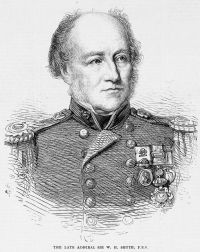 W. H. SmythDouglas Frazar
 Joan LowellRichard Henry DanaFrank Thomas BullenG. L. BlakeEarl Thomas Brassey BrasseyE. Keble ChattertonHawthorne Daniel
 David Binney PutnamVarious
 E. F. Knight
 Daniel Carter BeardWilliam FalconerA. Hyatt Verrill
 Jerome K. JeromeMayne ReidWilliam Scoresby
W. H. SmythDouglas FrazarJoan LowellRichard Henry DanaFrank Thomas BullenG. L. BlakeEarl Thomas Brassey BrasseyE. Keble ChattertonHawthorne DanielDavid Binney PutnamVariousE. F. KnightDaniel Carter BeardWilliam FalconerA. Hyatt VerrillJerome K. JeromeMayne ReidWilliam Scoresby