Brush (plant)

Definition and stakes

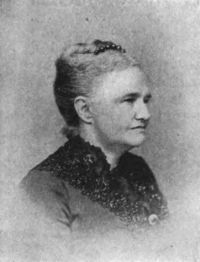
Ellen Miller,  Wild flowers of the north-eastern states (1895)

“ A few small bracts occur at the base of the flower-head, which droops on a small stem. The heads are arranged in little clusters springing from the angles of the branches and leaves.
As the flower-head matures, there may be found within its nodding cup a bunch of fine reddish hairs, like a sable paint brush,—later this opens into a downy seed tassel. The fine stalk gives the plant a distinguished appearance.
”
Source: Gutenberg

Anonymous,  The Vegetable Garden: What, When…

“ Brush.—The bushes should be cut as soon as the berries are fully colored, as the growth will be sufficiently matured so that no injury will be done the roots by removing the tops, thus avoiding a further drain upon the roots to mature the seed, and preventing the dropping of seed, followed by the springing up of innumerable young asparagus plants. ”
Source: Gutenberg

Portrait of Margaret Armstrong Margaret Armstrong,  Field Book of Western Wild Flowers

“ The leaves are smooth and thickish, bluish-green, with a "bloom," the lower ones with a few irregular, blunt teeth, or with wavy margins, and the flowers, which are the same shape and size as the last, are deep, bright pink, with a magenta line on each lobe and some white hairs on the lower lip. The filaments are purple, with whitish anthers, and the fifth stamen resembles a tiny brush, with yellow bristles on the upper side and pointing into the throat. The whole effect of the graceful flower-cluster is bright, beautiful, and conspicuous, growing among the rocks, on hillsides and in canyons. ”
Source: Gutenberg

Get perspective with Kwize: daily news enlightened by great literature