“ Then, as his bow sang taut a red-eyed fury, a giant of that wilderness, a bull moose, plunged head on, straight at him as he crouched for a shot.A bull moose, interrupted in his display of anger, is a terrible creature to behold. As the boy looked into his bloodshot eyes, as he took in at once his huge head, his broad spiked antlers, his powerful neck, he wondered about his chances for life, and in the flash of a second knew as never before what a glorious possession life was. ”
Bull moose
Definition and stakes
Quotes about “bull moose”
“ One of the slow migrations of the moose-folk, which take place only at intervals of many years, had set in. Drifting down from the Far North, scattered herds had invaded the old bear’s northernmost range. Like the witch-hazel, which blooms last of all the shrubs, the love-moon of the moose rises in the fall. The males of that folk take hardly the stress and strain of courtship. Bad-tempered at the best, a bull-moose is a devil unchained in September. As the hunter’s moon waxes in the frosty sky, he neither rests, eats, or sleeps, but wanders night and day through the woods in search of a mate. ”
Sir Charles G. D. Roberts, The Watchers of the Trails: A Book of Animal Life
“ Almost as smoothly as a mink slips from a rock the boy slipt down from his too conspicuous perch and crouched behind the fence. Peering between the rails he saw a tall, dark shape, with gigantic head, vast antlers, and portentous bulk of shoulder, step noiselessly from the thicket and stand motionless. With a heart that throbbed in mingled exultation and terror, the boy realized that he had called a bull-moose.Huge as seemed its stature to the boy's excited vision, the moose was in reality a young and rather small bull, who had been forced by stronger rivals to go unmated. ”
William T. Hornaday,
The Minds and Manners of Wild Animals…
“ The Moose is a weird-looking and uncanny monster, but he knows one line of strategy that is startling in its logic. Often when a bull moose is fleeing from a long stern chase,—always through wooded country,—he will turn aside, swing a wide semicircle backward, and then lie down for a rest close up to leeward of his trail. There he lies motionless and waits for man-made noises, or man scent; and when he senses either sign of his pursuer, he silently moves away in a new direction. ”
Edward William Nelson, Wild Animals of North America
“ Although taller than an ordinary horse, weighing more than half a ton, and adorned with wide-spreading antlers, the bull moose stalks with ghostly silence through thickset forests, where man can scarcely move without being betrayed by the loud crackling of dry twigs. ”
Sir Charles G. D. Roberts, The Watchers of the Trails: A Book of Animal Life
“ It was a sound of heavy, measured, muffled footfalls crushing the crisp snow. There was a bending and swishing of bare branches, a rattling as of twigs upon horn or ivory—and a huge bull moose [198] strode into view. With his splendid antlers laid far back he lifted his great, dilating nostrils, stared down the long, white lanelike open toward the rising sun, and sniffed the air inquiringly. Then he turned to browse on the aromatic twigs of the birch saplings. ”
Sir Charles G. D. Roberts, The Kindred of the Wild: A Book of Animal Life
“ The newcomer, who, for all his stout-heartedness, had viewed with concern the giant bulk of his foe, stopped short in his tracks and stared in bewilderment. So easy a victory as this was beyond his dreams,—even beyond his desires. However, a bull moose can be a philosopher on occasion, and this one was not going to quarrel with good luck. In high elation he strode on up the meadow, and set himself, not unsuccessfully, to wooing the deserted and disgusted cow. ”
William J. Long,
How animals talk
(1919)
“ I was once sitting on the shore of a lake at twilight, wholly intent on following the antics of a bull moose I had called into the open. He was on the other side of a small bay, ranging up and down, listening, threshing the bushes with his antlers, blowing his penny-trumpet at intervals,—in a dozen impatient ways showing what a young and foolish moose he was. A veteran would have kept to the cover till he had located what he came for. ”
Harold J. Brodrick, Wild Animals of Yellowstone National Park
“ The ugly face with its long nose, high and heavy shoulders and much smaller hindquarters, and the long legs all tend to make its appearance seem a caricature. But in spite of his size, appearance, and his mighty spread of antlers, the bull moose can, if he chooses, drift through the woodland as quiet as a mouse; then again he may give the sound effect of a herd of elephants on a stampede. ”
William T. Hornaday,
The Mentor: Game Animals of America…
“ The bull moose has under the throat a long strip of skin called a “bell.” In the adult male animal this bell is sometimes a foot in length The female moose has no antlers, and out of every thousand females only one has a bell.In captivity the moose is docile, and affectionate. They have even been trained to drive in harness. But owing to the peculiar nature of their digestive organs, they cannot live long upon ordinary grass or hay. Green grass is fatal to them.During the deep snows of winter moose herd together in sheltered spots in the forest. ”
Sir Charles G. D. Roberts, The Kindred of the Wild: A Book of Animal Life
“ After a high fashion of his own, seldom followed among the moose of the Tobique region, the king had rejoined his mate when she emerged from her spring retreat with a calf at her flank. He was too lordly in spirit to feel cast down or discrowned when his head was shorn of its great ornament; and he never felt the spring moroseness which drives most bull moose into seclusion. He always liked to keep his little herd together, was tolerant to the yearlings, [340] and even refrained from driving off the two-year-olds until their own aggressiveness made it necessary. ”
William T. Hornaday,
The Mentor: Game Animals of America…
“ BULL MOOSE Monograph Number Five in The Mentor Reading Course Imagine an animal standing between six and seven feet high at the shoulders, its legs four feet long, its neck and body covered with a heavy thatch of coarse, purplish gray hair, and its huge head crowned with massive antlers spreading from five to six feet in width! That is the moose (Alces americanus) . It is the largest animal of the deer family. The only way to appreciate a moose is to see an adult animal alive and full of strength, striding through the forests of Canada or Alaska. ”
Thierry Mallet, Plain Tales of the North
“ A Moose Story It never pays to take any liberties with a wild animal when one believes that the latter is at one’s mercy.In 1908 two Indians, when crossing a large lake in Northern Ontario in a small canoe, came across a big bull moose swimming from an island to the mainland.They needed the meat but preferred waiting until the animal was near land before shooting it. They accordingly decided to have some fun! The man at the bow found a rope, lassoed the moose by its antlers, then tied the other end of the rope to the front thwart. ”
Baron Robert Stephenson Smyth Baden-Powell Baden-Powell of Gilwell, Young Knights of the Empire : Their Code…
“ William Long, in his very interesting book called Beasts of the Field, describes how he once called a moose. The moose is a very huge kind of stag, with an ugly, bulging kind of nose. He lives in the forests of North America and Canada, and is very hard to get near; and is pretty dangerous when he is angry.Mr. Long was in a canoe fishing when he heard a moose bull calling in the forest—so just for fun he went ashore and cut a strip of bark off a birch tree and rolled it up so as to make a kind of megaphone, With this he proceeded to imitate the roaring grunt of the bull moose. ”
Sir Charles G. D. Roberts, The Watchers of the Trails: A Book of Animal Life
“ The ridge of his back sloped down to hind-quarters disproportionately small, finished off with a little, meagrely tufted tail that on any beast less regal in mien and stature would have looked ridiculous. The majesty of a bull moose, however, is too secure to be marred by the incongruous pettiness of his tail. From the lower part of his neck, where the great muscles ran into the spacious, corded chest, hung a curious tuft of long and very coarse black hair, called among woodsmen the "bell." ”
American Big Game in Its Haunts…
“ Bull moose differ from the rest of the deer family in not getting together a big band of cows, but pair off. The female remains with the bull only a short time, and then slips away, and then the bulls roam the forest in search of other partners. They are now very fearless, and if they come upon a female accompanied by another bull, fight gallantly to get possession of her. Their sense of smell is rather dulled at this time, for I have often seen their tracks following the trail which my native was constantly traveling. ”
William J. Long,
Ways of Wood Folk
“ Here the hunter collects a thick nest of dry moss and fir tips at sundown, and spreads the thick blanket that he has brought on his back all the weary way from camp; for without it the cold of the autumn night would be unendurable to one who can neither light a fire nor move about to get warm. When a bull answers a call from such a spot he will generally circle the barren, just within the edge of the surrounding forest, and unless enraged by jealousy will seldom venture far out into the open. This fearfulness of the open characterizes the moose in all places and seasons. ”
William T. Hornaday,
The Mentor: Game Animals of America…
“ The moose can be recognized by its broad, square-ended, overhanging nose, its high hump on the shoulders, its long, coarse, smoky gray hair, and the antlers of the male, which are enormously flattened and expanded. Moose are found in northern Maine, and some other parts of the Northern States, Canada and Alaska.It is hard to kill a moose. Most of those killed are shot from ambush. In the autumn months the moose hunter may sometimes make a horn of birch bark and, concealing himself beside a pond at nightfall, may by imitating the call of the cow moose attract a bull within shooting distance. ”
Charles Albert Jones, Habits, Haunts and Anecdotes of the Moose and Illustrations from Life
“ In size and strength the bull moose is probably the equal of any antlered animal that ever lived, one having been shot in Maine with a spread of over six feet. He sheds these splendid antlers every winter, generally in January. They are found sometimes by woodsmen, but usually are gnawed and eaten up by small animals as soon as dropped, as they have a salty flavor that makes them palatable to squirrels, sable, and the like. ”
Erle Elsworth Clippinger, Children's Literature
“ Last Bull, standing solitary and morose on a little knoll in his pasture, caught sight of the strange, dark figure of the running moose. A spark leapt into his heavy eyes. He wheeled, pawed the sod, put his muzzle to the ground, and bellowed a sonorous challenge. The moose stopped short and stared about him, the stiff hair lifting angrily along the ridge of his massive neck. Last Bull lowered his head and tore up the sod with his horns. ”
William Henry Giles Kingston,
The Western World
“ The horns of the animal begin to sprout in April, the old pair having fallen some time before. In the middle of this month the coat is shed, when the animal for some time afterwards presents a very rugged appearance. The cow towards the end of May produces one or two calves, generally near the margin of a lake, or in one of the densely-wooded islands, where they are secure from the attacks of the bull moose, who, cruel tyrant that he is, often destroys them. Rarely more than two are born at a time.Besides its human foes, the moose is attacked occasionally by the bear. ”
John S. Springer, Forest Life and Forest Trees: comprising winter camp-life among the loggers…
“ The "bull moose" is a formidable foe when he "gets his dander up," and specially so at particular seasons of the year; then, unprovoked, they will make war on man, betraying none of that shrinking timidity so characteristic of the cervine genus. A hunter, who used to put up occasionally over night at our camp, entertained us with the following singular adventure. ”
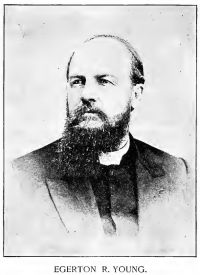
Egerton Ryerson Young,
Three Boys in the Wild North Land
“ In their hurried movements they had gradually approached each other, and so when not far from Mr Ross and Alec’s hiding place they suddenly appeared in a clear, elevated spot, and supposing they were now close to their companions they turned suddenly and gave each other battle. And a royal battle it was! A moose bull at the best is not handsome, but an angry, infuriated moose bull, when his temper is up, is one of the most hideous of monsters. ”
Charles Albert Jones, Habits, Haunts and Anecdotes of the Moose and Illustrations from Life
“ Some have a multitude of points; some have wider webs; some have stouter horn stems; some set more gracefully on the skull; some lie more horizontally than others; so that when the term a "choice head" is used it [Pg 52] means that nature has given the bull all the beauty of antlers in profusion.With far greater agility and cunning than any other animal of its weight, the moose is a formidable opponent when attacked. Some narrow escapes have been made by hunters using the old cap gun, but now with the breech-loader the speed that guarantees security is given. ”
Egerton Ryerson Young,
Three Boys in the Wild North Land
“ Before there could be the responsive answer on his part to them there dashed into the open space from the forest, not many hundreds of yards from him, another moose bull that roared out a challenge that could not be mistaken.The Indians with their birch horns again imitated the calls of the female moose. This they did with the purpose of bringing the bulls within range before they engaged in battle.It is a singular characteristic of many wild animals that when the rival males battle for the possession of the females they like to do it in the presence of those for whom they fight. ”
Daniel P. Thompson, The Demon Trapper of Umbagog: A Thrilling Tale of the Maine Forests (1890)
“ But still the bull moose, at this season of the year, is sometimes, when wounded, about as ugly a customer as you meet with in the woods. This fellow I judge to have been oncommon vicious, as he begun his tantrums before he was touched at all, it seems. ”
William J. Long,
Wood-folk comedies
“ Though I am a very poor caller, measured by Simmo’s art, I have seldom found much difficulty in bringing out a bull; but this may be due to the fact that most of my calling has been done far from settlements, in regions where moose are seldom hunted. Yet even in Maine, where moose are literally hunted to death, during the summer or “closed” season they have no more fear than in the remote wilderness. If you meet one on the trail at night, he may come quite as near as you care to have him; and in the early part of the mating season it is not unusual to have two or three bulls answer the call. ”
Charles Albert Jones, Habits, Haunts and Anecdotes of the Moose and Illustrations from Life
“ Ordinarily the moose is a silent animal, being very careful not to make a noise. Old guides have said that in spite of his great spread of horns he will pass quietly through a thick [Pg 39] growth. Generally, if seen in summer at the edge of a lake or stream, he slips noiselessly into the woods, but when the rutting season begins he casts his discretion to the winds and responds to the call of the cow with noisy disregard of consequences. He is also quarrelsome at such times, and should another bull happen to trespass on what he considers his territory there may be trouble. ”
William J. Long,
Ways of Wood Folk
“ Then he makes a wide circuit till he has gone completely round the spot where he heard the call; and if there is the slightest breeze blowing he scents the danger, and is off on the instant. On a still night his big [Pg 130] trumpet-shaped ears are marvelously acute. Only absolute silence on the hunter's part can insure success.Another condition quite as essential is moonlight. The moose sometimes calls just before dusk and just before sunrise; but the bull is more wary at such times, and very loth to show himself in the open. ”
F. S. Brereton, A Boy of the Dominion: A Tale of Canadian Immigration
“ They congregates and treads the snow flat, and lives there till their food is eaten; then off they goes to form another. Jest you slip along easy, lad; a bull moose ain't the sorter fellow one asks to come up aginst." A mile or so farther on it was evident that the moose whose tracks they were following, and who happened to have preceded them in their own direction, joined a well-worn track which plunged at once into forest. It was then that Hank again came to a sudden halt. "Did you hear that sort of cough?" he asked. "That's a bull moose fer sure; 'praps we'll come in fer some shootin'. ”