Birchbark

Definition and stakes

Homer B. Hulbert,  In Search of a Siberian Klondike

“ The natives strip the birchbark from the trees while it is still green, and cut it into long threads like vermicelli. On entering a village it is quite a common sight to see the women cutting up this bark for food. They ferment the juice of this birchbark and make a mild alcoholic drink. They also eat the berries of the shad-bush and the bark of the sallow, a kind of willow. ”
Source: Gutenberg

John S. Springer,  Forest Life and Forest Trees: comprising winter camp-life among the loggers…

“ The general outlines of the Yellow Birch often resemble the Elm, the root-spurs rise high up the trunk, protruding much beyond the regular circle of its shaft. It is very firmly rooted, capable of withstanding a violent blast. It attains to the height of seventy or eighty feet, and often measures from nine to ten feet in circumference three and four feet from the ground. Its wood is very useful for cabinet purposes, and is excellent for fuel.
The White or Canoe Birch is most remarkable for the beautiful thin sheets of bark which it affords, from which the Indian canoe is constructed.
”
Source: Gutenberg

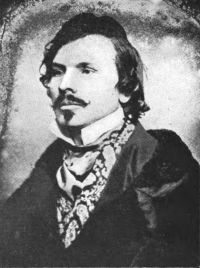
Portrait of Mayne Reid Mayne Reid,  The Young Voyageurs: Boy Hunters in the North

“ The wood makes excellent fuel, and is much used for that purpose in some of the large cities of America. The bark, too, is excellent for tanning—almost equal to that of the oak.
The “red birch” is still another species, which takes its name from the reddish hue of its bark. This is equal in size to the canoe-birch, often growing seventy feet high, with a trunk of nearly three feet diameter. Its branches are long, slender, and pendulous; and it is from the twigs of this species that most of the “birch-brooms” used in America are made.
”
Source: Gutenberg

Get perspective with Kwize: daily news enlightened by great literature