“ The black smoke, interfulgent with tortuous tongues of lurid fire, rolled in immense volumes over her!—the red flames darted up her masts, along the spars and rigging, and gushed in swirling sheets from her ports and bulwarks, while in their fierce gleams, the billows that ramped and raved about her, glowed like a huge seething cauldron of molten iron, and the gloomy clouds that lowered above were tinged in their ragged borders, as with blood. Occasionally the jarring thunder of her cannon, as they became heated to explosion, announced to us the progress of the insidious destroyer. ”
Cannon fire
Definition and stakes
Quotes about “cannon fire”
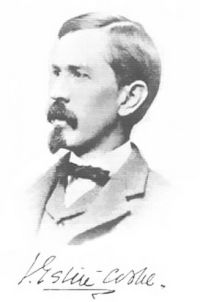
John Esten Cooke,
Mohun; Or, the Last Days of Lee and His Paladins
“ The glare of cannon lit the smoke-cloud; mortar shells rose, described their fiery curves, and descended in the trenches, and these were saluted as they rose and fell by the crack of musketry, the roar of artillery, the echoing cheers of the blue and gray people, who never seemed weary of fighting, yelling, and paying their compliments to each other. At night the spectacle was superb; the mortars were like flocks of fire-birds, swooping down upon their prey. The horizon glared at each cannon-shot; shell burst in vivid lightnings, shining for a moment, then extinguished. ”
“ On the earth, torn up by a recent explosion, were lying, here and there, broken beams, crushed bodies of Russians and French, heavy cast-iron cannon overturned into the ditch by a terrible force, half buried in the ground and forever dumb, bomb-shells, balls, splinters of beams, ditches, bomb-proofs, and more corpses, in blue or in gray overcoats, which seemed to have been shaken by supreme convulsions, and which were lighted up now every instant by the red fire of the explosions which resounded in the air. ”
Joseph A. Altsheler,
The Guns of Europe
“ Rifles were already crackling in the valleys between, where the pickets were seeking the lives of one another, and now came the deep, rumbling thunder of the giant cannon as they threw their shells from a range of eight or ten miles. When a shell burst there was a crash like that of a volcano in eruption, great cavities were torn in the earth, and men fell in dozens. Vast clouds of smoke from the monster guns began to drift against the horizon, but nearer where the smaller guns were at work only light white clouds appeared.The advancing German army was a semicircle of fire. ”
True Stories of the Great War, Volume 3…
“ In the distance I heard the roar of the big guns. As their noise grew louder the strumming of the machine guns mingled with it and their staccato was always distinguishable even amid the ear crushing thunder of the high explosives. Then came the rat-a-pat of rifle fire, foolishly insignificant in point of noise compared to the cannon, but cruelly deadly, as any one who has seen war knows.Artillery is terrifying, but after all it is cold steel in the hand-to-hand, bestial fighting that slays. ”
James Grant, Philip Rollo; or, the Scottish Musketeers…
“ More than once my heart shrank within me on seeing a strong and stately fellow doubled up like a tartan plaid, and hurled out of the ranks, with a cannon-ball fairly through his body. The cries of the wounded were piteous, but there was no time to heed them; though every instant we had to drag away the fallen men, whose bodies encumbered the wheels of the cannon and parapets, through the embrasures of which we suffered severely from the fire of the assailants. ”
J. H. Ingraham,
The South-West, by a Yankee. In Two Volumes…
“ We had run the gauntlet, from the left to the centre in front of the American lines, under a cross fire, in hopes of joining in the assault, and had a fine view of the sparkling of the musketry, and the liquid flashes of the cannon. And melancholy to relate, all at once many soldiers were met wildly rushing out of the dense clouds of smoke, lighted up by a sparkling sheet of fire, which hovered over the ensanguined field. ”
Francis James Child,
The English and Scottish Popular Ballads…
“ At handling sword or gun, But yet they are too naked men To bear the cannon's rung. For a cannon's roar in a summer night Is like thunder in the air; There's not a man in Highland dress Can face the cannon's fire. ”
Various, The Galaxy, May, 1877
“ Even the custom of firing a cannon, one great noise, heard at the furthest boundaries of the parish, and then done with, would be better than the continual repetition of the strokes of a bell, now violent and quick, as though calling out all the hose and hook and ladder companies of the fire department, now slowly dying away, tantalizing the listener with the expectation that now at last they are really going to cease, only to bitterly disappoint him by breaking out again with renewed clamor. ”
George Chetwynd Griffith,
The World Peril of 1910
“ And still, as the pitiless human strife went on with its ceaseless rattle of rifle fire, and the almost continuous roar of artillery, day by day the Invader from Space grew bigger and brighter in the great reflector, and day by day the huge cannon, which, in the decisive moment of the world's fate, was to do battle with it, approached completion. ”
Thomas Wilhelm, A Military Dictionary and Gazetteer
“ Are cannon-balls heated to redness, and fired from cannon at shipping, magazines, wooden buildings, etc., to combine destruction by fire with battering by concussion. In modern warfare, shells containing molten iron are intended to be used in lieu of red-hot shot ”
Richard Cannon, Historical Record of the Twelfth…
“ At this period the fire of the garrison produced great carnage, and the most pitiable cries and groans were heard, as the incessant showers of shot and shells were poured into the floating batteries. Soon after midnight one ship was in flames, and by two o'clock she appeared one sheet of fire from head to stern; a second was soon in the same state; the flames enabled the British artillery to point their guns with precision, and soon after three o'clock six more ships exhibited the effects of the red-hot shot. The burning ships exhibited one of the grandest spectacles of destruction ever beheld ”
William Henry Giles Kingston,
How Britannia Came to Rule the Waves
“ For purposes of offence they were fitted with beaks or rams to pierce the sides of the enemy, and were provided with catapults or other engines for hurling missiles, and with tubes for projecting Greek fire to create smoke and set their opponent on fire. The main tactics of the time, however, consisted in grappling with the enemy and transforming the combat into a hand-to-hand mêlée.When cannon were first mounted on board ship, about the year 1335, they were fired over the bulwarks, and the gunners were thus fully exposed to the enemy’s fire. ”
Victor Appleton, Tom Swift and His Giant Cannon…
“ Out gushed the liquid steel, giving off a myriad of sparks. The workers, as well as the visitors, had to wear violet-tinted glasses to protect their eyes from the glare. "Hoist away!" cried the manager, and the electric cranes started off with the caldrons of liquid fire, weighing many tons. "Pour!" came the command, and into the pit in the earth splashed the melted steel that was to form the big cannon. From each caldron there issued a stream of liquid metal of intense heat. There were numerous explosions as the air bubbles burst—explosions almost like a battery in action. ”
Richard Cannon, Historical record of the Eighty-eighth Regiment of Foot… (1838)
“ At length a few detached shots seemed to give a prearranged signal, at which the entire population of a vast town was to burst from its concealment, and in an instant the flat roofs of the houses swarmed with a mass of musqueteers, who poured a deadly, and almost unerring, fire upon the British soldiers. Under any circumstances the combat between men exposed in an open street, and adversaries ensconced behind the parapets of the houses on each side, must have been an unequal one ”
Thomas Wilhelm, A Military Dictionary and Gazetteer
“ In the art of war, a word of command to soldiers of all denominations to discharge their fire-arms, cannon, etc. It likewise expresses a general discharge against an enemy. To be “under fire” means to be exposed to the attack of an enemy by cannonade or fusilade. The fire in artillery may be either direct, ricochet, rolling, plunging, horizontal, or vertical, according to the nature of the projectile and the angle of elevation. A fire is said to be direct, when the projectile hits the object without striking any intermediate one ”
Thomas Wilhelm, A Military Dictionary and Gazetteer
“ Their purpose is to assist the artillerist in attaining his object without waste of time and ammunition, and also to regulate his aim when the effect of shot cannot be seen on account of the dust and smoke of the battle-field. The first few shots generally produce a great effect on the enemy, and it [163] is very important that they should be directed with some knowledge of their results, which, in the field, can only be attained by experience, or from the data afforded by a table of fire. Tables of fire for different kinds of cannon may be found in the Ordnance and Artillery Manuals. ”
Joseph Plumb Martin,
The Adventures Of A Revolutionary Soldier
(1830)
“ The soldiers were all ordered to take their posts at the palisadoes, which they were ordered to defend to the last extremity, as it was expected the British would land under the fire of their cannon and attempt to storm the fort. The cannonade was severe, as well it might be, six sixty-four gun ships, a thirty-six gun frigate, a twenty-four gun ship, a gally and a sloop of six guns, together with six batteries of six guns each and a bomb-battery of three mortars, all playing at once upon our poor little fort, if fort it might be called. ”
Cyril Field, The British Navy Book
“ Small breech-loading guns were mounted in considerable numbers in the fore and after castles, some of these, generally known as "murderers", being mounted inboard in such a way as to fire at close quarters on any boarding-parties of the enemy who might succeed in gaining possession of the waist of the ship. Others were mounted aloft in the tops, just as they were in our own days until the tops were required for fire-control platforms. But I propose to give the quaint ancestors of our modern monster cannon and rapid-fire guns a chapter to themselves later on. ”
Various, Continental Monthly , Vol. 6, No…
“ The effect of such a fire of artillery is, however, much less deadly than any except those who have been subject to it can believe. The prevalent impression concerning the relative destructiveness of cannon and musketry is another instance of popular error. ”
Richard Cannon, Historical Record of the Twelfth…
“ The night was very dark, but the regiment had scarcely cleared the outposts, when the air was illuminated by hundreds of fire-balls thrown up by the enemy, who thus detected the advance of the British troops, and immediately commenced a heavy fire of musketry and rockets, under which the Twelfth continued to advance in open column of companies. Suddenly, regular platoon firing was heard in front, and showers of bullets assailed the regiment on both flanks and in front, when it formed line. ”
Richard Cannon, Historical Record of the Thirty-first…
“ Towards morning the troops were formed in one line facing the enemy; the THIRTY-FIRST happened to be on the right of the whole. At the break of day, the British artillery opened on the enemy, who returned their fire, and after a short cannonading the infantry advanced to the attack: the THIRTY-FIRST moved steadily towards a battery of seven guns on the enemy’s extreme left, which kept up a continued fire of grape; it was, however, carried by the bayonet without a single check, and almost without a shot being fired by the assailants, though the loss of the THIRTY-FIRST was severe. ”
The Boy Mechanic, Volume 1: 700 Things for Boys to Do
“ Among the numerous exciting amusements in which boys may participate during the Fourth-of-July celebration is to make a cannon that will shoot life-sized dummies dressed in old clothes. Building the cannon, as described in the following, makes it safe to fire and not dangerous to others, provided care is taken to place it at an angle of 45 deg. and not to fire when anyone is within its range. The powder charge is in the safest form possible, as it is fired with a blow from a hammer instead of lighting a fuse. ”
M. Hamlin Cannon, Leyte: The Return to the Philippines
“ The tanks and tank destroyers could have been used more frequently and with greater versatility. Situations often arose in which an infantry platoon was held up by enemy machine gun and mortar fire, but “the use of indirect artillery fire was impracticable either because of overhead cover for the enemy weapons or because of undue risk to our enveloping infantry.” General Krueger recommended that the infantry employ direct fire by the tanks or tank destroyers. ”
Hudson Maxim,
Dynamite Stories, and Some Interesting Facts About Explosives
“ When burned in a cannon, all of the surfaces of the material are practically instantly ignited by a small flash charge of black rifle powder used for the purpose of setting fire to the charge of smokeless powder. The combustion in the perforations causes them to become larger and larger until the grain is all consumed. This form of grain tends better to maintain the pressure behind the projectile in its flight through the gun, and enables the use of larger charges of powder with lower pressures than could otherwise be employed. ”
M. Hamlin Cannon, Leyte: The Return to the Philippines
“ The first, which was similar to that employed by the Americans, utilized a base of fire from supporting weapons, followed by infantry fire and movement. This type of attack was not usually accompanied by artillery or mortar support. The other method consisted of a localized charge in which the Japanese by sheer force of numbers tried to crack the American lines. The heavy weapons fire of the Americans was nearly always able to break up both types of attack. Enemy forces, generally in small numbers, tried repeatedly to infiltrate through the American lines. ”
M. Hamlin Cannon, Leyte: The Return to the Philippines
“ Immediately afterward, about a battalion of Japanese infantry attacked Company G, while twelve machine guns started to fire from a ridge 1,200 yards to the east. The Japanese moved into the fire of their own heavy weapons. The 32d Infantry, using all of its artillery batteries, mortars, machine guns, and rifles, started throwing lead against the enemy force as fast as its men could load and fire. ”
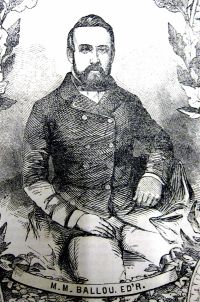
Maturin M. Ballou,
Due West; Or, Round the World in Ten Months
“ The same remark will apply to the principle of breech-loading fire-arms, examples of which may here be seen three hundred years old. One very singular cannon was observed, actually made from closely woven rope, so strong and compact as to be capable of bearing a discharge with gunpowder, and which had once seen service in battle. ”
M. Hamlin Cannon, Leyte: The Return to the Philippines
“ A group of about fifty Japanese came to within thirty yards of the right platoon of Company L and showered it with grenades. Mortar fire also fell on this platoon, and at the same time the platoon of Company K in the draw came under heavy fire. At least twelve emplaced machine guns, in addition to those carried up by the assaulting troops, raked the positions of Companies K and L with intense fire. Company L employed all weapons and threw back the assault with heavy casualties to the Japanese. ”
M. Hamlin Cannon, Leyte: The Return to the Philippines
“ In the meantime the mortar platoon from Troop D, in support of the 1st Squadron, fired upon Lonoy. The Japanese immediately responded with fire from a 105-mm. gun, which they had cleverly concealed in the gap between the two squadrons and about 600 yards from the regimental observation post at which the gun directed its fire. The enemy gun killed one man and wounded fifteen others of the command-post group. The heavy machine guns from the Weapons troop and the artillery from the 271st Field Artillery Battalion began concentrating their fires upon the enemy gun. ”
M. Hamlin Cannon, Leyte: The Return to the Philippines
“ The 37-mm. gun was an antitank weapon only occasionally employed by the 7th Division because there were few Japanese armored vehicles against which to use it. The excessive difficulty of manhandling it into a position from which fire could be delivered against Japanese pillboxes and machine guns rendered it ineffective for that purpose. The 90-mm. guns of the antiaircraft artillery had a considerable number of erratic bursts because of corroded fuzes and worn fuze setting lugs. ”