Cardamom

Definition and stakes

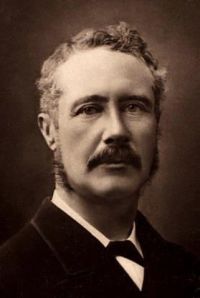
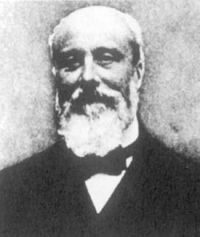
Sir Clements R. Markham,  Travels in Peru and India

“ The cultivators pick the cardamom capsules from the branches, and convey them to a temporary hut, where the women fill the bags with cardamoms, and carry them home, sometimes to distances of ten or twelve miles. Some families will gather 20 to 30 maunds annually, worth from 600 to 1000 Rs. [475]
This method of cardamom cultivation must be considered injurious to the conservancy of fine timber in the forests, but, on the other hand, the crops themselves are very valuable, and bring in a considerable revenue.
”
Source: Gutenberg

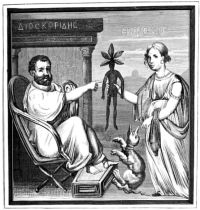
Friedrich A. Flückiger,  Pharmacographia (1879)

“ We do not know whether the dried fruits or the seeds are ever exported. Pereira confounded them with Bengal and Nepal cardamoms.
Korarima Cardamom—The Arab Physicians were acquainted with a sort of cardamom called Heil, which was later known in Europe, and is mentioned in the most ancient printed pharmacopœias as Cardamomum majus, [2414] a name occurring also in Valerius Cordus and Mattiolus.
”
Source: Gutenberg

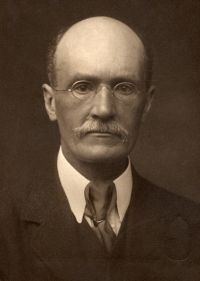
Paul Zipperer,  The Manufacture of Chocolate and other Cacao Preparations

“ The Ceylon cardamom is four times larger than the Malabar kind. The grey brown pericarp encloses about 20 dark greyish brown seeds about 6 mm large. The aroma of the Ceylon cardamom is due to an ethereal oil which it contains in quantities sometimes reaching 6 percent. Madras and Malabar cardamoms contain 4-8 percent of ethereal oil. As the Ceylon cardamoms are cheaper than the Malabar kind a confusion of the two seeds might possibly be to the disadvantage of the buyer, but the above description of their relative size would suffice to distinguish them. ”
Source: Gutenberg

Get perspective with Kwize: daily news enlightened by great literature