Clotted cream

Definition and stakes

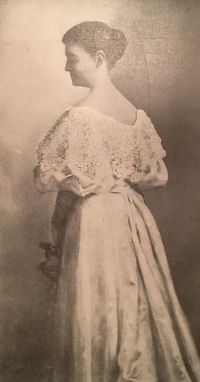
Portrait of Fannie Farmer Fannie Farmer,  Boston Cooking-School Cook Book (1918)

“ Thin, or strawberry, and thick cream may be obtained from almost all creameries. Devonshire, or clotted cream, is cream which has been removed from milk allowed to heat slowly to a temperature of about 150° F.
In feeding infants with milk, sterilization or pasteurization is recommended only to avoid danger of infectious germs. By this process milk can be kept for many days, and transported if necessary. To prevent acidity of the stomach, add from one to two teaspoonfuls of lime water to each half-pint of milk.
”
Source: Wikisource

Loudon M. Douglas,  The Bacillus of Long Life

“ It is thus considerably lighter than the other constituents, and when milk is left at rest, the fat globules gradually rise to the top and float there, forming cream. The difference in specific gravity between cream and milk is taken advantage of in the mechanical separator, now so much used, and which makes such a thorough separation between the two. Cream is an article of the most varied composition, according to the ideas of the person who produces it, but it ought to contain at least 20 per cent. of butter fat, and may be made with a much larger percentage if necessary. ”
Source: Gutenberg

Mary Hooper,  Nelson's Home Comforts

“ The careful housekeeper of modern times has been accustomed to class creams among the luxuries which can only be given on special occasions, both because they take so much time and trouble to make, and because the materials are expensive. It is, nevertheless, possible to have excellent creams made on a simple plan and at a moderate cost. Cream of a superior kind is now everywhere to be had in jars, condensed milk answers well, and by the use of Nelson's Gelatine, and any flavouring or syrup, excellent creams can be made. ”
Source: Gutenberg

Get perspective with Kwize: daily news enlightened by great literature