Coir

Definition and stakes

The New International Encyclopædia…

“ It is spun by special machinery, and produces a perfectly cabled yarn, which is woven into doormats or ordinary yard-matting. In 1901 the coir imported into the United States amounted to 3,901,384 pounds, valued at $141,830. The refuse from coir is used for stuffing mattresses, and also in horticulture as a protection against insects for vines and young trees. ”

Source: Wikisource

Thomas Williamson,  The East India Vade-Mecum, Volume 2…

“ A very good mode is, to strip off the coir, and, after soaking it well in water, to beat it with a heavy wooden mall until the pieces become a little pliant, when they should be firmly bound together with an iron ring: their ends being then levelled, the 100implement is fit for use. A little bees’-wax rubbed occasionally upon them, adds greatly to the lustre of the furniture, without being clammy. ”
Source: Gutenberg

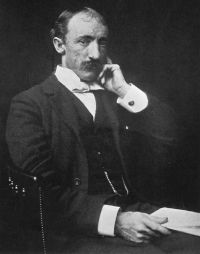
Portrait of Henry Yule Henry Yule,  Hobson-Jobson — C (1903)

“ COIR, s. The fibre of the coco-nut husk, from which rope is made. But properly the word, which is Tam. kayiru, Malayāl. kāyar, from v. kāyāṛu, 'to be twisted,' means 'cord' itself (see the accurate Al-Birūnī below) . The former use among Europeans is very early. And both the fibre and the rope made from it appear to have been exported to Europe in the middle of the 16th century. The word appears in early Arabic writers in the forms ḳānbar and ḳanbār, arising probably from some misreading of the diacritical points (for ḳāiyar, and ḳaiyār) . The Portuguese adopted the word in the form cairo. ”
Source: Wikisource

Get perspective with Kwize: daily news enlightened by great literature