Concentration (military)

Definition and stakes

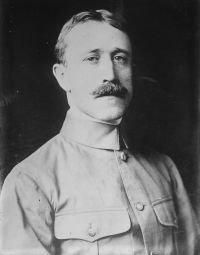
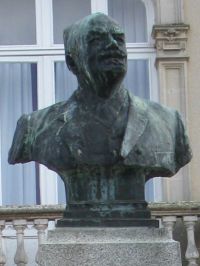
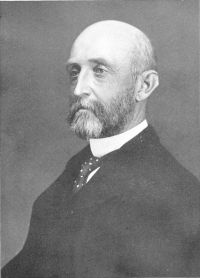
Portrait of A. T. Mahan A. T. Mahan,  Lessons of the war with Spain and other articles

“ Like the land, the sea, as a military field, has its important centres, and it is not controlled by spreading your force, whatever its composition, evenly over an entire field of operations, like butter over bread, but by occupying the centres with aggregated forces—fleets or armies—ready to act in masses, in various directions from the centres. This commonplace of warfare is its first principle. It is called concentration, because the forces are not spread out, but drawn together at the centres which for the moment are most important. ”
Source: Gutenberg

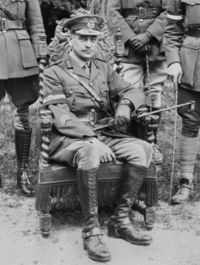
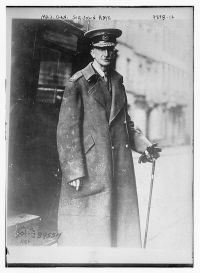
Portrait of Sir John Adye Sir John Adye,  Recollections of a Military Life

“ A vast continent was in a great measure over-run, and its munitions and military stores were temporarily in the hands of a great mutinous army, more or less in sympathy with the inhabitants; whilst the English troops in small scattered detachments, often hundreds of miles apart, were fighting a succession of battles, with their communications precarious, and for the moment without the power of concentration. ”
Source: Gutenberg

John Bernard Walker,  America Fallen! (1915)

“ It would be an optimistic forecast for me to say that we could concentrate these 90,000 men at any point on the Atlantic Coast within thirty days of the declaration of war. And when the concentration had been made, the troops would be without properly trained artillery and cavalry organization, and without ammunition trains; they would be hastily organized and assembled for the first time in large bodies; they would be unprepared to act effectively as an army; and should these troops be defeated, the country would have back of them practically no reserve of men and supplies. ”
Source: Wikisource

Get perspective with Kwize: daily news enlightened by great literature