Driving (animal husbandry)

Definition and stakes

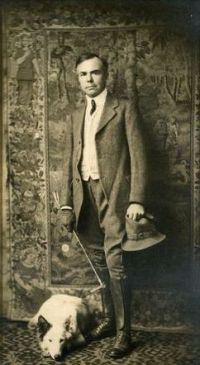
Edward L. Anderson,  Riding and Driving

“ Your dog twists himself into extravagant physical contortions when you return after a month's absence; your horse, on the other hand, is no more warm in his welcome than your saddle. He is, now that he has been so long guarded and cared for by man, a pitiably helpless animal when left to himself. The mere fact that the reins lie on the dash-board, that he hears no voice behind him, that he is free, sends him off at a gallop—possibly to his own destruction. ”

Source: Gutenberg

Ramón Páez,  Travels and adventures in South and Central America…

“ Each time the drivers turned out an animal the whole mass was thrown into the utmost confusion, and it required the most consummate skill{187} on the part of the men to prevent the entire dispersion of the cattle. The fearlessness with which the drivers plunged into that labyrinth of savage, panting brutes, advancing close upon the wall of bristling horns which barred their progress, and boldly driving the infuriated creatures before them like a pack of sheep, was truly worthy of admiration. ”
Source: Gutenberg

Portrait of Arthur Jerome Eddy Arthur Jerome Eddy,  Two Thousand Miles on an Automobile

“ Horses that behave well in the city are often the very worst in the country, so susceptible is the animal to environment.
On narrow country roads three out of five will behave badly, and unless the outward signs are unmistakable, it is never safe to assume one is meeting an old plug,—even the plug sometimes jumps the ditch.
The safe, the prudent, the courteous thing to do is to stop and let the driver drive or lead his horse by; if a child or woman is driving, get out and lead the horse.
By stopping the machine most horses can be gotten by without much trouble.
”
Source: Gutenberg

Get perspective with Kwize: daily news enlightened by great literature