 George Bernard Shaw,
Major Barbara
(1905)
“ At present there is not a single credible established religion in the world. ”
George Bernard Shaw,
Major Barbara
(1905)
“ At present there is not a single credible established religion in the world. ”
Various, The Continental Monthly, Vol. 5…
“ But can the doctrine of man's antiquity be made to harmonize with the essentials of Christianity and the inspiration of the Scriptures? If Christianity be a religion for man, as the present writer believes, we answer emphatically in the affirmative. Not the smallest feature that is essential to make Christianity a religion for man, if it be such, will be imperilled by this or any other well-established doctrine [Pg 385] of science. ”
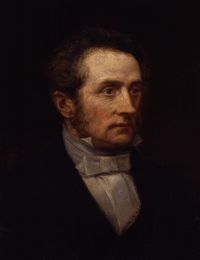 Arthur Penrhyn Stanley,
Three Introductory Lectures on the Study of Ecclesiastical History
(1857)
“ In the diversity of the Church will be found a more powerful argument for the divine origin of Christianity itself, than in the most perfect unity. It is not, humanly speaking, surprising that a religion should sustain itself from age to age in the same race and country. ”
J. H. Kurtz, Church History, Volume 1 (of 3…
“ The development of the system of Christian doctrine must become a necessity when Christianity meeting with pagan culture in the form of science is called upon to defend her claim to be the universal religion. ”
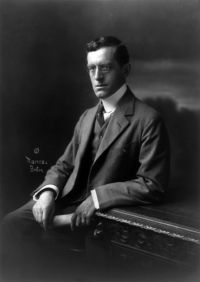 Ralph Adams Cram,
Towards the Great Peace
“ The reason for this coherency and consistency was the universal recognition and acceptance of religion as the one energizing and standardizing force in life, the particular kind of religion that then prevailed, and the organic power which this religion had established ”
Freiherr von Friedrich Hügel, The Mystical Element of Religion…
“ Such special, characteristic Revelations, Doctrines and Institutions, as we find them in all the great Historical Religions, and in their full normative substance and form in Christianity and Catholicism, can indeed alone completely develop, preserve and spread Religion in its depth and truth; yet they ever presuppose a general, usually dim but most real, religious sense and experience, indeed a real presence and operation of the Infinite and of God in all men. ”
Samuel L. Knapp, Memoirs of General Lafayette
“ It is, indeed, a consideration, creditable, in some measure, to those who admit it, and tending also to prove that christianity is calculated and designed to be an universal religion, that intelligent men of different countries and sects unite in receiving all the essential and practical doctrines of revelation. ”
 John Cassell,
Cassell's Illustrated History of England
(1865)
“ Where can we point to any one denomination which so fully and unequivocally based all religion on the direct teaching of the Divine Spirit, and so completely abandoned all forms and ceremonies as being neither part nor parcel of this divine work? ”
Rita, The Mystery of a Turkish Bath
“ In the world, and in society, religion is a tabooed subject—it is only kept for Sundays and for churches. I believe your clergy know no more of the real doctrines of Christianity, those deep and mystical truths underlying the teachings of Christ, than the child at his mother’s knee. ”
“ As to Catholicism, the records of Councils, the invectives of the Church, show us that, from the beginning, the secondary religion in point of time, the religion of the Church, laboured vainly to suppress, and had in part to tolerate, the primary religion of childish superstitions. ”
Joseph Wilhelm, A Manual Of Catholic Theology (1906)
“ Finally, Modern Theology has taken up the work of both of the foregoing epochs by defending the fundamental dogmas of Religion against modern agnostics and heretics, and at the same time carefully attending to the development of doctrine within the Church. ”
Elias Johnson, Legends, Traditions, and Laws of the Iroquois…
“ The new religion, as it has ever since been called, embodied all the precepts of the ancient faith, recognized the ancient mode of worship giving it a new sanction of the Great Spirit, and also comprehend such new doctrines as came in aptly, to lengthen out and enlarge the original system without impairing it. ”
Various, The Catholic World, Vol. 26, October…
“ After this long and circuitous digression we may direct our attention now on the specific nature of Christianity as an historical religion, and consider what organization Jesus Christ gave redeemed humanity in the universal church, how he embodied the absolute, universal religion, what means he adopted for achieving the work of the moral regeneration and eternal salvation of mankind. ”
 Theodore Parker,
The Collected Works of Theodore Parker
(1876)
“ This Christianity insists on rightness before God; ties no man down to worship in this mountain, nor yet in Jerusalem; on the first day of the week, or the last day; in the church or the fields; socially or in private; with a creed, ritual, priest, symbol, spoken prayer, or without these. It breaks every yoke, seen or invisible; bids men worship in love. It does not ask man to call himself a Christian, or his Religion Christianity. ”
George Bush, Gold for Brass and Silver for Iron (1853)
“ Those who listen to New Church instructions will find, at any rate, that so far from involving a mere farrago of mystical and visionary crudities, they do actually inculcate the necessity of a practical and life-pervading religion, and that our doctrines are not, as the impression often is, a peculiar mode of dispensing with all religion—a sort of quitclaim to all genuine devotion and piety. ”
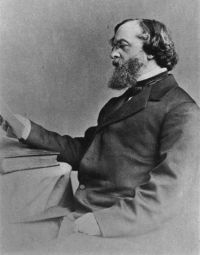 James Freeman Clarke,
Ten Great Religions: An Essay in Comparative Theology
“ As Christians they were only to know Christ, and they were not to know him according to the flesh, that is, not as a Jew. So Christianity became at once a catholic religion, consisting in the diffusion of great truths and a divine life. ”
William James, The Varieties of Religious Experience (1902)
“ And although the favor of the God, as forfeited or gained, is still an essential feature of the story, and theology plays a vital part therein, yet the acts to which this sort of religion prompts are personal not ritual acts, the individual transacts the business by himself alone, and the ecclesiastical organization, with its priests and sacraments and other go-betweens, sinks to an altogether secondary place. ”
“ Such being the facts, which cannot be successfully refuted, we must believe that the Christian religion, instead of being of Divine authenticity, as popularly claimed, is purely and entirely of human origin, and that all its teachings relative to a future state are but priestly inventions, concocted for the purpose of enslaving the ignorant masses. ”
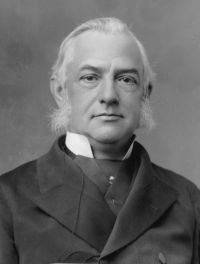 F. Max Müller,
Chips from a German Workshop, Volume 4
“ This preëminence of the object of Christian missions—namely, the formation of heroic, apostolic, and therefore Christian characters—has a wide practical importance. In these days—when there is so much temptation to dwell on the scaffolding, the apparatus, the organization of religion, as though it were religion itself—it is doubly necessary to bear in mind what true Religion is, wherein lies the essential superiority of Christianity to all the other forms of religion on the surface of the earth. ”
George A. Smith, Journal of Discourses — Volume 9…
“ Suppose you get the Christians now together and fetch them up here, and ask them to tell us which is the pure religion; take, say a dozen of the leading sects, and let each one tell us which is the pure religion of Jesus Christ, and they would get up such a quarrel, such a confusion, such a hubbub, that it would be impossible to tell anything about it. ”
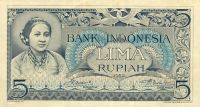 Raden Adjeng Kartini,
Letters of a Javanese princess…
(1921)
“ Differences of Church, albeit in each the same word, God, is spoken, have built a dividing wall between two throbbing hearts. I often ask myself uneasily: is religion indeed a blessing to mankind? Religion, which is meant to save us from our sins, how many sins are committed in thy name? ”
 Karl Rosenkranz,
Pedagogics as a System
“ The religious spirit, the consciousness of the Absolute, and the reverence for it, should permeate all. Not unfrequently, however, we find that what is meant by religion is theology, or the church ceremonial, and these are only one-sided phases of the total religious process. ”
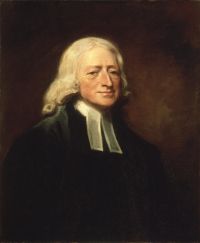 John Wesley,
The works of the Rev. John Wesley…
“ For indeed, what probability, what possibility rather, (speaking after the manner of men) is there that Christianity, Scriptural Christianity, should be again the religion of this place? That all orders of men among us should speak and live as men filled with the Holy Ghost? ”
J. W. Shepherd, The Church, the Falling Away, and the Restoration
“ They are an integral, if not an essential, part of the ceremonial, the pomp and power of an outward religion, that carnal perversion of the true idea of the Christian Church, and the legitimate consequence of beginning in the spirit and seeking to be made perfect in the flesh. ”
 Ralph Waldo Emerson,
Representative Men: Seven Lectures
“ To the withered traditional church yielding dry catechisms, he let in nature again, and the worshiper, escaping from the vestry of verbs and texts, is surprised to find himself a party to the whole of his religion. His religion thinks for him, and is of universal application. He turns it on every side; it fits every part of life, interprets and dignifies every circumstance. ”
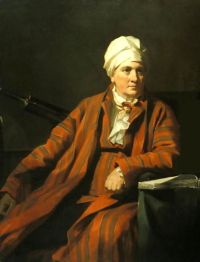 John Robison,
Proofs of a Conspiracy against all the Religions and Governments of Europe
“ The Scriptures, the foundation of our faith, were examined by clergymen of very different capacities, dispositions, and views, till by explaining, correcting, allegorising, and otherwise twisting the Bible, men's minds had hardly any thing left to rest on as a doctrine of revealed religion. ”
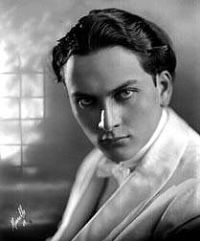 Manly Palmer Hall,
The Secret Teachings of All Ages…
(1928)
“ The Christian church blindly follows ancient customs, and when asked for a reason gives superficial and unsatisfactory explanations, either forgetting or ignoring the indisputable fact that each religion is based upon the secret doctrines of its predecessor. ”
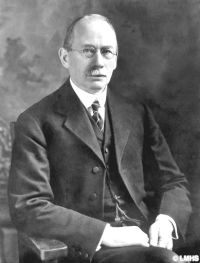 Rufus M. Jones,
Spiritual Reformers in the 16th & 17th Centuries
“ In an age which settled back upon the Scriptures as the only basis of authority in religious faith and practice, they boldly challenged that course as a dangerous return to a lower form of religion than that to which Christ had called men and as only legalism and scribism in a new dress. ”
Francis Legge, Forerunners and rivals of Christianity (1915)
“ In like manner, it may be said that the science of religions by no means attempts to discuss the causes which lead to the institution of any particular religion, but deals merely with the laws underlying its development when once instituted. The Christian religion, like those of Moses, Zoroaster, and Mohammed, however Divine its origin, was, like them, propagated by men who founded the Church, handed on the traditions, and gave form to the ceremonies. ”
 Jean-Baptiste Massillon,
Sermons
(1879)
“ And this, my brethren, is the first character by which the religion of Christians is at once distinguished from superstitions and sects. It is the most ancient religion in the world. The first men, before an impious worship was carved out of divinities of wood and of stone, worshipped the same God whom we adore, raised up altars, and offered sacrifices to him, expected from his liberality the reward of their virtue, and from his justice, the punishment of their disobedience. The history of the birth of this religion, is the history of the birth of the world itself. ”
Various, The Atlantic Monthly, Volume 13…
“ As fast as religion passes into life,—as the spiritual nature of man begins to be recognized as the ground of legislation and society, and not merely in the miracle of sainthood,—the apparatus and imagery of the Church, its dogmas and ceremonies, grow superfluous, as what they stand for is itself present. ”
W. R. Washington Sullivan, Morality as a Religion
“ What, then, are these Catholic, Protestant, Mohammedan and Buddhist religions? They are not religions at all: they are merely philosophies, or systematised accounts of God, the world, and of man, which have obtained large support in earlier stages of the world's history. ”
William James, The Varieties of Religious Experience (1902)
“ Worship and sacrifice, procedures for working on the dispositions of the deity, theology and ceremony and ecclesiastical organization, are the essentials of religion in the institutional branch. Were we to limit our view to it, we should have to define religion as an external art, the art of winning the favor of the gods. In the more personal branch of religion it is on the contrary the inner dispositions of man himself which form the centre of interest, his conscience, his deserts, his helplessness, his incompleteness. ”
Andrew Harper, The Expositor's Bible: The Book of Deuteronomy
“ Here consequently, if anywhere, we should expect to find the permanent factors in religion recognised even in the forms of worship, and the less permanent allowed to fall away. We should also expect the ritual of the cultus to grow in depth of meaning with time, and that it would more and more recognise the moral and spiritual elements in life. ”
John Hughes, Itinerary of Provence and the Rhone
“ Even with a view to the ascendancy which a more simple and purified religion may ultimately obtain under an improved and free constitution, it is better that a religious feeling of some sort should exist. ”
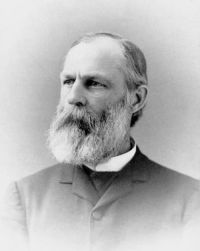 Crawford Howell Toy,
Introduction to the History of Religions
“ The external history of religion is the history of the process by which the religious sentiment has attached itself to the various conceptions formed by man's experience: ritual is the religious application of the code of social manners; the gods reflect human character; churches follow the methods of social organization; monotheism springs from the sense of the physical and moral unity of the world. ”
F. Max Müller,
Chips from a German Workshop, Volume 4
“ That which alone, if anything, stamps Christianity as the supreme religion, is that its essence, its object, is in none of these things, valuable as some of them may be as signs and symptoms of the change which every mission is intended to effect. ”
Nathaniel Ward, The Simple Cobler of Aggawam in America
“ Did the servants of Christ know what it is to live in Reformed Churches with unreformed spirits, under strict order with loose hearts, how formes of Religion breed but formes of Godlinesse, how men by Church-discipline, learne their Church-postures, and there rest; they would pray as hard for purity of heart, as purity of Ordinances. ”
Various, The Catholic World, Vol. 11, April…
“ Now, Christianity, as Christ founded it, is the religion of all created persons in time and space, who, united to the Theanthropos by a particular mode of union, worship God with and through the Theanthropos; that is, worship God as he deserves. Consequently Christianity is a law of the cosmos, an integral constituent of that cosmos which God selected, and hence true, elevating, and imperative. ”
Crawford Howell Toy,
Introduction to the History of Religions
“ Both thus rest the immense mass of human religious customs and beliefs, which form so large a part of human history, on the precarious foundation of passing fancy and inadvertence, and they must be put into the same category with the naïve theory, once popular, that religion is the invention of priests who sought to control men through their fears. ”
 Walter Pater,
Miscellaneous Studies; a series of essays
“ And in that place, religion, religious system, its claim to overpower one, presented itself in a way of which even the least serious by nature could not be unaware. Their great church, its customs and traditions, formed an element in that esprit de corps into which the boyish mind throws itself so readily. ”
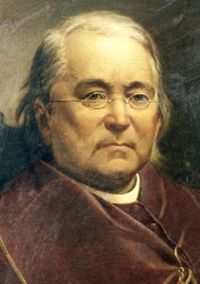 Martin John Spalding,
Pastoral Letter Promulgating the Jubilee
(1865)
“ XXI. The Church has not the power of defining dogmatically, that the Religion of the Catholic Church is the only true Religion. (Apostolic Letters Multiplices inter, 10th June, 1851.) XXII. The obligation which binds Catholic teachers and authors applies only to those things, which are proposed for universal belief as dogmas of the faith, by the infallible judgment of the Church. ”
 Bertrand Russell,
Why Men Fight
(1917)
“ But since the Reformation personal religion has been increasingly outside the Catholic Church, while the religion which has remained Catholic has been increasingly a matter of institutions and politics and historic continuity. ”
Crawford Howell Toy,
Introduction to the History of Religions
“ Notwithstanding departures from the ideal the services of the Church often represent voluntary worship; such worship, however, has been the rule in all religions from the earliest times to the present day and does not in itself distinguish Christianity from any other religion. ”
 Jean-Jacques Rousseau,
The Social Contract & Discourses
“ Religion, considered in relation to society, which is either general or particular, may also be divided into two kinds: the religion of man, and that of the citizen. The first, which has neither temples, nor altars, nor rites, and is confined to the purely internal cult of the supreme God and the eternal obligations of morality, is the religion of the Gospel pure and simple, the true theism, what may be called natural divine right or law. ”
 Thomas Jefferson,
The Writings of Thomas Jefferson…
“ As to myself, my religious reading has long been confined to the moral branch of religion, which is the same in all religions; while in that branch which consists of dogmas, all differ, all have a different set. ”
Theodore ParkerRufus M. Jones Robert Green IngersollCrawford Howell ToyWilliam James
 Émile DurkheimF. Max Müller
 George SantayanaJames Freeman Clarke
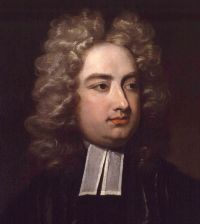 Jonathan SwiftJohn WesleyFrancis LeggeRalph Adams CramAndrew HarperJ. H. HillJohn Robison
 John Henry NewmanGeorge A. Smith
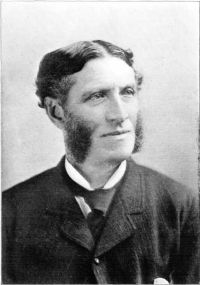 Matthew ArnoldFreiherr von Friedrich Hügel

