“ Under the shelter of the ridge, and close to the great guns, four little field hospitals were pitched, and here I made my first acquaintance with the circumstances of war. Each field hospital would be represented by a small central marquee, which formed an operating and dressing station, and a number of bell tents around it, which would accommodate in all about one hundred patients. ”
Field hospital
Definition and stakes
A field hospital is a temporary, mobile medical unit designed to provide emergency care to casualties near the site of emergencies, conflicts, or disasters, bridging the gap between initial treatment and permanent medical facilities. Originating in military medicine, it has expanded to address crises such as pandemics, with examples ranging from France’s PSM mobile kits to Namibia’s containerized units.
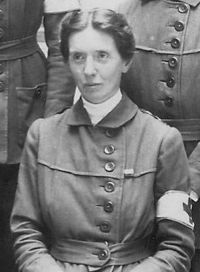
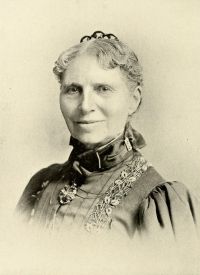
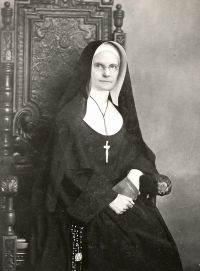
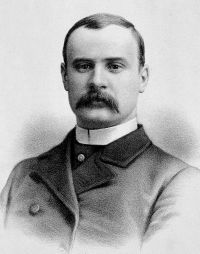
Authors such as Edward Alva Trueblood recounted personal experiences with field hospitals during wars, while Henry Sessions Souttar contrasted their frontline role with that of base hospitals. Clara Barton highlighted their critical function in wartime logistics, and unnamed narrators described the chaotic yet vital work of transporting wounded soldiers. These varied perspectives underscore the field hospital’s flexibility, from battlefield triage to pandemic response, reflecting its lasting role in saving lives through proximity and efficiency.
Quotes about “field hospital”
Edward Alva Trueblood, In the Flash Ranging Service
“ From the dressing station I was taken to a field hospital, about fifteen kilometers to the rear, and there placed in a ward in a tent. The purpose of the field hospital is to treat soldiers who are too severely wounded to be taken to base hospitals. My wound was again examined, cleaned and dressed and again the terrible swab went its depth. About 4 o'clock that afternoon I was loaded into another stretcher on an ambulance and taken to Base Hospital 51 at Toul. ”
M. A. Stobart, The Flaming Sword in Serbia and Elsewhere
“ Knowing your hospital as one of the best arranged amongst foreign hospitals, thoroughly organised for the work nearer the front and supplied with all up-to-date necessary material and utensils, I have the honour to inform you that your hospital is on that account selected to keep in touch with our Army—in case it moves or comes into contact with the enemy—keeping always behind the Army and close thereto, and thus be enabled to do the work of a real Field Hospital. ”
Henry Sessions Souttar, A Surgeon in Belgium
“ It is a curious reflection that whilst in the present war the base hospital has been given, if anything, an undue importance, in the other war it has been practically neglected. Our great hospitals are almost entirely field hospitals, planted right in the middle of the battle, and there we keep our patients till such time as they are to all intents and purposes cured. A very few convalescent homes will admit cases which still require treatment, but only a very few. ”
“ Before the move was made to Spearman's Farm the Hospital was enlarged, and the staff was increased by the addition of eight civil surgeons. It is sad to report that of these two died in the camp and others were invalided. No men could have worked better together than did the army surgeons and their civilian colleagues.The greatest capacity of the Hospital was reached after the battle of Spion Kop, when we had in our tents about 800 wounded.Some account of the nurses who accompanied the Hospital is given in a section which follows. ”
“ Very early on Saturday morning, while it was yet moonlight, the hospital train backed down from Chieveley and came to a stand as near the field hospitals as possible. As soon as it was daylight (and at this time of the summer the sun rose before five) the loading of the train commenced.The filling up of a hospital train is no easy business, and affords a somewhat depressing sight.The worst cases are dealt with first, and a long line of stretchers soon began to pour from the hospital tents to the railway. The stretchers are put down on the railroad close to the wheels of the train. ”
Clara Barton,
The Red Cross in Peace and War
“ It is the intention to transfer the seriously sick men from our field hospitals to the general hospitals as soon as practicable; and we wish our enlisted men of the Hospital Corps to take care of the sick in the Division Field hospitals and in camps of instruction, so that they may be fully prepared to perform the same duties when the troops are in active operations. ”
“ Clothes were being got together; helpless men were being dressed; blankets were being rolled up, and such comforts as the hospital could provide were being packed for the wounded to take with them on their journey. Cherished possessions were being dragged out from under pillows, to be safely disposed in a haversack or a boot. The grey light fell upon orderlies in their shirt sleeves bustling from tent to tent; upon piles of provision cases and of forage which were being turned out; upon heaps of stretchers; upon the rolled-up kit of the Army Medical Corps men ”
Thomas Herbert Russell, America's War for Humanity
“ Two orderlies put the patient on a stretcher, and he was taken into the next room for examination. Later in the day the amputation was performed. MOVED TO HOSPITALS IN CITIES "From these little field hospitals, as soon as the men can be moved, they are taken to some general hospital in the nearest large city, where several thousands can be cared for. Such a hospital exists in this neighborhood in the building of a normal college, where every corner is used in housing wounded men. ”
“ From the belt will probably be hanging a big knife or a tin-opener, in place of the nurse's chatelaine, and from the breeches pocket may be projecting the bowl of a pipe. The orderly in a field hospital--who is for the most part a "good sort"--look's a little like one of the dramatis personæ of Bret Harte's tales, and is a curious substitute for the immaculate dresser and the dainty nurse. ”
Eric Fisher Wood,
The Note-Book of an Attaché: Seven Months in the War Zone
“ The field hospitals are nearly always established in [Pg 306] village churches with overflow into neighboring houses in case of heavy casualties. All the furniture is removed from the church and the floor is covered thick with straw, upon which the wounded are laid out in long rows. The altar is made the pharmacist’s headquarters, the vestry is converted into an operating room, and a Red Cross flag is hung from the tower or steeple. These field hospitals are generally well within the zone of artillery fire, and are frequently struck by shells. ”
Barbara McLaren, Women of the war (1918)
“ During its two years of work for the sick and wounded, no military hospital has succeeded in establishing a finer record. To see it is a wonderful experience. The hospital consists of 17 wards, with 578 beds, and is entirely staffed by women—surgeons, doctors, pathologists, oculists, dental surgeons, anæsthetists, dispensers, nurses, orderlies. The only men are the patients.Sir Alfred Keogh, the Director-General of the Army Medical Service, said, when speaking of it: “The hospital is in every respect a military hospital, differing in no way from any other military hospital in the country. ”
Various, Chambers's Journal of Popular Literature…
“ The current system of large hospitals is abandoned, as being equivalent to 'warehousing diseases on the largest possible scale;' while special hospitals are deemed unnecessary—'as if the different organs could walk out of the body and present themselves for separate treatment.' Each hospital has an ambulance ready to be sent out to bring any injured persons to the institution; the ambulance drives straight into the hospital, where a bed of the same height on silent wheels receives the patient, and conveys him or her to a ward. ”
Conference of Officers in Charge of Government Hospitals Serving Veterans of the World War
“ Another problem is the question of creating, in connection with General hospitals, wards where patients of this sort may receive at the beginning of their treatment, their preliminary examination, where they may be evacuated home with compensation or without compensation, or evacuated to a prolonged treatment hospital for further care.It has sometimes been difficult to get enough men, trained personnel, to man these wards. ”
George R. Sims,
Dagonet Abroad
“ The glorious halls and corridors, the massive marble pillars, the splendid marble staircases, indicate wealth, but the perfection of the sanitary and scientific arrangements tells of long years of anxious thought and study and research. So perfectly is this marvellous hospital built that, in the event of plague or cholera breaking out to such an extent as to infect the building, the whole of the inside of the hospital can be removed and another hospital will still be left standing as complete as the other. ”
Benjamin Ward Richardson,
Hygeia, a City of Health
“ The medical officers attached to the hospital in our model city are allowed to hold but one appointment at the same time, and that for a limited period. Thus every medical man in the city obtains the equal advantage of hospital practice, and the value of the best medical and surgical skill is fairly equalised through the whole community.In addition to the hospital building is a separate block, furnished with wards, constructed in the same way as the general wards, for the reception of children suffering from any of the infectious diseases. ”
Conference of Officers in Charge of Government Hospitals Serving Veterans of the World War
“ No effort will be spared to render the very best service possible under the circumstances and conditions imposed.Just what the future will hold for the Public Health Service in this work, it is now impossible to say. It appears, however, that the Public Health Service for sometime to come will be one of the designated agencies for furnishing hospital care and treatment to beneficiaries of the U. S. Veterans’ Bureau. This responsibility of supplying hospital facilities, with all that is implied, will be as adequately met as possible. ”
Conference of Officers in Charge of Government Hospitals Serving Veterans of the World War
“ As the men were discharged from Army Hospitals the burden of the Public Health Hospitals became greater, and many of the individuals who had been active in the Army work became associated with the Public Health and established as a part of their hospital program the Section of Physical Reconstruction, to include Occupational Therapy and Physiotherapy. ”
Samuel Henry Prince, Catastrophe and Social Change
“ The hitherto meager hospital facilities are being amplified by the building of a maternity hospital and the enlargement of the children's hospital,—a centralization plan of hospital service being a unique and distinctive feature. In the way of industrial hygiene a full-time nurse is employed in the ship-building plant and here also safety policies have been introduced and have reduced accidents to a minimum. The movement for the control of preventable disease is gaining impetus and a modern tuberculosis hospital is being established. ”
George Barton, Angels of the Battlefield
“ At the time of my visit the Mound City hospital was considered the best military hospital in the United States. This was due to the administrative talent of Dr. E. S. Franklin, of Dubuque, Ia., who, despite poverty of means and material, transformed the rough block of stores into a superb hospital, accommodating 1000 patients. Fifteen hundred had been crowded in it by dint of close packing.“The most thorough system was maintained in every 299 department. There was an exact time and place for everything. Every person was assigned to a particular work and held responsible for its performance. ”
Henry Burdett, 1911 Encyclopædia Britannica, Volume 13… (1911)
“ Others, on the contrary, through the energy of their original promoters and the excellence of the work they have done, have obtained a position of authority and reputation which has had a very important bearing for good upon the development of medical science in the treatment of disease. If the world had to-day to organize the very best system of hospital accommodation which could be evolved, there is no doubt that few or none of the special hospitals would find any place in that system. ”
Benjamin Rush,
Medical Inquiries and Observations…
“ Hospitals built of coarse logs, with ground floors, with fire-places in the middle of them, and a hole in the roof, for the discharge of smoke, were found to be very conducive to the recovery of the soldiers from the hospital fever. This form of a military hospital was introduced into the army by Dr. ”
Florence Nightingale,
Subsidiary Notes as to the Introduction of Female Nursing into Military Hospitals in Peace and War
“ It might also be right to have reserve wards for what must occur every now and then in a Military Hospital, an influx of patients beyond the usual number, or an outbreak of cholera, or some malignant epidemic, which it might be desirable to isolate from the other patients. ”
Sir James W. Barrett, The Australian Army Medical Corps in Egypt
“ It is just these badly defined functions in a base hospital which a chaplain can discharge so well.We think also that women might be used in base hospitals as stenographers, ward maids, telephone operators, and the like. Base hospitals in the future are not likely to be housed in tents, and under rough conditions. At present, trained nurses are sent to the Stationary Hospitals. It seems a pity to waste fine young men, who could be combatants, as orderlies in a base hospital. ”
Florence Nightingale,
Subsidiary Notes as to the Introduction of Female Nursing into Military Hospitals in Peace and War
“ Human life is, however, a more expensive article than any other. If human beings, and especially sick human beings, are to be spread over as much space as possible, which is now known to be an essential to health and more especially to recovery, this must be done under any system and can be best done under the Pavilion system. It of course necessarily entails a greater amount and cost of attendance and of supervision. Pure air and light are the prime necessities of a hospital. ”
Mary Theodosia Mug,
Lest We Forget: The Sisters of Providence of St…
(1931)
“ But the war came, and with it the gathering of forces and its accompanying evils and sickness. There were but very inadequate accommodations in the camp for the sick; none in fact, for the time. The City Hospital seemed a special providence, sent in the very nick of time. It was exactly what was most needed. The frail, damp structures of the camp could protect the sick but little better than tents; and the dry, clean airy bed chambers that cure far better than medicine, were out of the question. The City Hospital could supply all, and of the best construction. ”
“ My Richmond friends never lost sight of me for one day during my service in that city. Nearly every day my little boy was sent for to play among happy children, far away from the impure atmosphere of the hospital, which was soon filled with patients suffering from almost every form of disease. As the demand for more room became pressing, the three stories of the main building were successively utilized, as well as a large storage-room in the yard. The ground-floor contained the surgeons' and steward's offices, store-rooms, etc., while the second and third formed two immense sick-wards. ”
Florence Nightingale,
Subsidiary Notes as to the Introduction of Female Nursing into Military Hospitals in Peace and War
“ In a Military Hospital, the proportion of heavy cases is in ordinary times considerably below the average proportion of such cases in a Civil Hospital, open, as the latter is, to accidents, and to the cases of dangerous disease always more or less rife in low and crowded neighbourhoods. ”
Various, Charities and the Commons: The Pittsburgh Survey…
“ New hospitals are erected under the eaves of old hospitals. Sick and injured people are carried long, unnecessary distances at great risk. Seven new hospitals are going [Pg 632] up in Pittsburgh and yet, when they are all completed and other changes which have been decided upon are carried out, there will be a great belt of river wards, thickly populated, without a convenient hospital plant,—wards in which we shall see disease is most rife. ”
Sir Richard Francis Burton,
Goa and the Blue Mountains; or…
(1851)
“ The hospital must be visited every day during the latter half of the course. It is a large edifice, situated [150] at the west end of the town, close to the sea, but by no means, we should imagine, in a favourable position for health, as a channel of fetid mud passes close under the walls. The building can accommodate about three hundred patients and is tolerably but not scrupulously clean. It contains two wards, one for surgical, the other for medical cases, a chapel, an apartment for sick prisoners and a variety of different lecture-rooms. ”
Frederick Treves,
The Elephant Man and other reminiscences
“ WHAT a strange company they are, these old patients who crowd into the surgeon’s memory after a lifetime of busy practice! There they stand, a confused, impersonal assembly, so illusive and indistinct as to be little more than shadows. Behind them is a dim background of the past—a long building with many windows that I recognize as my old hospital, a consulting room with familiar furniture, an operating theatre, certain indefinite sick-rooms as well as a ward in which are marshalled a double row of beds with blue and white coverlets. ”
Henry Burdett, 1911 Encyclopædia Britannica, Volume 13… (1911)
“ These principles, as civilization grew, education improved, and the tastes and requirements of the common people were developed, made men and women of many races realize that the treatment of disease in buildings set apart exclusively for the care of the sick was, in fact, a necessity in urban districts. The establishment of a hospital freed the streets of the abuses attendant upon beggars and other poor creatures, who made their ailments the chief ground of appeal for alms. ”