Finite difference

Definition and stakes

Jaime Luciano Balmes,  Fundamental Philosophy, Vol. 2…

“ We may infer from this that the possibility of assigning a finite difference to an infinite extension, does not prove any thing against its true infinity. The infinite, and because it is infinite, contains all that belongs to the order in which it is infinite. We may take any sure value, and considering it as a difference, and we shall obtain a finite difference. But far from proving the absence of infinity, this confirms its existence; for it shows that all the finite is contained in the infinite. ”
Source: Gutenberg

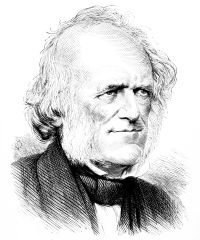
Portrait of F. H. Bradley F. H. Bradley,  Ethical Studies — Essay VI. (1876)

“ An infinite quantity we have seen to be a self-contradiction, and the advance towards it fallacious; so that ‘more’ does not come any nearer to ‘most.’ In comparison of infinity, all finite sums are equal. When you ask for the difference between each and the infinite, in order to compare these differences one with the other, you get in every case the same answer, Between the infinite and each finite alike there is a quantity, about which in no case can we say more than that it is not any finite sum. ”
Source: Wikisource

Jaime Luciano Balmes,  Fundamental Philosophy, Vol. 2…

“ The proposition that the difference between the finite and the infinite cannot be finite, is not wholly correct. We must first of all take notice that the difference between two quantities, whether finite or infinite, cannot be absolutely infinite, in the sense of diminution. Difference is the excess of one quantity over another, and necessity implies a limit; for as the excess only is considered, the quantity exceeded is not contained in the difference. Calling the difference D, the greater quantity A, and the smaller a, I say that D can in no hypothesis be infinite. ”
Source: Gutenberg

Get perspective with Kwize: daily news enlightened by great literature