“ The flintlock musket ignited the powder in the external pan by striking flint against steel when the trigger was pulled, and it was a concealable weapon which could also be used in rainy weather, since it did not require a burning cord. A flintlock cost three or four times as much as a matchlock and required almost constant maintenance by a skilled gunsmith. Morris suspected that whereas a few of the rich royalist exiles on Barbados might own flintlocks, most of the poorer planters probably had nothing more than cheap matchlocks. ”
Flintlock musket
Definition and stakes
The theme of “flintlock musket” has been addressed by authors such as Ernest Christian Wilford, Frederick Edward Maning, Eliza Lee Cabot Follen, Various and Thomas Hoover. It is often associated with terms like rifle, gunpowder, barrel, bullet and flint.
Quotes about “flintlock musket”
Philip Verrill Mighels, As It Was in the Beginning
“ From beneath a heap of rotted cordage a greenish cylinder protruded. Grenville drew it forth. It proved to be a small brass cannon, unmounted, and apparently filled with mud. Near by he discovered the rapidly disintegrating remnants of an old-time flintlock musket. This was a priceless treasure, for the flint, which was still intact. He likewise saved a bit of the steel that the cordage had protected. ”
1911 Encyclopædia Britannica (1911)
“ The general adoption of the flintlock musket and the suppression of the pike in the armies of Europe put an end to the original special duties of fusiliers, and they were subsequently employed to a large extent in light infantry work, perhaps on account of the greater individual aptitude for detached duties naturally shown by soldiers who had never been restricted to a fixed and unchangeable place in the line of battle. ”
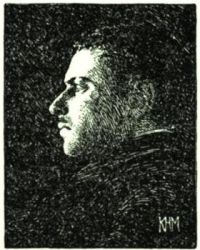 Henry W. Shoemaker,
A Catalogue of Early Pennsylvania and Other Firearms and Edged Weapons at "Restless Oaks"…
“ Some illegible lettering on barrel, which is octagon and extremely heavy. Ramrod under barrel. Stock extends only to breech and is inlaid with German silver. Extremely rare. This type was used on the western plains, 1840-'55.30. U. S. FLINTLOCK MUSKET. L. 58"Model of 1798. Cheek-piece hollowed into stock. Complete with flint and ramrod and in fine shooting condition. Mark, "J. Henry, Phila."31. FLINTLOCK KENTUCKY RIFLE. L. 56-1/2"Curley maple stock. Brass mounts, including long patch-box. Original striped ramrod, which has been re-tipped with an exploded pistol cartridge. ”
J. B. Jones, A Rebel War Clerk's Diary at the Confederate States Capital
“ All the world seems to be in the market buying arms. Mr. Dayton, U. S. Minister in Paris, has bought 30,000 flint-locks in France; and our agent wants authority to buy some too. He says the French statisticians allege that no greater mortality in battle occurs from the use of the percussion and the rifled musket than from the old smooth-bore flint-lock musket. This may be owing to the fact that a shorter range is sought with the latter.August 24th.—We are resting on our oars after the victory at Manassas, while the enemy is drilling and equipping 500,000 or 600,000 men. ”
 George Manville Fenn,
!Tention: A Story of Boy-Life during the Peninsular War
“ It does a fellow good to see you burst out laughing. Why, I haven’t seen you grin like that not since the day when I went down with the bullet in my back. Here, I know what I’ll do. I’ll chuck all these stones, and make a scratch for every day on the stock of my musket. ’Tain’t as if it was a Bri’sh rifle and the sergeant coming round and giving you hooroar for not keeping your arms in order. That would be a good way, wouldn’t it, because the musket-stock wouldn’t weigh any heavier when you had done than when you had begun. ”
Various, Popular Science Monthly (1886)
“ Steady improvement of the weapon through the seventeenth and eighteenth centuries, by the men who were wielding it to gain for themselves the commonest rights of ownership in their own souls and bodies and the fruits of their toil, had made the musket so handy that the cumbrous fork-rest could be dispensed with, and had given it the flint-lock, the bayonet, and the front-sight, which latter greatly increased the accuracy of aim. ”
H. A. Wise, Captain Brand of the "Centipede"
“ Yes, those watchful, kind eyes followed his slightest movements; and while the hammer was going in vigorous blows on the planks, or the axe chipping away a timber, his pleasant voice sang Creole songs to the child, or encouraged his innocent prattle. A loaded musket, which, with some ammunition, he had dug out from the wreck of his old quarters, stood leaning against an upright post under the shade, and woe to the man or beast that might have dared to approach the boy! ”
William Surtees, Twenty-Five Years in the Rifle Brigade
“ My opinion is, that our line troops ought to be armed with a better description of musket. If five shillings more were added to the price, it would make a great difference in the article, and be very trifling to the public. Our army has always been too sparingly supplied with flints, which may be had almost for an old song; but if wanted in the field, nothing can supply their place. Many a brave soldier has fallen while hammering at a worn out flint. ”
Percy Godfrey Botfield Lake, Once a Week, Series 1, Volume VI… (1861-1862)
“ An invention which doubled the use of the musket now was introduced. To Germany we owe the flint-lock, as well as the wheel-lock. Rude and clumsy indeed at first, with its upright steel, the “Schnapp-hahn,” or literally snap-cock, when it once gained a footing, drove the match lock completely out of the field, and held its ground for upwards of 150 years. ”
Various, McClure's Magazine, Vol. 6, No…
“ The Indian relics are a tomahawk, a Winnebago pipe, a Winnebago flute, and a knife. The powder-horn and the flintlock rifle are the only volunteer articles. One of the survivors of the war, Mr. Elijah Herring of Stockton, Illinois, says of the flintlock rifles used by the Illinois volunteers: "They were constructed like the old-fashioned rifle, only in place of a nipple for a cap they had a pan in which was fixed an oil flint which the hammer struck when it came down, instead of the modern cap. ”
Percy Godfrey Botfield Lake, Once a Week, Series 1, Volume VI… (1861-1862)
“ The improvement of causing the steel to cover the priming, and to fly open by the striking of the cock against it, was soon made; and at the beginning of the eighteenth century the flint-lock was in general use in the English army, and differed but little from that with which our troops were armed up to 1840: it was a little heavier, and a little clumsier, perhaps, but that was all the difference, considered only as a fire-arm. ”
Irving B. Cook, The "City Guard": A History of Company "B" First Regiment Infantry… (1895)
“ The caliber of this firearm was .69 of an inch. Members were allowed to use any charge powder they wished, the bullet being round. This musket superseded the old “flint lock.” No dependence could be placed upon it for close shooting, however, even at the short range of those days. ”
Thomas T. Hoopes, Armor and Arms
“ The locks and the large and numerous mounts on the stock are elaborately chiseled steel in strong relief with designs of animals, monsters, and semi-human figures against a background of floral arabesques.Not all flintlocks were on firearms. The same mechanism was used on tinder boxes, alarm clocks, and gunpowder testers. The powder tester (Fig. 49) was like a pistol with a friction cover closing the mouth of the barrel. It was loaded (of course without a bullet) and fired. The force of the explosion blew the cover away from the barrel against the friction of a heavy spring ”
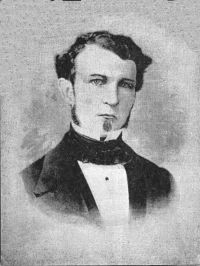 Roderick Flanagan,
The Aborigines of Australia
(1888)
“ On the same principle, a hoop thrown from the hand with a spinning motion inwards will begin to return before it touches the ground, and also the curious, though not so familiar, instance of a ball fired from a musket, the barrel of which has been bent to the left, being carried at long distances considerably to the right of the object aimed at, in consequence of the rotation of the ball on its axis, caused by the right side of the barrel overcoming the projectile force, and thus carrying it across the right line of aim. ”
Various, Harper's New Monthly Magazine, No…
“ In fact it is always a pleasure to see any thing done that is done with grace and dexterity, and this is a pleasure which the visitor to the Armory has an opportunity to enjoy at almost every turn.The component parts of the musket are all made according to one precise pattern, and thus when taken up at random they are sure to come properly together. There is no individual fitting required in each particular case. Any barrel will fit into any stock, and a screw designed for a particular plate or band, will enter the proper hole in any plate or band of a hundred thousand. ”
“ In the first place, the firing mechanism's a flintlock. So when you pull the trigger, the piece of flint there in the hammer strikes against the steel wing on the cap of the powder pan, opening it and firing the powder in a single action. Also, the powder pan loads automatically when the barrel's primed. It's faster and better than a matchlock.""That's lovely. But flintlocks have been around for some time, or hadn't you heard?" She looked at the guns and took a sip of sack, amused by his endless fascination with pistols. ”
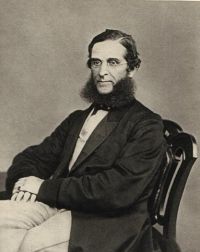 John Evans,
The Ancient Stone Implements, Weapons…
(1897)
“ These flints are wrought into shape in precisely the same manner as gun-flints, and it seems possible that the trade of chipping flint into forms adapted to be used with steel for striking a light may be of considerable antiquity, and that the manufacture of gun-flints ought consequently to be regarded as only a modification and extension of a pre-existing art, closely allied with the facing and squaring of flints for architectural purposes, which reached great perfection at an early period. ”
Various, The Atlantic Monthly, Volume 12…
“ Each soldier to whom a musket is served is provided also with a little tool, which, though very simple in its construction, enables him to separate his gun into its forty-seven parts with the greatest facility.The most costly of the various parts of the musket is the barrel, which, when completed, is estimated at three dollars. From this the parts descend gradually to a little wire called the ramrod-spring-wire, the value of which is only one mill.A complete percussion-musket weighs within a small fraction of ten pounds. ”
Thomas Baines, Shifts and Expedients of Camp Life…
“ Gunpowder, lead, and percussion caps, such as they are, can, when your own store is expended, destroyed, or lost, be readily procured even in very out of the way corners of the earth; whilst the cartridges calculated for breech-loaders could be only procured in towns or trading posts of importance, where the cost would, as a matter of necessity, be great, and their efficiency questionable. Strong flint muskets (old army regulation) will be found best calculated for the use of native servants. A bit of agate, common quartz, or iron pyrites, answers the purpose of a flint, should one be lost. ”
William Henry Doolittle, Inventions in the Century
“ As the arquebus succeeded the bow and arrow, so the musket, a smooth and single-barrel muzzle-loader with a flint-lock and a wooden ramrod, succeeded the arquebus. Rifles, which were the old flint-lock muskets with their barrels provided with spiral grooves to give the bullet a rotary motion and cause it to keep one point constantly in front during its flight, is claimed as the invention of Augustin Kutler of Germany in 1520, and also of Koster of Birmingham, England, about 1620. Muskets with straight grooves are said to have been used in the fifteenth century. ”
John Malcolm Mitchell, Oswald Barron, and Charles Francis Atkinson, 1911 Encyclopedia Britannica (1911)
“ Both the arquebus and the musket had a touch-hole on the right side of the barrel, with a pan for the priming, with which a lighted quick match was brought in contact by pressing a trigger. The musket, on account of its weight, was provided with a long rest, forked in the upper part and furnished with a spike to stick in the ground. The matchlock (long-barrelled matchlocks are still used by various uncivilized peoples, notably in India) was the typical weapon of the soldier for two centuries. ”
William Greener, Gunnery in 1858: Being a Treatise on Rifles…
“ Many years ago I made numberless experiments to ascertain this fact, and had it demonstrated beyond all doubt to be a bore of 18 and a bullet of 19; the difference in size admitting of the paper of the cartridge with a moderate degree of tightness. The ultimate range of such a musket with three drachms of gunpowder, would be equal to the range of the Enfield; but, of course, without one-tenth its accuracy. Yet for close quarters, line-firing, or quickness of loading, the musket will hold its place for centuries to come ”
John Evans,
The Ancient Stone Implements, Weapons…
(1897)
“ A few blows with the hammer enable a practised flint-knapper to judge whether the material on which he is at work is in the proper condition or no. Some of the Brandon workmen, however, maintain that though a flint which has been some time exposed to the air is harder than one recently dug, yet that it works equally well, and they say further, that the object in keeping the flints moist is to preserve the black colour from fading, black gun-flints being most saleable. ”
Various, Lippincott's Magazine of Popular Literature and Science…
“ The office of the spirally-wound feather in communicating a rotary motion, and thereby balancing, by an opposite force, the tendency of the missile to swerve in any given direction, is fulfilled by the spiral groove of the rifle. Of course, the ordinary smooth musket is unfitted to the conico-cylindrical ball. Discharged from such a barrel, there being nothing to keep the point in the direction of its flight, it soon tumbles over, like an arrow without a feather, and strikes wide of the mark. ”
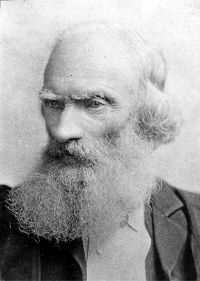 Sir Daniel Wilson,
Prehistoric man
“ We are apt to think of the old flint and stone-workers as merely picking up the chance materials suited to their simple craft. But the use of flint in the manufacture of sling-stones, arrow-heads, and other missile weapons, as well as of all ordinary household implements, and those of war and the chase, involved a constant demand for fresh materials, frequently procurable only from distant localities. It is what might be assumed, therefore, apart from any direct evidence, that a regular system of quarrying for flint nodules best fitted for the tool-makers’ art was pursued ”
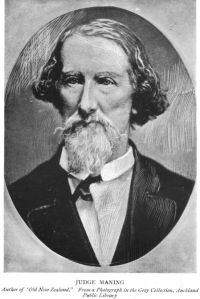 Frederick Edward Maning,
Old New Zealand: A Tale of the Good Old Times
“ When we reflect that a ton of cleaned flax was the price paid for two muskets, and at an earlier date for one musket, we can see at once the dreadful exertion necessary to obtain it. But supposing a man to get a musket for half a ton of flax, another half ton would be required for ammunition ”
John Evans,
The Ancient Stone Implements, Weapons…
(1897)
“ We have seen that in the gun-flint manufacture the flakes are finally shaped by means of a knapping or trimming hammer and a fixed chisel, which act one against the other, somewhat like the two blades of a pair of shears, and the process adopted by the ancient flint-workers for many purposes must have been to some extent analogous, though it can hardly have been precisely similar. ”
Various, The Atlantic Monthly, Volume 12…
“ A curious and interesting part of the operation of manufacturing muskets is the straightening of the barrel. This straightening takes place continually in every stage of the work, from the time the barrel first emerges from the chaotic mass produced by heating the scalp, until it reaches the assembling-room, where the various parts of the musket are put together. ”
Ernest Christian Wilford, Class Book for the School of Musketry…
“ Six drachms of powder is the full service charge for a flint musket, and four drachms of a percussion musket; yet this immense pressure can be resisted by a cylinder of iron not more than one quarter of an inch thick, and not iron of the best quality.Experiment 2.—A good musket barrel had a cylinder of brass, three inches long, turned to fit the muzzle, and soldered in, so as to close it air-tight. The plug, or breech-screw, was removed, and a felt wad was pushed in with a short piece of wood, marked to the exact depth the charge would occupy, to prevent the ball rolling forward. ”
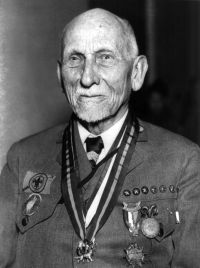 Daniel Carter Beard,
The Book of Camp-Lore and Woodcraft
“ In the olden times some people had flint lock pistols without barrels, which were used only to ignite punk for the purpose of fire-building. But when one starts a fire by means of flint and steel one's hands must act the part of the hammer, the back of one's knife may be the steel, then a piece of flint or a gritty rock and a piece of punk will produce the spark necessary to generate the flames. ”
Thomas Wilhelm, A Military Dictionary and Gazetteer
“ Iron plates 1 inch thick, oak from 8 to 10 inches thick, a good wall a foot thick or a firm bank of earth 4 feet thick, will afford secure cover from grape-shot, from any but the largest guns at short ranges. The common musket will drive its bullet about a foot and a half into well-rammed earth, or it will penetrate from 6 to 10 half-inch elm boards placed at intervals of an inch. The penetration of the rifled musket is about twice that of the common musket. A rope matting or mantlet 31⁄2 inches thick is found to resist small-arm projectiles at all distances ”
Related terms
Authors who wrote about “flintlock musket”
Ernest Christian WilfordFrederick Edward Maning Eliza Lee Cabot FollenVariousThomas HooverPhilip Verrill MighelsGeorge Manville FennJ. B. JonesHenry W. ShoemakerWilliam SurteesPercy Godfrey Botfield LakeH. A. WiseWilliam Henry DoolittleRoderick FlanaganWilliam GreenerIrving B. CookJohn Malcolm Mitchell, Oswald Barron…Thomas Wilhelm
 Frederick MarryatWillis Fletcher Johnson
Frederick Edward ManingEliza Lee Cabot FollenVariousThomas HooverPhilip Verrill MighelsGeorge Manville FennJ. B. JonesHenry W. ShoemakerWilliam SurteesPercy Godfrey Botfield LakeH. A. WiseWilliam Henry DoolittleRoderick FlanaganWilliam GreenerIrving B. CookJohn Malcolm Mitchell, Oswald Barron…Thomas WilhelmFrederick MarryatWillis Fletcher Johnson