Funerary urn

Definition and stakes

Lucius M. Sargent,  Dealings with the Dead, Volume 1…

“ However desirable, when the remains of the dead were to be deposited in the dwelling-houses of the living, cremation and urn burial are quite unnecessary, wherever there is no want of ground for cemeteries, in proper locations. The funereal urns of the ancients were of different sizes and forms, and of materials, more or less costly, according to the ability and taste of the surviving friends. Ammianus Marcellinus relates, that Gumbrates, king of Chionia, near Persia, burnt the body of his son, and placed the ashes in a silver urn. ”
Source: Gutenberg

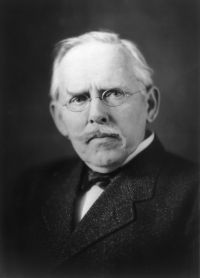
Portrait of Robert Munro Robert Munro,  Prehistoric Britain (1923)

“ This is a condition often met with in the case of urn cemeteries of later times. In burials by inhumation the grave was frequently marked by a standing stone, or a circle of earth or stones. As inhumation and cremation were practised simultaneously, both methods may be found in the same mound.
When the body was burnt the incinerated remains were carefully collected and usually placed in an urn, and then buried, either in the earth, or in a prepared grave. A common practice was to bury an urn in a more ancient tumulus or barrow, and hence these are known as secondary interments.
”
Source: Wikisource

Hugo Erichsen,  The cremation of the dead

“ If the guardians of consecrated sepulchres, in which people have paid an honest fee to be buried, are to dig them up and cart them off as in England, or make a show of them as here, why, I can only say that cremation will gain a good many converts. Any one would prefer urn burial to the chance of being thus made a spectacle. So good, too, it must be for the rising population to take off the edge of any salutary horror they may feel at death and decay, or of reverence for the dead. ”
Source: Gutenberg

Get perspective with Kwize: daily news enlightened by great literature