Gas emission

Definition and stakes

Archibald Williams,  How it Works

“ Inventors therefore sought for methods by which the emission of light could be obtained from coal gas independently of the incandescence of the carbon particles in the flame itself; and step by step it was discovered that gas could be better employed merely as a heating agent, to raise to incandescence substances having a higher emissivity of light than carbon. ”
Source: Gutenberg

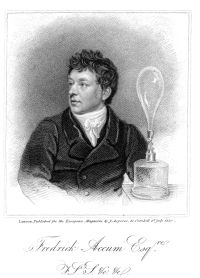
Portrait of Friedrich Christian Accum Friedrich Christian Accum,  Description of the Process of Manufacturing Coal Gas…

“ The quantities of heat and light produced by the combustion of inflammable gases are by no means in the same constant relation to each other; one frequently increases, whilst the other diminishes; and this is eminently the case when coal gas and oil gas are burned against each other. The quantity of heat liberated is, speaking generally, as the quantity of gas consumed, and this is greatest with the coal gas; but the quantity of light is nearly as the quantity of carbon that is well burnt in the flame, and this is greatest in the oil gas. ”
Source: Gutenberg

John B. Rathbun,  Practical Hand Book of Gas, Oil and Steam Engines

“ Since the carbon and hydrogen elements of a fuel exist in many different proportions and conditions in coal and oil, different amounts of oxygen are required for the consumption of different fuels. It should also be borne in mind that a greater quantity of air is required for the combustion of a fuel than oxygen, as the air is greatly diluted by an inert gas, nitrogen, which will not support combustion. Because of the impossibility of obtaining perfectly homogenous mixtures of air and the fuel, a greater quantity of air is used in practice than is theoretically required. ”
Source: Gutenberg

Get perspective with Kwize: daily news enlightened by great literature