Green woodpecker

Definition and stakes

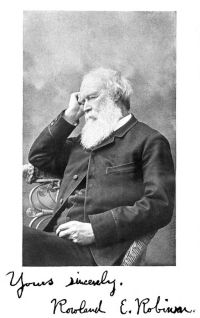
Portrait of Jean-Henri Fabre Jean-Henri Fabre,  Animal Life in Field and Garden

“ The commonest of our woodpeckers is the green woodpecker, which is about as large as a turtle-dove. Its plumage has a richness rarely seen in that of any of our other birds. The top of the head and the nape of the neck are of a magnificent crimson; two mustaches of the same hue adorn the bird’s face; the back is green, the breast and stomach yellowish white, the rump yellow, and the large wing-feathers black with regular marks of white on the edge. The female has less brilliant coloring than the male and its mustaches are black instead of red. ”
Source: Gutenberg

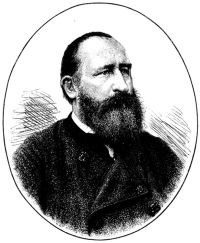
Portrait of Grant Allen Grant Allen,  Moorland Idylls

“ But though the green woodpecker is so exceedingly practical and sensible a bird, built all for use and very little for show, he is not wholly devoid of those external adornments which are the result of generations of æsthetic preference. Dominant types always show these peculiarities. His ground-tone of green, indeed, serves, no doubt, a mainly protective function, by enabling him to escape notice among the leaves of the woodland; and even on a tree-trunk he readily assimilates with the tone of the background ”
Source: Gutenberg

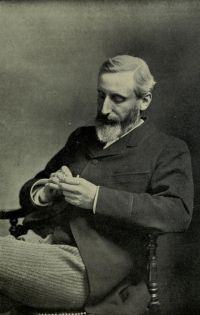
Portrait of Olive Thorne Miller Olive Thorne Miller,  Little Brothers of the Air

“ Mother Nature is kind to woodpeckers. She [Pg 43] fits them out for life before they leave the seclusion of the nursery. There is no callow, immature period in the face of the world, no "green" age for the gibes or superior airs of elders. A woodpecker out of the nest is a woodpecker in the dress and with the bearing of his fathers,—dignified, serene, and grown up.
As the sweet June days advanced, the young bird in the oak-tree grew bolder.
”
Source: Gutenberg

Get perspective with Kwize: daily news enlightened by great literature