“ The realms of Chosroe I would not covet, were the phantom of my love to vanish from my sight. May the showers of rain ever bedew the lands and mounds of Sheerebah! lands, where the brilliancy of the veiled full moons may be seen in the obscurity of their sable ringlets—where my heart chases among them, a damsel whose eyes are painted with antimony, more lovely than the Houri. Thou mayst see in her teeth a liquor when she smiles, where the wine cup is studded with pearls. The fawn has borrowed the magic of her eye, and it is the lion of the earth that chases its prey for her beauty. ”
Quotes about “houri”
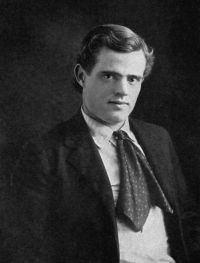 Jack London,
The Jacket (The Star-Rover)
Jack London,
The Jacket (The Star-Rover)
“ For woman is beautiful . . . to man. She is sweet to his tongue, and fragrance in his nostrils. She is fire in his blood, and a thunder of trumpets; her voice is beyond all music in his ears; and she can shake his soul that else stands steadfast in the draughty presence of the Titans of the Light and of the Dark. And beyond his star-gazing, in his far-imagined heavens, Valkyrie or houri, man has fain made place for her, for he could see no heaven without her. ”
James Arthur, Time and Its Measurement
“ When we say “6 o'clock” we mean a point of time marked by the striking of the clock. We have no names for the hour periods. We must say “from 5 to 6” or “between 5 and 6” for an hour period. The “twelfth hour” of the New Testament, I understand to mean a whole hour ending at sunset; so we are dealing with an oriental attitude of mind towards time. I think we get that conception nearly correct when we read of the “middle watch” and understand it to mean during the middle third of the night. Secondly, why do the Japanese use no 1, 2, 3 on their dials? ”
active 1857-1887 James W. Benson, Time and Time-Tellers
“ In ancient books the word cloche simply stands for a bell,—the monks being accustomed to ring a bell at certain periods marked for them by their sun-dials or hour-glasses, and 'What's o'clock?' in old writers is often merely equivalent to the inquiry, 'What hour was last struck by bell?' The word horologe or hour-measurer of course equally applied to the sun-dial, the clepsydra, and the clock, and this convertibility of terms makes it all the more difficult to trace the point at which the newer invention began. ”
G. Hastie, Folk-Lore (1893)
“ The eyes of the immense crowd are ever being turned towards the lighted clock-face of the "Auld and Faithfu" Tron, the hour approaches, the hands seem to stand still, but in one second more the hurrahing, the cheering, the hand-shaking, the health-drinking, the swaying to and fro of the immense throng, is all kept up as long as the clock continues to ring out the much-longed-for midnight hour. ”
Johan Horrins, Memoirs of a Trait in the Character of George III. of these United Kingdoms (1835)
“ Now, the exact time of the day at the place where we are, can be ascertained by well known and easy observations of the Sun if visible for a few minutes at any time from his being ten degrees high until within an hour of noon, or from an hour after noon until he is only 10 degrees high in the afternoon; if therefore, at any time when such observation is made, a Timekeeper tells us at the same moment what o'clock it is at the place we sailed from, our Longitude is clearly discovered. ”
 George Augustus Sala,
Twice round the clock; or, The hours of the day and night in London
(1862)
George Augustus Sala,
Twice round the clock; or, The hours of the day and night in London
(1862)
“ But why, the inquisitive may ask—the child-man who is for ever cutting up the bellows to discover the reservoir of the wind—why four o’clock a.m.? Why not begin our pilgrimage at one a.m., and finish the first half at midnight, in the orthodox get-up-and-go-to-bed manner? [11] Simply because four a.m. is in reality the first hour of the working London day. The giant is wide awake at midnight; he sinks into a fitful slumber about two in the morning: short is his rest, for at four he is up again and at work, the busiest bee in the world’s hive. ”
James Arthur, Time and Its Measurement
“ Some Chinese and Japanese methods of dividing the day and night are indicated in Fig. 1. The old Japanese method divides the day into six hours and the night also into six, each hour averaging twice as long as ours. In some cases they did this by changing the rate of the clock, and in others by letting the clock run uniformly and changing the hour marks on the dial, but this will come later when we reach Japanese clocks.It is remarkable that at the present time in England the “saving daylight” agitation is virtually an attempt to go back to this discarded system. ”
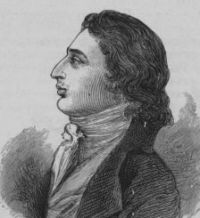 Robert Southey,
The doctor, &c., vol. 1 (of 7)
(1834)
Robert Southey,
The doctor, &c., vol. 1 (of 7)
(1834)
“ This was the clock which, with few intervals, measured out by hours the life of Daniel Dove from the seventeenth year of his age, when he first set up his rest within its sound.Perhaps of all the works of man sun-dials and church-clocks are those which have conveyed most feeling to the human heart; the clock more than the sun-dial because it speaks to the ear as well as to the eye, and by night as well as by day. Our forefathers understood this, and therefore they not only gave a Tongue to Time, but provided that he should speak often to us and remind us that the hours are passing. ”

“ IanThe clocks! Bring them! [Seizes the spade over by the house; begins to dig a grave behind the sun-dial.] Bring every one! We will bury the clocks before the sun-dial—an offering, a living sacrifice. I tell you this is great, Eloise. What is a clock? Something agreed upon and arbitrarily imposed upon us. Standard time. Not true time. Symbolizing the whole standardization of our lives. Clocks! Why, it is clockiness that makes America mechanical and mean! Clock-minded! A clock is a little machine that shuts us out from the wonder of time. ”
Robert Cleland, True to a Type, Vol. 2 (of 2)
“ The hour was still on the early side of noon; but when the day begins between three o'clock and four, for persons whose waking hour is seven--when those persons, instead of breaking their fast when they get up, spend hours in the keen morning air and on the water before breakfast, a heaviness supervenes, and the system of the individual makes it late in the day, however early be the time which the clock may indicate. Wilkie, as was not unnatural, began to feel the expedition something of a bore. ”
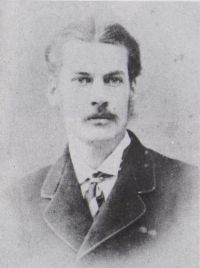 Ernest Mason Satow,
A Diplomat in Japan
Ernest Mason Satow,
A Diplomat in Japan
“ Perhaps an hour passes in this way, for the entertainment is provided from a restaurant, as the domestic who performs the office of cook in a household only knows how to boil rice and make commonplace stews; and in those days at least neither clocks nor punctuality were common. If you were invited for two o'clock, you went most often at one or three, or perhaps later. In fact, as the Japanese hour altered in length every fortnight, it was very difficult to be certain about the time of day, except at sunrise, noon, sunset and midnight. ”
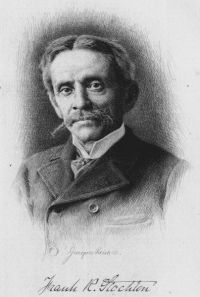 Frank R. Stockton,
Fanciful tales
(1922)
Frank R. Stockton,
Fanciful tales
(1922)
“ And, on the other hand, if you set a clock forward even so little as ten minutes, you take away that much from the future, and you make the coming hour only fifty minutes long. Now, no human being has a right to take anything away from the future, or to make the hours shorter than they were intended to be. I desire, my dear niece, that you will earnestly think over what I have said, and I am sure that you will then see for yourself how unwise it would be to trifle with the length of the hours which make up our day. And now, Arla, let us talk of other things. ”
 Basil Hall Chamberlain,
Things Japanese
(1905)
Basil Hall Chamberlain,
Things Japanese
(1905)
“ Hence if the numbers one, two, and three had been used to denote any of the actual hours, confusion might have arisen between them and the preliminary strokes,—a confusion analogous to that which, in our own still imperfect method of striking the hour, leaves us in doubt whether the single stroke we hear be half-past twelve, one o'clock, half-past one, or any other of the numerous half-hours. Old-fashioned clocks, arranged on the system just described, are still sometimes exposed for sale in the curio-shops. ”
Matthew Henry, Matthew Henry's Commentary on the Whole Bible… (1700s)
“ Are there not twelve hours in the day? The Jews divided every day into twelve hours, and made their hours longer or shorter according as the days were, so that an hour with them was the twelfth part of the time between sun and sun; so some. Or, lying much more south than we, their days were nearer twelve hours long than ours. The divine Providence has given us day-light to work by, and lengthens it out to a competent time; and, reckoning the year round, every country has just as much daylight as night, and so much more as the twilights amount to. Man's life is a day ”
James Arthur, Time and Its Measurement
“ So we have a complete striking clock made by a man so poor that he had only his anvil, hammer and file. The weights are hung on cords as thick as an ordinary lead pencil and pass over pulleys having spikes set around them to prevent the cords from slipping. The weights descend 7 ft. in 12 hours, so they must be pulled up—not wound up—twice a day. The single hour hand is a work of art and is cut through like lace. Public clocks may still be seen in Europe with only one hand. ”
Frank R. Stockton,
Fanciful tales
(1922)
“ THE CLOCKS OF RONDAINEThis story naturally leads to the history of clocks and time-pieces of various kinds, from the crude hour-glass, the burning candle graduated to last a certain time, the water-clock, much the same as the hour-glass, and the dial on which the shadow of the sun is traced, down to the clocks which we [134] have now, and especially those of finest mechanism and beautiful ornamentation.The industry of clock-making is a very important one. In the United States it has been built up almost entirely in the last sixty years. ”
George Augustus Sala,
Twice round the clock; or, The hours of the day and night in London
(1862)
“ Eleven o’clock at night is the great supper-time of the working classes; then, by the steady and industrious mechanic, the final calumet is smoked, the borrowed newspaper read, the topics of the day, the prospects of the coming week, discussed with the cheery and hard-working helpmate who sits by the side of her horny-handed lord, fills his pipe, pours out his beer, and darns the little children’s hose. ”
 John Henry Newman,
An Essay in Aid of a Grammar of Assent
John Henry Newman,
An Essay in Aid of a Grammar of Assent
“ We do not dispense with clocks, because from time to time they go wrong, and tell untruly. A clock, organically considered, may be perfect, yet it may require regulating. Till that needful work is done, the moment-hand may mark the half-minute, when the minute-hand is at the quarter-past, and the hour hand is just at noon, and the quarter-bell strikes the three-quarters, and the hour-bell strikes four, while the sun-dial precisely tells two o’clock. ”
“ You bathe in the Channel in the very prose of the day. Nothing in the world is more uninteresting than eleven o’clock. It is the hour of mediocrity under the best conditions; but eleven o’clock on a shingly beach, in a half-hearted summer, is a very common thing. Twelve has a dignity always, and everywhere its name is great. The noon of every day that ever dawned is in its place heroic ”
Laura Lee Hope, The Outdoor Girls at Rainbow Lake (1913)
“ Just then a clock chimed out eight strokes, in four sections of two strokes each. "Eight o'clock!" exclaimed Amy. "Your timepiece must be wrong, Betty. It's nearer noon than eight." "That's eight bells—twelve o'clock," said the pretty hostess, with a laugh. "That's a new marine clock Uncle Amos gave me for the Gem. It keeps time just as it is done on shipboard." "And when it's eight o'clock it's twelve," murmured Grace. "Do you have to do subtraction and addition every time the clock strikes?" ”
Arthur Hayden, Chats on Old Clocks
“ It was Bacon who wrote, a century before: "If a man be in sickness or pain, the time will seem longer without a clock or hour-glass than with it."The question arises as to what particular kind of clock was at the bedside of Charles II that he should notice that it required winding. It may have been usual to wind it at that particular time every morning, being, as it undoubtedly was, a thirty-hour clock conveniently wound the same time every day. ”
Mary Graham Bonner, 365 bedtime stories (1923)
“ The Clocks “I think I shall tell you the story of the talking that went on one day in a clock shop when the old clock mender had gone to his lunch,” said daddy.“‘My master is so lazy!’ said the Eight-Day Clock. ‘He keeps saying: “Oh, dear, I must wind up that Clock.” And then he grabs a newspaper and sits down and reads. He quite forgets about me. He should wind me up when it is time. Gracious, I strike so he can tell I need to be wound up. But he doesn’t pay much attention. He just winds me up after I have had to stop for days. ”
 Mrs. John Van Vorst,
The Woman Who Toils
Mrs. John Van Vorst,
The Woman Who Toils
“ An hour at noon? Of course, this magnificent hour is theirs! Time to eat, time to feed the human machine. One hour in which to stretch limbs, to pull to upright posture the bent body. Meanwhile daylight progresses from glowing beauty to high noon, and there the acme of brilliance seems to pause, as freed humanity stares half-blinded at God's midday rest.All the remaining hours of daylight are for the leisure world. Not till night claims Lynn shall the factory girl be free.Ascending the five flights of dirty stairs, my steps fell side by side those of a young workman in drilling coat. ”
Frank H. Stauffer, The Queer, the Quaint and the Quizzical…
“ About 1679 Nicholas Grallier de Servierre, an old soldier who had served in the Italian army, constructed a whimsical clock. A figure of a tortoise, dropped into a plate of water, having the hours marked on the rim, would float around and stop at the proper time, telling what o'clock it was. A lizard ascended a pillar, on which the hours were marked, and pointed to the time as it advanced. A mouse did the same thing by creeping along an hour-marked cornice.Clock Presented to Charlemagne. ”
 Thomas Hardy,
Far from the Madding Crowd — Chapter XL
(1874)
Thomas Hardy,
Far from the Madding Crowd — Chapter XL
(1874)
“ A manor-house clock from the far depths of shadow struck the hour, one, in a small, attenuated tone. After midnight the voice of a clock seems to lose in breadth as much as in length, and to diminish its sonorousness to a thin falsetto. ”
 Oliver Optic,
Across India; Or, Live Boys in the Far East
Oliver Optic,
Across India; Or, Live Boys in the Far East
“ Every degree by meridians is equal to four minutes of clock-time. Multiply the longitude by four, and the result in minutes is the difference of time between Greenwich and Aden, 180 minutes, or three hours. When it is noon at Greenwich, it is three o'clock at Aden, as you see in the diagram before you." "Three o'clock in the morning, Mr. Scott?" queried the commander. "In the afternoon, I should have added. Going east the time is faster, and vice versa," continued the young officer. ”
 Leonid Andreyev,
The Little Angel and Other Stories
Leonid Andreyev,
The Little Angel and Other Stories
“ The clock in the neighbouring church-tower began to strike, and its dismal metallic sound trembled and wept, flying away into the void, and being lost in the maze of silently whirling snowflakes. I began to count the strokes, and went into a fit of laughter. The clock struck 15! The belfry was old, and so, too, was the clock, and although it indicated the right time, it struck spasmodically, sometimes so often that the grey, ancient bell-ringer had to clamber up and stop the convulsive strokes of the hammer with his hand. ”
George Augustus Sala,
Twice round the clock; or, The hours of the day and night in London
(1862)
“ One o’clock is a capital hour to step round to your stockbroker, [133] in Pope’s Head Alley, Cornhill, and do a little business in stocks or shares. At one o’clock the Prime Minister, or his colleagues, have resignation enough to listen (with tolerable patience) to some half dozen deputations who come to harangue them about nothing in particular; at one o’clock obliging noblemen take the chair at public meetings at the Freemasons’, or the London Tavern. At one o’clock—from one to two rather—the aristocracy indulge in the sumptuous meal known as “lunch.” ”
Frederic Shoberl, Persia (1828)
“ Such indeed is their precipitation, that the duty of prayer seems to be quite as irksome as it is indispensable. At ten o'clock, a servant announces that supper, shamee, is ready: at the same time, he brings with him a ewer of water; each of the party washes his hands; and they then seat themselves round the tray on which the dishes are placed. Eleven o'clock usually breaks up the company, and puts an end to the occupations of the day. ”
