“ So in speculations as to the origin and evolution of the human race, history affords the standard from which we start, through the successive 6 stages of prehistoric, neolithic, and palæolithic man, until we pass into the wider ranges of geological time. ”
Human prehistory
Definition and stakes
The theme of “human prehistory” has been addressed by authors such as Robert J. Braidwood, Various, Emory Adams Allen, S. Laing and Francis Bacon. It is often associated with terms like civilization, culture, anthropology, history and geology.
Quotes about “human prehistory”
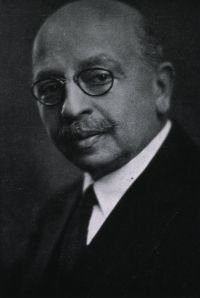 Joseph Jastrow,
Fact and Fable in Psychology
“ The origin of human endowment lies hidden in an obscure and unrecorded past; the fact of development, of the gradual unfoldment of capacity, stands out conspicuously throughout the historical record of human achievement, and is equally recognizable in the extensive remains of prehistoric humanity. ”
Charles Morris, Man And His Ancestor: A Study In Evolution
“ If now, instead of seeking for evidences of man's ancestry within the human body, in survivals of ancient anatomical structures, we seek for them within the crust of the earth, we find ourselves confronted with evidences of a great antiquity of the human race, partly in implements of human manufacture, partly in ancient or fossilized bones of primitive man. ”
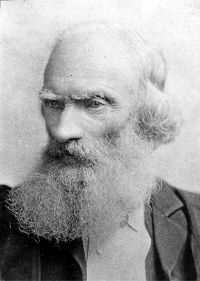 Sir Daniel Wilson,
Prehistoric man
“ With such well-authenticated and altogether indisputable evidence already in our possession, the additions made to our grounds for belief in the antiquity of the prehistoric dawn of Britain or Europe do not materially affect the conclusions thereby involved, though they add to the apparent duration of the human era. ”
marquis de Jean-François-Albert du Pouget Nadaillac, Manners and Monuments of Prehistoric Peoples
“ Whatever antiquity may be attributed to the human race, whatever the initial date to which its first appearance may be relegated, this antiquity is but slight, this date is but modern, if we compare it with the truly incalculable ages of which geology reveals the existence. ”
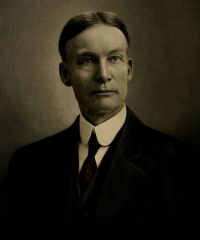 Frank W. Blackmar,
History of Human Society
“ The earliest historical records and relics of the seats of ancient civilization all point backward to an earlier period of human life. Looking back from the earliest civilizations along the Euphrates and the Nile that have recorded the deeds of man so that their evidences could be handed down from generation to generation, the earlier prehistoric records of man stretch away in the dim past for more than a hundred thousand years. ”
 G. K. Chesterton,
The Everlasting Man
“ The truth is that they are using the terms historic and prehistoric without any clear test or definition in their minds. What they mean is that there are traces of human lives before the beginning of human stories; and in that sense we do at least know that humanity was before history. ”
Paul Klapper, College Teaching
“ To a complete knowledge of this civilization belongs all that the ancients possessed or did, all that they thought or wrote, whether or not any particular part of it had an influence upon later times or is, in itself, interesting or valuable now. All parts alike are phenomena of the life of these ancient peoples and so of the life of the human race. ”
Emory Adams Allen, The Prehistoric World; Or, Vanished Races
“ They make us acquainted with a people the very existence of whom was not known a few years back. Though the whole life of those ancient races seemed hopelessly lost in the night of time, the gloom is irradiated by the light of modern science, which lays before our astonished vision the remains of arts and industries of the primitive tribes that occupied Europe during the morning-time of human life. ”
Emory Adams Allen, The Prehistoric World; Or, Vanished Races
“ This primitive culture seems to have been the commencement of our own culture, and so the industries, household implements, and weapons of these ages possess a greater interest to us. We have now completed our inquiry into prehistoric life in Europe, and are ready to turn our attention to other parts of the field. What we have thus far learned shows us how true it is that the past of human life on the globe is full of mystery. We trust that what has been written will enable our readers to form clearer conceptions of life in Europe during these far away times. ”
William A. Locy, Popular Science Monthly (1909)
“ The accounts of the discoveries of prehuman remains, connecting by gradations with races now living, are extending into remote periods our conception of the antiquity of man. These matters arouse interest and discussion, and the sweep of all these discoveries brings with it a widening of the horizon of human understanding. ”
“ The immense antiquity of man upon earth having been established, other questions of great interest present themselves as to the origin of the race. These questions, however, no longer depend on positive facts of observation, like the discovery of palæolithic remains in definite geological deposits, but on inference and conjecture from these and other observed facts, most of which are of comparatively recent date and hardly extend beyond the historical period. ”
“ If then all memory of a period so comparatively recent as that of the neolithic stone age and of the latest extinct animals was completely lost when the first dawn of history commences, it follows as a matter of course that nothing like an historical tradition survives anywhere of the immensely longer palæolithic period and of the origin of man. ”
A. H. Keane, Man, Past and Present
“ If, as above seen, the study of human origins is largely a geological problem, the investigation of the later developments, during the Metal Ages and prehistoric times, belongs mainly to the field of Archaeology. ”
Various, Popular Science Monthly (1889)
“ DURING the unlettered youth of the race there were no written records from which the antiquity of man can be read. So the anthropologist on the one hand, and the geologist on the other, have sought to construct an early human history from prehistoric relics, and from the formations in which they are imbedded or the fossils with which they are associated. ”
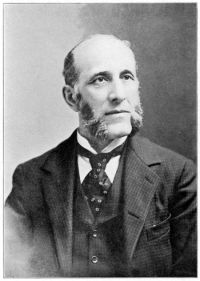 Philip Van Ness Myers,
Ancient History
(1904)
“ How we learn about Prehistoric Man.—A knowledge of what prehistoric man was and what he did is indispensable to the historical student; for the dim prehistoric ages of human life form the childhood of the race,—and the man cannot be understood without chapat least some knowledge of the child. ”
 Robert Munro,
Ancient Scottish Lake-Dwellings or Crannogs
“ In searching back through the successive stages of human civilisation we arrive at a period when both written history and traditions fail. This prehistoric period, up to the commencement of the present century, was entirely lost in the thick veil of darkness which surrounded everything pertaining to the past history of the globe. ”
Philip Van Ness Myers,
Ancient History
(1904)
“ The Prehistoric and the Historic Age.—The uncounted millenniums which lie back of the time when man began to keep written records of what he thought and did and of what befell him, are called the Prehistoric Age. The comparatively few centuries of human life which are made known to us through written records comprise the Historic Age. ”
Frank W. Blackmar,
History of Human Society
“ The recent study of anthropologists and archaeologists has brought to light much knowledge of primitive man which may be judged on its own evidence and own merits. The verification of these early cultures by the living races who have reached a similar degree of progress is of great importance. ”
Robert J. Braidwood, Prehistoric Men
“ More important than anything else—as our structure grows more complicated and our materials increase—is the fact that “a sort of history of human activity” does begin to appear. The habits or traditions that men formed in the making of their tools and in the ways they did things, begin to stand out for us. How characteristic were these habits and traditions? What areas did they spread over? How long did they last? ”
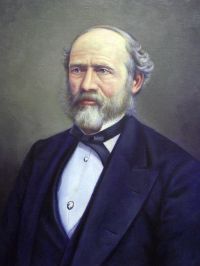 Lewis Henry Morgan,
Ancient Society
“ The antiquity of mankind upon the earth is now established by a body of evidence sufficient to convince unprejudiced minds. The existence of the race goes back definitely to the glacial period in Europe, and even back of it into the anterior period. We are now compelled to recognize the prolonged and unmeasured ages of man’s existence. The human mind is naturally and justly curious to know something of the life of man during the last hundred thousand or more years, now that we are assured his days have been so long upon the earth. ”
“ It has been fought to a great extent before the immense antiquity of the human race had been established, and it had become almost certain that its original starting-point must be sought at least as far back as in the Eocene period. ”
Frank W. Blackmar,
History of Human Society
“ Progress Is Indicated by the Early Cultures.—It is convenient to divide the early culture of man, based upon his development in art into the Paleolithic, or unpolished, and the Neolithic, or polished, Stone Ages. ”
 William Whewell,
The Plurality of Worlds
“ This history professes to inform us how man was placed upon the earth; and how, from one centre, the human family spread itself in various branches into all parts of the world. This genealogy of the human race is accompanied by a chronology, from which it results that the antiquity of the human race does not exceed a few thousand years. ”
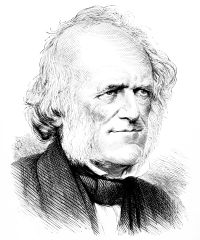 Charles Lyell,
The Antiquity of Man
(1863)
“ When it was written the subject was a particularly thorny one to handle, and it undoubtedly required much courage to tackle the origin and development of the human race from a purely critical and scientific standpoint. It must be admitted on all hands that the result was eminently successful, taking into account the paucity of the available material, and the "Antiquity of Man" must ever remain one of the classics of prehistoric archaeology. ”
Joseph Wild, The Lost Ten Tribes, and 1882
“ We have been told that the human race has gradually improved, and that our ancestors in far off ages were monkeys, or something of that sort, but the remains of the ruins and knowledge of antiquity show everything the reverse of this to be the truth. ”
Charles Lyell,
The Antiquity of Man
(1863)
“ They enlarge at the same time our conception of the antiquity, not only of the living species of animals and plants but of their present geographical distribution, and throw light on the chronological relations of these species to the earliest date yet ascertained for the existence of the human race. ”
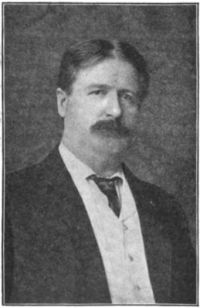 Willis George Emerson,
The Smoky God; Or, A Voyage to the Inner World
“ Beyond question, this new land "within" is the home, the cradle, of the human race, and viewed from the standpoint of the discoveries made by us, must of necessity have a most important bearing on all physical, paleontological, archaeological, philological and mythological theories of antiquity. ”
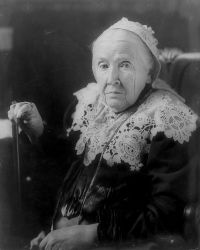 Julia Ward Howe,
Modern Society
“ The first consequence of this is that we become able to make the largest and most general comparison of human conditions which has ever been possible to humanity, nor does this [Pg 25] ability regard the present alone. The unveiling of the treasures of the past, the interpretation of its experience and doctrine which we owe to the scholar and archæologist, enable us to compare remote antiquity with the things of the last minute. The work of antiquarian science culminates in the discovery of the prehistoric man. ”
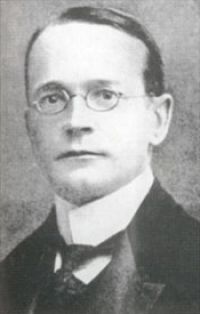 Joseph McCabe,
Modern Rationalism
(1897)
“ About the middle of the present century the first and more important part of the dogma—the early descent of man from a high civilization—received a severe blow from the combined researches of anthropologists, ethnologists, and historians. The examination of the flint instruments we have mentioned not only proved from their geological position the vast antiquity of the human race, but also the lowly condition of those primitive specimens of humanity. ”
 Jacob Grimm,
Grimm's Household Tales
(1884)
“ It is now generally recognised (though some scholars hold out against the opinion) that the sciences of Anthropology and Archæoloy also throw much light on the human past, which has left no literary documents. ”
“ Furnished with such a measuring-rod it becomes easier to attempt to bring into some sort of co-ordination the vast mass of facts which have been accumulated in recent years as to prehistoric, neolithic, and palæolithic man; and the glimpses of light respecting the origin, antiquity, and early history of the human race, which have come in from other sciences such as astronomy, geology, zoology, and philology. ”
Henry Fairfield Osborn, Men of the Old Stone Age: Their Environment…
“ These facts are of extraordinary interest, for they show that the civilization, such as it was, of the Upper Palæolithic was very widely extended. This marks an important social characteristic, namely, the readiness and willingness to take advantage of every step in human progress, wherever it may have originated. ”
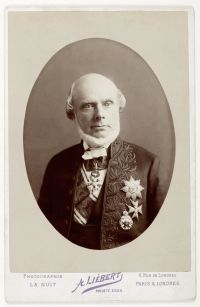 A. de Quatrefages,
The human species
(1879)
“ All traditions point to a period when human knowledge was very small, when man was ignorant of industries, to our eyes very elementary, and which we see appear in succession. Upon this point the Bible agrees with classical mythology. The Hebrews have their Tubal Cain, and the Greeks their Triptolemos. Prehistoric studies confirm this progressive development in Western Europe upon every point. ”
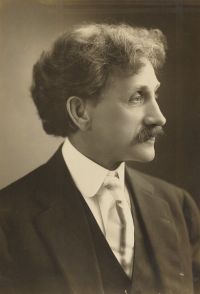 J. Howard Moore,
The Universal Kinship
“ They antedate human history by thousands of years. They are the ruins of the Stone Age, the Bronze Age, and the Iron Age of mankind. In all of these remains there is evidence of a slow but gradual improvement as we approach the present. There are places on the earth where the evolution of human implements, from the rudest chipped stones to the comparatively finished products of historic peoples, is epitomised in the deposits of a few feet in depth. ”
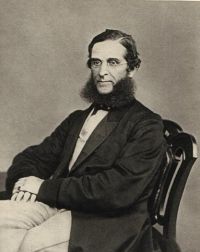 John Evans,
The Ancient Stone Implements, Weapons…
(1897)
“ At the same time, judging from all analogy, there can be but little doubt that the human race will eventually be proved to date back to an earlier period than the Pleistocene or Quaternary, though it will probably not be in Europe that the evidence on this point will be forthcoming. ”
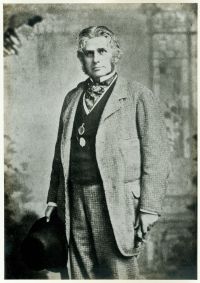 Augustus Henry Lane-Fox Pitt-Rivers,
The Evolution of Culture, and Other Essays
“ If we are justified, as I think we are, in regarding the various grades of culture, observable among the more lowly of the still existing races of man, as representing to a considerable extent those vanished cultures which in their succession formed the different stages by which civilization emerged gradually from a low state, it surely becomes a very important duty for us to study with energy these living illustrations of early human history, in order that the archaeological record may be supplemented and rendered more complete. ”
Charles James Sprague, The Atlantic Monthly (1866)
“ For a while the old influence of theological rule held even these venturous explorers to the ancient landmarks of human origin. By and by, the same impulse which had before led men to examine the proofs of physical creation induced them to consider the evidence of their own advent upon earth. ”
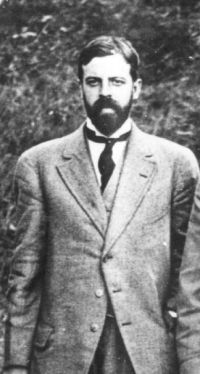 A. L. Kroeber,
Anthropology
(1923)
“ In the long run, too, the older implements prove to be the simpler. Thus archæologists have succeeded in working out an evolution of civilization which parallels rather neatly the evolution of life forms. This evolution of human mental operations as it is reflected in the artifacts preserved from the lowest and earliest strata of civilization is the subject of the present chapter. ”
Emory Adams Allen, The Prehistoric World; Or, Vanished Races
“ These closing essays have impressed on us clearly and distinctly the isolation of the Paleolithic Age. When we reflect on its prolonged duration, its remoteness in time, and its complete severance from the Neolithic and succeeding ages, we are almost ready to wonder whether they were indeed human beings. But beginning with the Neolithic Age, we come to our own era. ”
“ In each case we have a standard or measuring-rod of authentic historical record, of certainly not less than 6000, and more probably 7000 years from the present time; and in each case we find ourselves at this remote date, in presence, not of rude beginnings, but of a civilization already ancient and far advanced. We have populous cities, celebrated temples, an organized priesthood, an advanced state of agriculture and of the industrial and fine arts; writing and books so long known that their origin is lost in myth ”
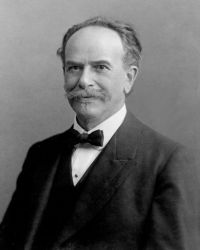 Franz Boas,
The mind of primitive man
(1911)
“ If archæological investigations should show that implements and other evidences of human achievement are found in a geological period during which mankind had not attained its present world-wide distribution, we should have to infer that these represent the early cultural possessions of man, which he carried with him all over the world. ”
“ And did the division of mankind into distinct and widely different races, which is such a prominent feature at the present day and ever since the commencement of history, exist in the case of the palæolithic man, whose remains are so widespread? ”
Related terms
Authors who wrote about “human prehistory”
Robert J. BraidwoodVariousEmory Adams Allen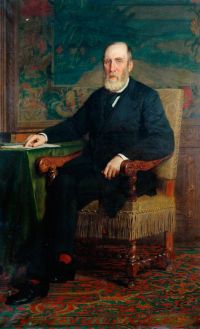 S. Laing
 Francis BaconA. L. KroeberJoseph McCabeA. de QuatrefagesCharles LyellPhilip Van Ness MyersFrank W. BlackmarA. H. KeaneWilliam A. LocyPaul KlapperG. K. ChestertonSir Daniel Wilsonmarquis de Jean-François-Albert du Pouget NadaillacJoseph JastrowCharles MorrisJoseph Wild
S. LaingFrancis BaconA. L. KroeberJoseph McCabeA. de QuatrefagesCharles LyellPhilip Van Ness MyersFrank W. BlackmarA. H. KeaneWilliam A. LocyPaul KlapperG. K. ChestertonSir Daniel Wilsonmarquis de Jean-François-Albert du Pouget NadaillacJoseph JastrowCharles MorrisJoseph Wild