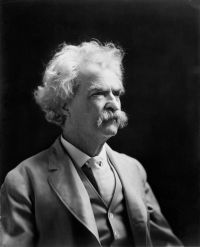
 Mark Twain,
A Connecticut Yankee in King Arthur's Court
(1889)
Mark Twain,
A Connecticut Yankee in King Arthur's Court
(1889)
“ Intellectual “work” is misnamed; it is a pleasure, a dissipation, and is its own highest reward. ”
Mark Twain,
A Connecticut Yankee in King Arthur's Court
(1889)
“ Intellectual “work” is misnamed; it is a pleasure, a dissipation, and is its own highest reward. ”
 John Stuart Mill,
A System of Logic, Ratiocinative and Inductive
(1843)
John Stuart Mill,
A System of Logic, Ratiocinative and Inductive
(1843)
“ A few individuals, by extraordinary genius, or by the accidental acquisition of a good set of intellectual habits, may work without principles in the same way, or nearly the same way, in which they would have worked if they had been in possession of principles. But the bulk of mankind require either to understand the theory of what they are doing, or to have rules laid down for them by those who have understood the theory. ”
“ He must study the nature of the effect that he is to produce, and of the materials upon which he is to work, and adopt, after mature deliberation, a plan to accomplish his purpose founded upon the principles which ought always to regulate the action of mind upon mind, and adapted to produce the intellectual effect which he wishes to accomplish. ”
 Frank Pierrepont Graves,
A student's history of education
Frank Pierrepont Graves,
A student's history of education
“ His central thought appears more definitely through the philosophical principles in his famous Essay concerning the Human Understanding, and through the intellectual training suggested in his other educational work, Conduct of the Understanding, which was originally an additional book and application of the Essay. ”
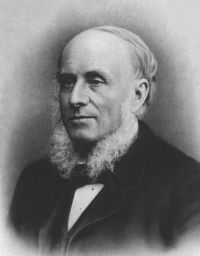 Alexander Bain,
Popular Science Monthly
(1877)
Alexander Bain,
Popular Science Monthly
(1877)
“ The greatest contrast is between what belongs to intelligence, and what belongs to the feelings and the will. The more strictly intellectual department comprises Mechanical Art, Language, the Sensible World, the Sciences, Fine Art ”
 John Taylor of Caroline,
An Inquiry into the Principles and Policy of the Government of the United States
(1814)
John Taylor of Caroline,
An Inquiry into the Principles and Policy of the Government of the United States
(1814)
“ To understand, we have analyzed the intellectual world into two classes, good and evil; and to discover the members of each class, we fix their qualities, not by the hypothetick, but the practical mode of reasoning. ”
“ I am not able to find such a term;—talent, ability, genius, belong distinctly to the raw material, which is the subject-matter, not to that excellence which is the result of exercise and training. When we turn, indeed, to the particular kinds of intellectual perfection, words are forthcoming for our purpose, as, for instance, judgment, taste, and skill; yet even these belong, for the most part, to powers or habits bearing upon practice or upon art, and not to any perfect condition of the intellect, considered in itself. ”
F. Barham Zincke, A month in Switzerland (1873)
“ Whereas in the advocates of modern knowledge as the object and instrument of education, and in its teachers, there is none of this unreality, or want of connexion with the thought, and with the work, of the world that is stirring around us. ”
 Walter Pater,
Appreciations, with an Essay on Style
Walter Pater,
Appreciations, with an Essay on Style
“ The philosophic critic, at least, will value, even in works of imagination, seemingly the most intuitive, the power of the understanding in them, their logical process of construction, the spectacle of a supreme intellectual dexterity which they afford. ”
Daniel Burleigh Parkhurst, The Painter in Oil
“ But if you are in touch with your century, if you would paint to express the suggestion you receive from the nature you study, or if you would convey the idea of truth to the world around you, as that world exists, frankly accepting the conditions of it, you will have to make the study of values fundamental to your work. ”
 John Henry Newman,
The Idea of a University Defined and Illustrated
John Henry Newman,
The Idea of a University Defined and Illustrated
“ Lists of questions are published, wonderful for their range and depth, variety and difficulty; treatises are written, which carry upon their very face the evidence of extensive reading or multifarious information; what then is wanting for mental culture to a person of large reading and scientific attainments? what is grasp of mind but acquirement? where shall philosophical repose be found, but in the consciousness and enjoyment of large intellectual possessions? ”
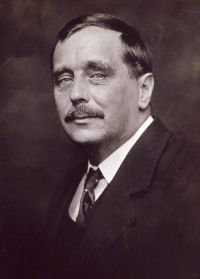 H. G. Wells,
Mankind in the Making
H. G. Wells,
Mankind in the Making
“ We are attempting generalization about a class of remarkably peculiar and difficult persons. They are persons either of great intellectual power or simply of great imaginative power, whose bias and quality it is to apply these exceptional powers not directly and simply to their personal advancement and enrichment, but primarily through philosophical, scientific, or artistic channels, to the increase of knowledge or of wisdom or of both. ”
 Samuel Johnson,
The Works of Samuel Johnson, LL.D. in Nine Volumes…
Samuel Johnson,
The Works of Samuel Johnson, LL.D. in Nine Volumes…
“ But if genius and study were to be weighed one against the other, in order to discover which must contribute most to a good work, the question would become more curious, and, perhaps, very difficult of solution. ”
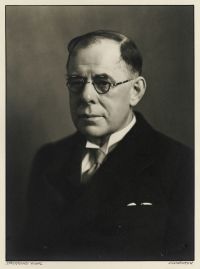 A. E. Taylor,
Elements of metaphysics
(1903)
A. E. Taylor,
Elements of metaphysics
(1903)
“ The more clearly you realise the character of the problems which your own intellectual pursuits lead up to and the nature of their solution, the clearer becomes your insight into the problems and purposes of other workers in the same field. ”
Alexander Bain,
Popular Science Monthly
(1878)
“ If we can hold on till they bear their fruits in the explanation of things that we have already begun to take notice of, the pursuit is sustained by a genuine and proper scientific interest, whose real groundwork, however deeply hidden, is the stimulus of agreement among differing particulars, and the lightening of the intellectual labor in comprehending the world. ”
John Stuart Mill,
Auguste Comte and Positivism
“ He not only personally appreciates, but rates high in moral value, the creations of poets and artists in all departments, deeming them, by their mixed appeal to the sentiments and the understanding, admirably fitted to educate the feelings of abstract thinkers, and enlarge the intellectual horizon of people of the world. ”
Ontario. Department of Education, Ontario Normal School Manuals: Science of Education
“ But the possession of an intellectual and moral nature which responds to appropriate stimulations implies, also, that as man develops intellectually, he will find meaning in human life as realized in himself and others. Thus he becomes able to recognize worth in human life and to determine the conditions which favour its highest growth, or development. ”
Francis Adams, Australian Essays
“ This, then, it seems, is Culture—knowing the best that has been thought and known in the world—not only knowledge, but right tact and justness of judgment, forming themselves by and with judgment—reading, but reading with a purpose to guide it, and with system. ”
P.-J. Proudhon, System of Economical Contradictions…
“ If education were first of all experimental and practical, reserving speech only to explain, summarize, and coordinate work; if those who cannot learn with imagination and memory were permitted to learn with their eyes and hands,—soon we should witness a multiplication, not only of the forms of labor, but of capacities; everybody, knowing the theory of something, would thereby possess the language of philosophy; on occasion he could, were it only for once in his life, create, modify, perfect, give proof of intelligence and comprehension, produce his master-piece, in a word, show himself a man. ”
 Herbert Spencer,
First Principles
Herbert Spencer,
First Principles
“ When, again, we speak of moral or intellectual progress, we refer to the state of the individual or people exhibiting it; while, when the progress of Knowledge, of Science, of Art, is commented upon, we have in view certain abstract results of human thought and action. ”
 Havelock Ellis,
The Dance of Life
Havelock Ellis,
The Dance of Life
“ Material facts, which we are apt to consider the most easily measurable, include quantity and distribution of population, production of wealth, the consumption of food and luxuries, the standard of life. Intellectual facts include both the diffusion and degree of instruction and creative activity in genius. Moral facts include the prevalence of honesty, justice, pity, and self-sacrifice, the position of women and the care of children. They are the most important of all for the quality of a civilisation. ”
Th. Ribot, Essay on the Creative Imagination
“ Let us eliminate the intellectual and moral qualities characteristic of each group, which establish notable differences between them, and let us consider only their inventive capacity as applied to practical life. ”
John Stuart Mill,
Autobiography (Mill) — Chapter V. 1826-1832
(1874)
“ I never turned recreant to intellectual culture, or ceased to consider the power and practice of analysis as an essential condition both of individual and of social improvement. But I thought that it had consequences which required to be corrected, by joining other kinds of cultivation with it. The maintenance of a due balance among the faculties, now seemed to me of primary importance. The cultivation of the feelings became one of the cardinal points in my ethical and philosophical creed. ”
Charlotte Marie Mason, Home Education (Mason) — Part III: 'Habit Is Ten Natures'
“ Intellectual and Moral Education.--"The object of intellectual education is to create such indissoluble associations of our ideas of things, in the order and relation in which they occur in nature; that of a moral education is to unite as fixedly, the ideas of evil deeds with those of pain and degradation, and of good actions with those of pleasure and nobleness." ”
Henry Davenport Northrop, New Century Speaker and Writer… (1901)
“ And the range of topics is very wide; it embraces science and art, history and philosophy; above all, the knowledge of human nature that teaches how the mind he addresses is to be convinced and persuaded, and how a willing ear is to be won to his discourse. ”
Various, The Atlantic Monthly (1858)
“ Concede intellectual power, or the spiritual element, then add this temperament, and there follows a certain subtile, penetrative, radical quality of thought, a characteristic percipience of principles. And principles are not only seen, but felt; they thrill the nerve as well as greet the eye ”
John Lord, Beacon Lights of History, Volume 14…
“ The higher intellectual powers of man, such as those of ratiocination, abstraction, self-consciousness, etc., probably follow from the continued improvement and exercise of the other mental faculties. ”
Alexander Bain,
Popular Science Monthly
(1878)
“ It is an effort of prime importance to trace exhaustively the inducements and allurements to intellectual exertion. What are the intrinsic charms of knowledge, whether in pursuit or in possession? The difficulty of the answer is increased rather than diminished by the flow of fifty years' rhetoric. ”
David Masson, The Three Devils: Luther's, Milton's…
“ The mind thinks with what it knows; and, if you alter the knowledge in any one whit, you alter the thinking instrumentality in proportion. Our whole practice of education is based on this idea, and yet somehow the idea is allowed to lurk. ”
 Jonathan Swift,
Gulliver's Travels into Several Remote Nations of the World
Jonathan Swift,
Gulliver's Travels into Several Remote Nations of the World
“ Every one knew how laborious the usual method is of attaining to arts and sciences; whereas, by his contrivance, the most ignorant person, at a reasonable charge, and with a little bodily labour, might write books in philosophy, poetry, politics, laws, mathematics, and theology, without the least assistance from genius or study. ”
 Lorenz Oken,
Elements of Physiophilosophy
Lorenz Oken,
Elements of Physiophilosophy
“ In this he is but expressing the sentiments ofvii the author himself, and acknowledging what the present time with its accumulating mass of knowledge presses upon us more and more—the necessity of work, wherein abstract science and experience, theory and facts shall advance together, the Ideal in part receiving and reflecting back with increased lustre the light which it has derived from the Real or outward semblance of things. ”
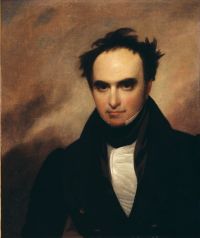 Daniel Webster,
The Great Speeches and Orations of Daniel Webster
Daniel Webster,
The Great Speeches and Orations of Daniel Webster
“ Mind is the great lever of all things; human thought is the process by which human ends are ultimately answered; and the diffusion of knowledge, so astonishing in the last half-century, has rendered innumerable minds, variously gifted by nature, competent to be competitors or fellow-workers on the theatre of intellectual operation. ”
 Percy Bysshe Shelley,
A Defence of Poetry and Other Essays
Percy Bysshe Shelley,
A Defence of Poetry and Other Essays
“ Suppose, however, that the intellectual and vital principle differs in the most marked and essential manner from all other known substances; that they have all some resemblance between themselves which it in no degree participates. ”
James Harold Romain, Gambling; or, Fortuna, her temple and shrine
“ It is replete with learning, and original in conception. The philosophy is broad and the tone dignified. Patient research is manifest in every page. Every branch of knowledge has been made to contribute its force to the argument. The work is a mine of information in political speculation, social science and moral philosophy. ”
Baron Thomas Babington Macaulay Macaulay, Critical, Historical, and Miscellaneous Essays…
“ Moral philosophers ought, he said, to set themselves vigorously to work for the purpose of discovering what are the actual effects produced on the human character by particular modes of education, by the indulgence of particular habits, by the study of particular books, by society, by emulation, by imitation. ”
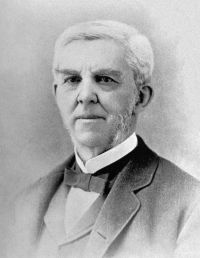 Oliver Wendell Holmes Sr.,
The Autocrat of the Breakfast-Table…
Oliver Wendell Holmes Sr.,
The Autocrat of the Breakfast-Table…
“ Men who exercise chiefly those faculties of the mind which work independently of the will, - poets and artists, for instance, who follow their imagination in their creative moments, instead of keeping it in hand as your logicians and practical men do with their reasoning faculty, - such men are too apt to call in the mechanical appliances to help them govern their intellects. ”
Alfred William Benn, The Greek Philosophers, Vol. 2…
“ Or, again, our interest in the work may be purely historical and psychological; we may look on it as the product of a particular age and a particular mind, as summing up for us under their most abstract form the ideas and aspirations which at any given moment had gained possession of educated opinion. ”
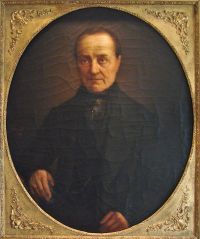 Auguste Comte,
A General View of Positivism
Auguste Comte,
A General View of Positivism
“ Special studies carried on without regard for the encyclopædic principles which determine the relative value of knowledge, and its bearing on human life, will be condemned by all men of right feeling and good sense. ”
Sarah Sheppard, Characteristics of The Genius and Writings of L. E. L. (1841)
“ Intellect and feeling, the head and heart, are her leading topics. Genius and study, knowledge and taste, all concentre here; while nature and art, society and conventional life are made to subserve the grand design of illustrating the development of human character, with all its diversified phases incident from adventitious circumstances. ”
John Stuart Mill,
Utilitarianism
“ A cultivated mind—I do not mean that of a philosopher, but any mind to which the fountains of knowledge have been opened, and which has been taught, in any tolerable degree, to exercise its faculties—finds sources of inexhaustible interest in all that surrounds it; in the objects of nature, the achievements of art, the imaginations of poetry, the incidents of history, the ways of mankind past and present, and their prospects in the future. ”
Robert Bisset, Modern literature: a novel, Volume 3… (1804)
“ It demonstrated to the public the force and extent of his talents, the accuracy and range of his knowledge, the depth of his [129] philosophy, which though yet more theoretical in several doctrines and opinions, than is consistent with fact and practice, manifested on the whole, that strength of discrimination, completeness of comprehension, boldness of conception, and fertility of invention, which when matured by experience, becomes soaring genius, guided by beneficial wisdom. ”
Antonio Aliotta, The Idealistic Reaction Against Science (1914)
“ The reaction from intellectualism, which is, in my opinion, the predominant characteristic of contemporary philosophy, will act as our guide in the study of the prevailing tone of present-day thought touching the theory of knowledge. ”
Various, The Germ: Thoughts towards Nature in Poetry…
“ If this adherence to fact, to experiment and not theory,—to begin at the beginning and not fly to the end,—has added so much to the knowledge of man in science; why may it not greatly assist the moral purposes of the Arts? ”
“ And now, from the consideration of pleasure, we pass to that of knowledge. Let us reflect that there are two kinds of knowledge—the one creative or productive, and the other educational and philosophical. ”
 Charles Dudley Warner,
Some Causes of the Prevailing Discontent
Charles Dudley Warner,
Some Causes of the Prevailing Discontent
“ The world is ruled by ideas, by abstract thought. Society, literature, art, politics, in any given age are what the prevailing system of philosophy makes them. We recognize this clearly in studying any past period. ”
Francis Adams, Australian Essays
“ The success of that charming series of biographies, the English Men of Letters—nay, of the little shilling Literature Primers—is a sign of it. And the same thing, too, is being done with regard to Philosophy; but, so far, the men of Science have the lead, and they deserve it; for, as I have said, theirs has been the most complete singleness of heart and soul with which Truth has been sought out, they have the most thoroughly applied the secret of the purpose and system of Culture. ”
 James Frederick Ferrier,
Lecture on Imagination, 1848
(1883)
James Frederick Ferrier,
Lecture on Imagination, 1848
(1883)
“ I am convinced that such among you as may intend to hereafter prosecute your speculative researches in a profound and zealous spirit, and to study philosophy both in itself and in its history,—I am convinced that you must build your labours upon the distinction now brought before you. ”