 Daniel Webster,
The Great Speeches and Orations of Daniel Webster
“ When the spotless ermine of the judicial robe fell on John Jay, it touched nothing less spotless than itself. ”
Daniel Webster,
The Great Speeches and Orations of Daniel Webster
“ When the spotless ermine of the judicial robe fell on John Jay, it touched nothing less spotless than itself. ”
John Cordy Jeaffreson, A Book About Lawyers
“ In the seventeenth century, until wigs were generally adopted, the common law judges, like their precursors for several past generations, wore in court velvet caps, coifs, and cornered caps. Pictures preserve to us the appearance of justices, with their heads covered by one or two of these articles of dress, the moustache in many instances adorning the lip, and a well-trimmed beard giving point to the judicial chin. The more common head-dress was the coif and coif-cap, of which it is necessary to say a few words. ”
Catherine Beatrice Phillips, 1911 Encyclopædia Britannica (1911)
“ The state robe of the Master of the Rolls, the Lords justices of the Court of Appeal, and the President of the Probate, Divorce and Admiralty Divisions is the same, except that they have not the purse, and similar to it is the full-dress gown of the Speaker of the House of Commons, the Chancellor of the Exchequer, &c. The Lords justices of the Court of Appeal sit in court in a costume similar to that of King’s Counsel. The Lords of Appeal have no official robes, but sit in ordinary civilian dress. On state occasions they wear their peers' robes. ”
 James Fenimore Cooper,
The ways of the hour
(1861)
“ Wigs of all kinds, even when there is a deficiency of hair, we hold in utter detestation; and we shall maintain that no more absurd scheme of clothing the human countenance with terror was ever devised, than to clothe it with flax. Nevertheless, as comfort, decency and taste unite in recommending clothing of some sort or other, we do not see why the judicial functionary should not have his appropriate attire as well as the soldier, the sailor, or the priest. ”
Catherine Beatrice Phillips, 1911 Encyclopædia Britannica (1911)
“ The summer equivalent of the black robes is in thin blue stuff, faced with silk. A costume like that of King’s Counsel, namely, a black silk gown, with black cloth court suit, is the dress of judges when sitting alone to try civil actions, and of vice chancellors and judges of the Chancery Division, but Sir Herbert Stephen remarks that of late years certain of the judges have preferred on grounds of comfort the black or blue gown with scarlet casting-hood. ”
marquise de Fontenoy, The Secret Memoirs of the Courts of Europe…
“ According to these sumptuary decrees gentlemen who are invited to entertainments at court, and who for any reason have no right to military, naval or civil service uniform, are compelled to appear in a species of court dress, consisting of a coat cut after the fashion of the last, rather than of the present century. ”
Wilfred Mark Webb, The Heritage of Dress: Being Notes on the History and Evolution of Clothes
“ Although the law does not seem to have been able to change the fashions to a very great extent, they have sometimes been killed suddenly. In the days of public executions, criminals sometimes elected to wear fashionable garments, and in consequence the demand for them ceased. Sometimes, again, those who were interested in the suppression of the fashion persuaded [353] the doomed man or woman to wear a particular dress, and a judge has been known to compass the same end by ordering the hangman who officiated to deck himself in the objectionable garment. ”
 Anatole France,
The Gods Are Athirst
“ But tell me, Évariste, how are you dressed in your grand tribunal?"Gamelin informed her that the judges wore a hat with black plumes, but that the jury had no special costume, that they were dressed in their every-day attire."It would be better," returned the good woman, "if they wore wig and gown; it would inspire more respect. Though you are mostly dressed carelessly, you are a handsome man and you set off your clothes; but the majority of men need some fine feathers to make them look imposing; yes, the jury should have wigs and gowns." ”
Francis Watt, The Law's Lumber Room
“ Of old time man's dress was rich and varied, but how to catch its vanished effect? In Courts of Justice there is still the splendid, if occasional, bravery of the judge. See the same man in private, gaze on divinity disrobed, and the disenchantment measures for you what is lost in the splendid garb of other days. ”
Catherine Beatrice Phillips, 1911 Encyclopædia Britannica (1911)
“ There is a well known jest of Chief Baron Pollock to the effect that “the Bar went into mourning at the death of Queen Anne, and never came out again,” which bears out this theory as to the origin of the costume. At the present time barristers wear black stuff gowns, with small wigs having three rows of curls round the head. King’s Counsel wear black silk gowns over a cloth court suit (cp. the expression “ to take silk, ” i.e. to become a K.C.) ; on full-dress occasions they wear a full-bottomed wig, and at court a black damask tufted gown over a velvet court suit. ”
 Eugène Brieux,
Woman on Her Own, False Gods and The Red Robe
“ Vagret. Ah, if I could only wear this on my back when I'm demanding the conviction of the Irissary murderer! Say what you like, the man who devised this costume was no fool! It's this sort of thing that impresses the jury. And the prisoner too! I've seen him unable to tear his eyes from the gown of the State Attorney! And you feel a stronger man when you wear it. It gives one a better presence, and one's gestures are more dignified: "Gentlemen of the court, gentlemen of the jury!" Couldn't I make an impressive indictment? "Gentlemen of the court, gentlemen of the jury! ”
 H. G. Wells,
The World Set Free
“ The horse-hair wigs and antic dresses of the British judges, their musty courts and overbearing manners, were indeed only the outward and visible intimations of profounder anachronisms. The legal and political organisation of the earth in the middle twentieth century was indeed everywhere like a complicated garment, outworn yet strong, that now fettered the governing body that once it had protected. ”
John Cordy Jeaffreson, A Book About Lawyers
“ In this light and flippant age there are men irreverent enough to smile at the habiliments which our judges wear in court, for the glory of God and the seemly embellishment of their own natural beauty.Like the stuff-gown of the utter-barrister, the robes of English judges are of considerable antiquity; but antiquaries labor in vain to discover all the facts relating to their origin and history. Mr. Foss says that at the Stuart Restoration English judges resumed the robes worn by their predecessors since the time of Edward I. ”
John Cordy Jeaffreson, A Book About Lawyers
“ In old time the lawyers often quarrelled and drew swords in hall; and the object of this regulation doubtless was to diminish the number of scandalous affrays. The Middle Temple, in 26 Eliz., made six prohibitory rules with regard to apparel, enacting, "1. That no ruff should be worn. 2. Nor any White color in doublets or hoses. 3. Nor any facing of velvet in gownes, but by such as were of the bench. 4. That no gentleman should walk in the streets in their cloaks, but in gownes. 5. That no hat, or long, or curled hair be worn. 6. Nor any gown, but such as were of a sad color." ”
 Nathaniel Hawthorne,
Passages from the English Notebooks…
“ August 21st.—I was in the Crown Court on Saturday, sitting in the sheriff's seat. The judge was Baron ———, an old gentleman of sixty, with very large, long features. His wig helped him to look like some strange kind of animal,—very queer, but yet with a sagacious, and, on the whole, beneficent aspect. During the session some mischievous young barrister occupied himself with sketching the judge in pencil; and, being handed about, it found its way to me. It was very like and very laughable, but hardly caricatured. The judicial wig is an exceedingly odd affair ”
marquise de Fontenoy, The Secret Memoirs of the Courts of Europe…
“ The emperor likewise directed that all officials of the court and the civil service, namely, every man who did not happen to belong either to the army or to the navy, should wear at court balls and at all great state entertainments, white knee breeches, and white silk stockings, with low, gold-buckled shoes, in lieu of the blue, black, or white gold-laced trousers that had until then been habitually worn with the gold-embroidered swallow-tail coat, which constitutes the uniform of the German civil service, and of court officialdom. ”
Frank Murphy, Price v. Johnston — Opinion of the Court
“ We therefore conclude that circuit courts of appeals do have the power under § 262 of the Judicial Code to issue an order in the nature of a writ of habeas corpus commanding that a prisoner be brought to the courtroom to argue his own appeal. ”
John West, The History of Tasmania , Volume II
“ No convict shall be allowed to wear any other clothing than that which is issued to him by the government; and the number of each convict on the settlement is to be painted on each article of his dress, before and behind. ”
marquise de Fontenoy, The Secret Memoirs of the Courts of Europe…
“ The long court train may be of an entirely different material and color from the dress itself, if the wearer pleases, the only stipulation made being that the richness and splendor of the fabric must be beyond question. ”
 Alice Morse Earle,
Customs and Fashions in Old New England
“ That no person either man or woman shall hereafter make or buy any apparel, either woolen or silk or linen with any lace on it, silver, gold, or thread, under the penalty of forfeiture of said clothes. Also that no person either man or woman shall make or buy any slashed clothes other than one slash in each sleeve and another in the back; also all cut-works, embroideries, or needlework cap, bands, and rails are forbidden hereafter to be made and worn under the aforesaid penalty ”
Various, Mother Earth, Vol. 1 No. 3, May 1906
“ Every person beneath a lord was to wear a jacket reaching to his knees, and none but a lord was to wear pikes to his shoes exceeding two inches. (1463.) Nobody but a member of the royal family was to wear cloth of gold or purple silk, and none under a knight to wear velvet, damask or satin, or foreign wool, or fur of sable. It is true, notwithstanding all these restrictions, that a license of the king enabled the licensee to wear anything. For one whose income was under twenty pounds, to wear silk in his night-cap was to incur three months' imprisonment or a fine of ten pounds a day. ”
D. Macleod Malloch, Law and Laughter
“ You can't speak.""May it please the Bench," said the barrister, "I conform strictly to the law. Let me illustrate. The law says the barrister shall wear a black gown and [Pg 232] coat, and your honour thinks that means a black coat?""Yes," said the judge."Well, the law also says the sheriff shall wear a cocked hat and sword. Does your honour hold that the sword must be cocked as well as the hat?"He was permitted to go on.In the United States, as elsewhere, the average juryman is not very well versed in the fine distinctions of the law. On these it is the judge's duty to instruct him. ”
Stanley Matthews, Hartranft v. Langfeld — Opinion of the Court
“ That if the jury should find that silk is the component material of chief value of the goods in question, and that they are suitable for and are occasionally used for hat trimmings, but that they are generally used for other purposes, then, as they are not exclusively or specially used for hat trimmings, they cannot be said to be 'used for making or ornamenting hats' within the meaning of the act of congress so as to subject them to a duty of twenty per centum ad valorem, and your verdict should be for the defendant. ”
Wilfred Mark Webb, The Heritage of Dress: Being Notes on the History and Evolution of Clothes
“ There is also a series of buttons as well as pieces of braid on the sleeves which are survivals, and we have not the hanging sleeves of the King’s Counsel, which are comparable to those seen in many academic gowns. Small falling bands are of course generally worn by members of the legal profession, and barristers and King’s Counsel when in mourning have a little pleat down the middle of each band. ”
Earl John Russell Russell, Adventures in the Moon, and Other Worlds
“ At the same time I saw a lawyer's wig and gown, and by the eloquent gestures of the sleeves and the forcible nods of the wig, I perceived that [104] it was pleading a cause. This was the apparel of a young lawyer, which, finding no employment in court, was frequently exercised in the imagination of the wearer. ”
Fürst von Hermann Pückler-Muskau, Tour in England, Ireland, and France…
“ A suit in this Court is become proverbial for something interminable; and there is a very diverting caricature, which bears the inscription, ‘A Chancery Suit.’ At first a young man handsomely dressed, and in high blooming health, fills the hat of a starved skeleton of a lawyer with guineas, by way of retaining fee. A long, long procession of men and things follows; and at last we see the young man as a ragged broken-down beggar, asking alms of the lawyer, now grown fat as a tun, which the latter scornfully refuses. ”
 Hugo Black,
Warden Maryland Penitentiary v…
“ That is because the clothing is pertinent to identification of the person hotly pursued as being, in fact, the person whose pursuit was justified by connection with the crime. I would frankly place the ruling on that basis. ”
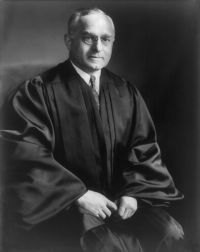 Felix Frankfurter,
Uveges v. Pennsylvania — Dissent
“ After all, this is the Nation's ultimate judicial tribunal, not a super-legal-aid bureau. ”
“ The officers of the customs, who were stationed at the gates of the towns, were ordered to stop every man who wore a long dress, and compel him either to pay a fine of about fifty cents, or else kneel down and have all that part of their coat or gown which lay upon the ground, while they were in that posture, cut off with a pair of big shears. ”
The Visigothic code (1910)
“ And the judge, lest, hereafter, the aforesaid persons may again indulge in such practices, shall place them in confinement, and see that they are provided with clothing and food, to deprive them of an opportunity of inflicting further injury; or he may lay the matter before the king, to be disposed of at his royal pleasure. Those who are convicted of having given advice to such persons, shall each receive two hundred lashes in the assembly of the people, in order that all who have aided in the commission of such a crime may not go unpunished. ”
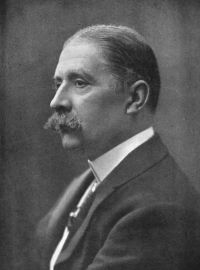 Sir Leslie Ward,
Forty years of 'Spy'
“ The Law Courts held more possibilities for me than most "hunting grounds," because I invariably found my subject without the difficulty of "stalking" him, and with the advantage of wig and gown to add to the individuality and relieve the conventionality of his unprofessional habiliments. Another advantage lay in the fact that when a barrister or a judge was conducting a case or presiding on the bench, a host of peculiarities and idiosyncrasies became evident, and I had the satisfaction of observing all unnoticed. ”
Alfred A. Grace, The Tale of Timber Town
“ With his clothes in tatters and earth-stained, his boots burst at the seams and almost falling to pieces, his hair long and tangled, his beard dirty and unkempt, thus, in a state of utter disreputableness, he unflinchingly faced the Court; and the crowd, forgetful of the prisoner, Judge, and jury, gave its whole attention to him.Beckoning with his hand, the Judge said, “Bring this man forward. Place him where I can see him.”The Police Sergeant led the would-be witness to the space between the dock and the jury-box. ”
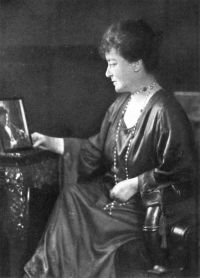 Eliza Davis Aria,
Costume: Fanciful, Historical, and Theatrical…
(1906)
“ The dress regulations relating to others than Peers and Peeresses ruled that gentlemen should appear in full uniform or full Court dress; while ladies were commanded to wear Court dress without trains, and mourning was strictly prohibited. ”
P. L. Jacob, Manners, Customs, and Dress During the Middle Ages and During the Renaissance Period
“ These courts were always held with impressive pomp. The sovereign usually summoned to them the princes of the blood royal and the officers of his household; the members of the Parliament took their seats in scarlet robes, the presidents being habited in their caps and their mantles, and the registrars of the court also wearing their official dress. The High Chancellor, the First Chamberlain, and the Provost of Paris, sat at the King's feet. The Chancellor of France, the presidents and councillors of the Parliament, occupied the bar, and the ushers of the court were in a kneeling posture. ”
Wilfred Mark Webb, The Heritage of Dress: Being Notes on the History and Evolution of Clothes
“ Fig. 140.—The vestige of the coif from the wig of a serjeant-at-law.After having been in existence for many hundreds of years, the order of serjeants-at-law was abolished by Mr. Gladstone. Lord Lindley, we believe, is the last member who survives. A black skull-cap is also worn by a judge, but it is not to be confounded with the cap of dignity which is used by him when pronouncing sentence, and which was ordered to be worn in church when on circuit. Ordinarily, the judge does not wear his scarlet gown, but a black one, the girdle of which has grown to a very great width. ”