Lead ore

Definition and stakes

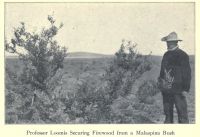
Portrait of Frederic Brewster Loomis Frederic Brewster Loomis,  Field Book of Common Rocks and Minerals

“ Most lead when first smelted from its ore, contains a greater or less amount of silver in it, sometimes enough so that the lead ore is better worth working for the silver than for the lead.
Lead is used in making pipes, gutters, bullets, etc., and in its oxide forms in the manufacture of paints and glass. Eighty-three parts of lead with 17 parts of antimony make type metal. Lead and tin alloy to make solder. Lead and tin with small amounts of copper, zinc and antimony make pewter. The United States produce about 20% of the world’s supply of this metal.
”
Source: Gutenberg

1911 Encyclopedia Britannica (1911)

“ When cold, the button is hammered, cleaned carefully from slag, and weighed. The proportion is calculated from the amount of ore used, and the result is expressed in parts in a hundred or percentage of the ore. Various impurities, such as copper, antimony and sulphur, go into the lead button, so that the result is generally too high. The most accurate method for the determination of lead in ores is the gravimetric method, in which it is weighed as lead sulphate after the various impurities have been separated. Nearly all lead ores contain more or less sulphur ”
Source: Wikisource

Thomas Wood,  The Mosaic History of the Creation of the World

“ This kind of tin owes its superiority, not only to the purity of the ore, but to the care with which it is washed and refined.
Lead is of a blueish white color, scarcely sonorous, unelastic, and, being the softest of all metals, yields readily to the hammer. It generally contains a small quantity of silver. An alloy of this metal with tin forms pewter, and in different proportions soft solder. Its specific gravity is 11.35. Lead ore is very abundant in Scotland, the western parts of Northumberland and Durham, Derbyshire, and many other parts of the world.
”
Source: Gutenberg

Get perspective with Kwize: daily news enlightened by great literature