Mantle (clothing)

Definition and stakes

Oswald Barron,  1911 Encyclopædia Britannica (1911)

“ When the fashion for slittering the edges of clothing came in, the edges of the mantle were slittered like the edge of the sleeve or skirt, and, flourished out on either side of the helm, it became the delight of the painter of armories and the seal engraver. A worthless tale, repeated by popular manuals, makes the slittered edge represent the shearing work of the enemy’s sword, a fancy which takes no account of the like developments in civil dress. Modern heraldry in England paints the mantle with the principal colour of the shield, lining it with the principal metal. ”

Source: Wikisource

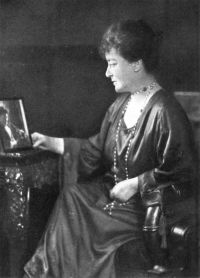
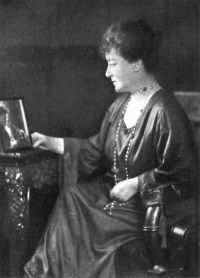
Portrait of Ida Pfeiffer Ida Pfeiffer,  A Woman's Journey Round the World

“ These people have a wild appearance, and their clothing consists of only a dark-brown mantle. The men have a part of this drawn between the legs, and another part hung round them; the women completely envelop themselves in it; the children very commonly go quite naked until the twelfth year. The colour of their skin is a dark brown, the face slightly tattooed: both the men and women braid their hair into four plaits, which hang down upon the back of the head and temples. ”
Source: Gutenberg

Oscar Chrisman,  The Historical Child

“ They also wore a cloak or mantle, which was thrown over the shoulders and tied around the neck. The women wore a short tunic, usually without sleeves, and with it a short skirt under which they would wear another skirt of longer length, these skirts often being embroidered and ornamented. Over tunic and skirt they would wear a long loose robe, which might have at its upper part a hood attached, for wearing over the head. The material first used for clothing was of skins and later of maguey and cotton. Mantles of fur and of feather-work were also worn in cooler weather by both men and women. ”
Source: Gutenberg

Get perspective with Kwize: daily news enlightened by great literature