Marasmus

Definition and stakes

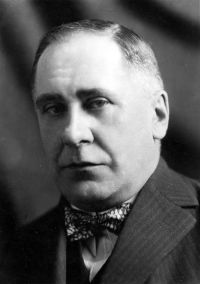
Aegineta Paulus,  The seven books of Paulus Ægineta… (1844)

“ If you lay bare, and examine the parts about the abdomen, you will fancy that none of the entrails and intestines remain, and that the hypochondrium is forcibly drawn upwards. The skin is parched in the last extreme, the pulse slender, dense, and hard. The heat on the first application of the hand seems faint, but soon afterwards feels acrid and pungent. While, therefore, any of the natural moisture remains, the fever is only hectic; but when the humidity runs the risk of being altogether consumed, a true marasmus is formed. ”

Source: Gutenberg

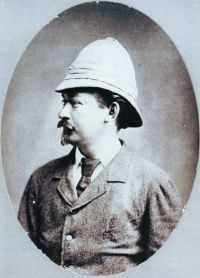
Portrait of Thomas Taylor Thomas Taylor,  Student's Hand-book of Mushrooms of America…

“ In habit of growth it is subcæspitose; sometimes found growing in company with the M. oreades.
Prof. Peck says of M. urens that he has not yet seen an American specimen which he could refer to that species with satisfaction. Our experience, so far, is the same as that of Prof. Peck.
Marasmius peronatus has a reddish buff cap, with crowded thin gills, creamy, turning to reddish brown; the stem solid and fibrous, with yellowish filaments at the base. It is acrid in taste and is usually found among fallen leaves in woods.
”
Source: Gutenberg

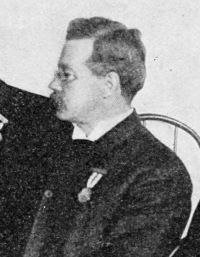
Portrait of Henry Ogg Forbes Henry Ogg Forbes,  A Hand-book to the Primates — Introduction to Anthropoidea… (1894)

“ The species vary much in coloration, and some of them resemble the Lemurs in being ring-tailed.
The Marmosets are all gentle and playful in disposition, and are, on this account, very largely brought to Europe as pets; but they are very delicate, and rarely survive long in confinement after the advent of the Northern winter. They are arboreal, living in troops, and feeding on insects and fruit, and not disdaining flesh, especially of fishes, when they can obtain it. They emit a characteristic chirping noise.
I. THE COMMON MARMOSET. HAPALE JACCHUS.
”
Source: Wikisource

Get perspective with Kwize: daily news enlightened by great literature