Migration (animal behavior)

Definition and stakes

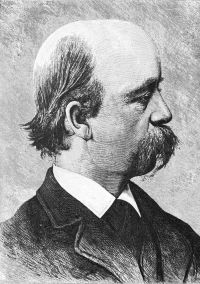
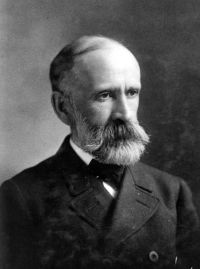
Portrait of Frederick Charles Lincoln Frederick Charles Lincoln,  Migration of Birds (1979)

“ Like the bird's other habits its migratory behavior is just as characteristic as the color of its plumage and, like it, evolved through natural selection because it was advantageous for the survival of the population. Its origin has been thought by some to be a mystery locked in past ages, but by study of the history of how birds came to occupy their present ranges, information becomes available which suggests theories that may be developed and explored. ”
Source: Gutenberg

Portrait of Frederick Charles Lincoln Frederick Charles Lincoln,  Migration of Birds (1979)

“ The general anatomical and physiological attributes of birds enable them to develop more diverse and spectacular migratory behavior than any other group of animals. Their potential for long sustained flights is of primary importance in pre-adapting birds to successful migrations. Migration has long since become a definite hereditary habit of many species of birds that recurs in annual cycles, evidently because of physiological changes which prompt a search for an environment suitable for reproduction and survival. ”
Source: Gutenberg

Portrait of Frederick Charles Lincoln Frederick Charles Lincoln,  Migration of Birds (1979)

“ Traditions that have lived for countless generations may die overnight if experienced individuals are lost or no longer active (Hochbaum 1955) ; migration patterns remain constant only as long as the factors influencing these - 97 - patterns remain constant. But the landscape and the interacting ecological stresses are forever changing, and we would expect the adaptive behavior of birds to respond with them. One of these responses to an expanding habitat is colonization of new territory and expansion of a species' range with accompanying development of a migratory habit. ”
Source: Gutenberg

Get perspective with Kwize: daily news enlightened by great literature