“ The mining district is situated between two prominent ridges of sandstone which bound the valley of Grand river, or the basin of Potosi. These ridges diverge in their course northward, and are intercepted by the Merameg, which receives the waters of Grand river, and forms a boundary to the mining district in that direction. In Illinois are the richest lead mines in the world. The district which furnishes the ore, lies in the north-west part, and extends beyond the limits of the state. It comprises a tract of above two hundred miles in extent. The ore is inexhaustible. ”
Mining district
Definition and stakes
The theme of “mining district” has been addressed by authors such as C. W. Haskins, Arthur J. Hoskin, John S. Hittell, George Graham Rice and J. C. F. Johnson. It is often associated with terms like gold, miner, ore, river and mineral.
Quotes about “mining district”
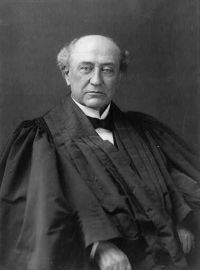 David Josiah Brewer,
Benson Mining Smelting Company v…
“ Its scope and purport are expressed in the opening words, as follows: 'The miners of each mining district may make regulations not in conflict with the laws of the United States or with the laws of the state or territory in which the district is situated, governing the location, manner of recording, amount of work necessary to hold possession of a mining claim, subject to the following requirements;' and then follow several provisions in the nature of limitations on the general authority thus given to miners. ”
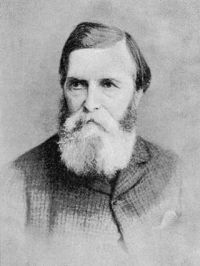 R. M. Ballantyne,
Handbook to the new Gold-fields
“ Now, as almost all the importance of a mining district depends on easy communication with a provision market—and the very richest will be rendered comparatively insignificant if provisions can only be carried thither at enormous cost and labour—no fact has yet been established of more importance than the easy navigability of the Fraser River. ”
James Mackay Drummond, The Life and Work of Richard John Seddon (1907)
“ We are satisfied that the mining industry, as a whole, in the Hauraki mining district, is in a very critical condition, and that the Court is not justified, unless very cogent reasons are established, in adding to the present expense necessary for the further development of the industry. ”
Felix Paul Wierzbicki, California as it is, and as it may be
“ In the mining district proper, the elevated portion of the land, every lot should have for its centre the whole extent of one of the streams that fall either into the Sacramento or San Joaquin; the lateral boundaries of these lots would be the ridges on both the north and south side, that turn the minor streams and ravines into the principal ones selected as centres of the lots. These lots, unless they are as large as this division would make them, would not be worth the having; the land is worthless for any other purpose, except mining ”
J. W. Hawes, The American Cyclopædia (1879)
“ The first person to organize a party to explore the mining district was W. G. Russell, a Georgian, who in 1858 found gold on Dry creek, about 7 m. S. of Denver. These discoveries were speedily known throughout the country, and about 400 persons had reached the mining region in the winter of 1858-'9. The first discovery of a gold-bearing lode was made by John H. Gregory, May 6, 1859, in what is now Gregory mining district, Gilpin county. The first act of the miners toward organizing a government was the erection of Arapahoe county, with Auraria as its county seat ”
| editor, Oregon Historical Quarterly (1922)
“ Cameron's store and elected J. W. Burrill chairman, and W. A. A. Hamilton, Clerk. A motion was made and carried that a new Mining District be organized and named and known as the Union Town Mining District. It was moved and carried that said Mining District will be bounded on the north by the Jackass Mining District, on the East by the Lower Sterlingwell District, on the South by the Comstock Ditch Dam, and on the West by the summit of the mountains bordering on the main stream of the Applegate. ”
The Overland Monthly (1870)
“ It requires no little pluck, and business enterprise, to meet the obstacles constantly recurring; and he who gets honor by the completion of such enterprises, generally gets far less than he deserves. When the first tunnel is completed, however, it forms a demonstration of the real nature of the mine, and, consequently, of all mines belonging to the district that have similar indications. Thus it happens that, in the district we are considering, success in mining is no longer a question of chance, but simply the result of persistent effort, in the sagacious use of means. ”
W. P. Strickland, Old Mackinaw; Or, The Fortress of the Lakes and its Surroundings
“ First of the Superior Country, the least agricultural portion of this district, we have the concurrent testimony of geologists, miners, settlers, and travelers, that it is one of the richest mining districts in the world. ”
Delegates to the Constitutional Convention of Idaho, Constitution of the State of Idaho (1889)
“ And in any organized mining district, those using the water for mining purposes or milling purposes connected with mining, shall have preference over those using the same for manufacturing or agricultural purposes. ”
Owen J. Roberts, Ohio v. United States — Opinion of the Court
“ The latter territory is highly industrialized, and great quantities of coal are there consumed for manufacturing and domestic purposes. This comes from the producing districts in Eastern Ohio and from those to the east and south in Pennsylvania, West Virginia, Kentucky, and adjoining states. The rates are group rates from each mining district; all mines within a single district enjoying the same rate to a given destination. ”
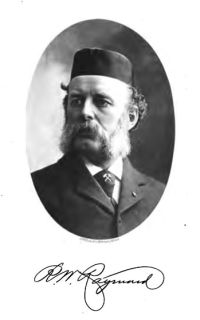 Rossiter W. Raymond,
The American Cyclopædia
(1879)
“ The mining districts of Owyhee in Idaho, and Unionville, Reese River, Belmont, Pioche, White Pine, and Eureka in Nevada, have been the scenes of successive excitements, and are still productive. In Eureka district, as in the principal districts of Utah, and some of those in Montana, Colorado, New Mexico, and California, argentiferous cerussite and galena are smelted, to produce work lead containing silver. ”
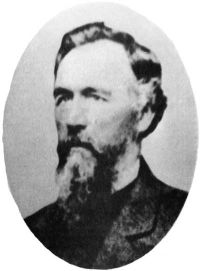 Alexander Majors,
Seventy Years on the Frontier
“ The Black Hills mining district of South Dakota is a very large mining camp, where millions and millions of dollars in gold and silver have been taken out, and where, no doubt, hundreds of millions more will be produced. ”
Harold W. Fairbanks, Old Mines of Southern California
“ A pretty valley, a mile long, has been eroded in the eastern end of the gravels, down to the underlying granite. Placer mining has been carried on for years here in a small way by Mexicans. Gold is said to be scattered everywhere through the gravels, which are often very firmly cemented. Lack of water, for the ridge is higher than any of the surrounding country, has prevented work on a large scale. Lately a mining district has been organized, and it is proposed to bring water 7 miles in pipe. In the gravels are washed bowlders, many of them being 2 feet in diameter and well polished. ”
 Frances Fuller Victor,
Atlantis Arisen
(1891)
“ The most promising mining districts of those bordering the Wallamet Valley are situated on the North and South Forks of the Santiam, and are reached from the Southern Pacific by wagon from Turner, in Marion County. The formations are porphyritic and granitic, similar to the belt along the range, north and south. Some slate, silicious and approaching sandstone, is found. Quartz is abundant, and float carrying gold is frequently found in the water-courses. Greenhorn district was discovered by Dr. ”
 Henry Rowe Schoolcraft,
Scenes and Adventures in the Semi-Alpine Region of the Ozark Mountains of Missouri and Arkansas
“ The mining district, formerly called the lead mines of Louisiana, is situate between the 37th and the 38th degree of north latitude, and between the 89th and 92d degree of west longitude, covers three thousand one hundred and fifty square miles—it is from seventy to one hundred miles long by forty or forty-five, extending in width from the Mississippi south-west to the Fourche à Courtois, and in length from the head waters of St. Francis northerly to the Maramec. ”
 Isabella L. Bird,
A Lady's Life in the Rocky Mountains
“ These mines, with their prolonged subterranean workings, their stamping and crushing mills, and the smelting works which have been established near them, fill the district with noise, hubbub, and smoke by night and day; but I had turned altogether aside from them into a still region, where each miner in solitude was grubbing for himself, and confiding to none his finds or disappointments. Agriculture restores and beautifies, mining destroys and devastates, turning the earth inside out, making it hideous, and blighting every green thing, as it usually blights man's heart and soul. ”
Josie Moore Crum, Three Little Lines
“ We would like very much this year to extend the road in that direction some 12 or 15 miles in order to reach a very rich and valuable mining district. There are a great many very extensive mines of low grade material lying between Silverton and the summit of the range towards the northeast, and our object in offering to you the bonds of the present line of the railroad is to obtain funds to extend the line up the Animas River. ”
Henry Rowe Schoolcraft,
Scenes and Adventures in the Semi-Alpine Region of the Ozark Mountains of Missouri and Arkansas
“ Schoolcraft informs us that although the mining business is much improved, there is still a great deficiency both of capital and of skill—there is in the whole district but one regular hearth furnace for smelting, and that not the best;—among forty mines, there are only four or five regular shafts—there is among all the mines, no engine of any description for raising water, and some of the richest mines with the best prospects in view, have been in consequence abandoned. Yet, under all these disadvantages, the annual produce of the mines is estimated at three millions of pounds of lead. ”
J. Theodore Bent, The ruined cities of Mashonaland… (1892)
“ In a cablegram recently received from the Company’s administrator on his return from a tour of inspection of the various mining districts he states that new finds were occurring everywhere daily, and that crushings were everywhere successful; that the reefs were improving with depth, and that wonderful development was proceeding in every district. As regards alluvial gold, that large deposits do exist, and that their discovery is only a question of time, is the opinion of all experienced miners. ”
Warren Bert Kimberly, History of West Australia (1897)
“ Prior to 1895 the population was essentially nomadic, but with the transitions in the stages of mining districts—from unworked claims to mines, from wildernesses cursorily examined to systematic development, from mining camps to mining towns—the goldfields people began to assert their rights by calling for an amelioration of their condition. Chambers of Mines were formed, and devoted themselves to the interests of the mining industry. ”
Samuel Smiles, Industrial Biography: Iron Workers and Tool Makers
“ The district is known as the Erzgebirge or Ore Mountains, and the Riesengebirge or Giant Mountains, MacCulloch says that upwards of 500 mines are wrought in the former district, and that one-thirtieth of the entire population of Saxony to this day derive their subsistence from mining industry and the manufacture of metallic products.— Geographical Dict. ”
Various, Popular Science Monthly (1906)
“ This is largely due to the fact that the mining districts in these states are adjacent to well-populated and comparatively cultured communities, whereas in the West, the mines are situated in states or territories which contain few or no large cities, and wherein the rural population is of a rather low order. ”
Harold W. Fairbanks, Old Mines of Southern California
“ A system of leasing portions of mining claims, called “chloriding” in Calico, was introduced in the early days, and is still in vogue. Many poor men have made moderate fortunes in the district, and in days gone by all did well. The mines are leased on a royalty of one fourth to one sixth of the ore to the claim owner, according to its value, the owner receiving more as the grade is higher. ”
 John Taylor,
On the Economy of the Mines of Cornwall and Devon
(1814)
“ The work of the mines, on the surface as well as underground, is universally performed by contract, and in this particular the practice of this district is probably similar to that of other mining establishments in different parts of the kingdom. Day work is in general disrepute in the stannaries, and is seldom resorted to, but where jobs are to be performed which either hardly admit of a previous estimate, or are too trifling to be worth contracting for ”
 John S. Hittell,
Hittel on Gold Mines and Mining
“ Most of the mining is done along the banks of the Klamath River, which runs about twenty miles through the south-eastern portion of the county. There are some miners on the head-waters of Althouse Creek, which runs northward into Oregon. The county assessor, in his report for 1860, does not mention the existence of any quartz-mill or mining-ditch in the county. The mining districts are very mountainous and difficult of access. They obtain most of their supplies from Crescent City. The mining is chiefly in shallow placers, in deep and narrow ravines, and on bars of the Klamath River. ”
George Graham Rice, My Adventures with Your Money
“ Along the southern slope of Hooligan Hill several sets of leasers were mining ore so rich that guards were maintained through the night to prevent loss from theft. At the Alexander lease on Hooligan Hill the miners were crushing the richer quartz from their shaft and washing out gold to the value of $20 a pan. These were the three principal centers of activity, but they by no means embraced the productive area of the district. Tall, skeleton-like gallows-frames dotted the landscape for miles in every direction. ”
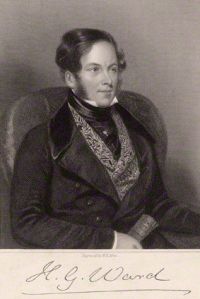 Henry George Ward,
Mexico in 1827/Volume 2
(1828)
“ The Outlay of the Companies has not, in any instance, been confined to a single Mine, but has embraced a series, or suite of Mines, sometimes in the same, sometimes in different districts, each requiring a multiplicity of extensive works, not only in the interior, for the drainage and extraction of ores, but on the surface, in order to turn to account these ores, when raised. It is in the immense mass of ores which they are capable of producing, and not by any means in the abundance of Silver contained in them, that the riches of the Southern, or Central mining districts of Mexico, consist. ”
The American Cyclopædia — Salt Lake
“ Along the base of the mountains the soil is productive when irrigated. There are four mining districts, producing gold, silver, and lead in 1874 to the value of more than $4,000,000. There are smelting works, stamp mills, flouring mills, saw mills, breweries, tanneries, and various manufactories. ”
 Karl Marx,
Das Kapital
(1906)
“ The mining districts attract with rapidity a large population, made up of the miners themselves, and the artisans, shop-keepers, &c., that group themselves around them. The ground-rents are high, as they are generally where population is dense. The master tries, therefore, to run up, within the smallest space possible at the mouth of the pit, just so many cottages as are necessary to pack together his hands and their families. If new mines are opened in the neighbourhood, or old ones are again set working, the pressure increases. ”
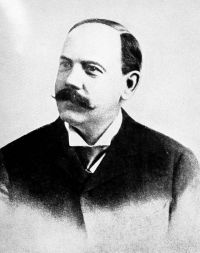 Julian Ralph,
On Canada's Frontier
“ Dawson says that while gold is so generally distributed over the province that scarcely a stream of any importance fails to show at least "colors" of the metal, the principal discoveries clearly indicate that the most important mining districts are in the systems of mountains and high plateaus lying to the south-west of the Rocky Mountains and parallel in direction with them. ”
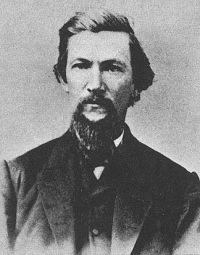 Dan De Quille,
A History of the Comstock Silver Lode & Mines
“ In Lincoln, Nye, White Pine, Lander, Elko, and Humboldt Counties, there are hundreds of mining districts in which this is the case, and in these hundreds of districts are lying unworked thousands of quartz veins, all showing more or less of the precious metals at the very surface, and even in the croppings above the surface.A thousand years of mining will not exhaust the mineral treasures of the mountains of Nevada. ”
Various, Popular Science Monthly (1898)
“ The mining settlement is a mechanical formation and not an organic growth. Its rise has been too often observed to need description. A lucky prospector finds a gold-or silver-bearing reef, possibly in a district indicated by a geologist, who is thus also a pioneer. The news spreads like the cry of fire. From the adjacent colonies and distant countries a mob of adventurers and old gold diggers crowd in and clamor for concessions. ”
Arthur J. Hoskin, The Business of Mining
“ There will be found to exist some uniformity in the accounting as practised by the mines of a particular district which are operating under similar conditions; but when one considers that the mines of various districts have quite dissimilar conditions throughout almost every phase of the business, it is not surprising that different methods must be employed in the keeping of their accounts. ”
Related terms
Authors who wrote about “mining district”
C. W. HaskinsArthur J. HoskinJohn S. HittellGeorge Graham RiceJ. C. F. JohnsonHenry George WardWarren Bert KimberlyFelix Paul WierzbickiDame ShirleyJames Fowler Rusling Paul GosarDan De QuilleWriters' Program of the Work Progress AdministrationC. F. G. Clark
 Melville FullerWillis DrummondDelegates to the Constitutional Convention of IdahoAlexander MajorsIthamar M. HowellRobert W. Bruère
John S. HittellGeorge Graham RiceJ. C. F. JohnsonHenry George WardWarren Bert KimberlyFelix Paul WierzbickiDame ShirleyJames Fowler RuslingPaul GosarDan De QuilleWriters' Program of the Work Progress AdministrationC. F. G. ClarkMelville FullerWillis DrummondDelegates to the Constitutional Convention of IdahoAlexander MajorsIthamar M. HowellRobert W. Bruère