Nebular hypothesis

Definition and stakes

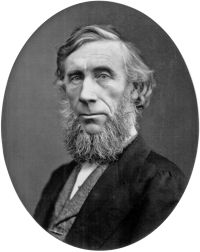
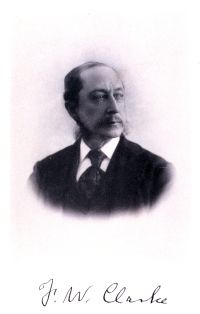
Portrait of Robert Stawell Ball Robert Stawell Ball,  Popular Science Monthly (1883)

“ The nebular theory offers an explanation of this circumstance. It does not appear that this common rotation of the planets is absolutely necessary for the stability of the system. Should it further be proved that there is no other agency at work which would force the planets to rotate in the same direction, then it must be admitted that the nebular theory receives very substantial support.
There is another way in which we can examine the evidence on behalf of the nebular hypothesis. There are certain actions going on at present in the solar system
”
Source: Wikisource

Lee Parker Dean,  The evolution of worlds from nebulae (1894)

“ I conceive that one reason why scientists believe in the nebular hypothesis is because of their knowing that heat consumes. One cannot contemplate a burning object without perceiving that it grows smaller and smaller; therefore why should not the sun with its flaming hydrogen, rising sometimes to a height of 200,000 miles, consume the sun? It is claimed but 1/2300 millionth of its force reaches earth, and yet it is asserted that the sun could melt 287,200,000 cubic miles of ice per second without quenching its heat. ”
Source: Gutenberg

Popular Science Monthly (1873)

“ The nebular hypothesis is the doctrine of to-day, in its application to the most perfect of the sciences, and it is nothing less or other than an hypothesis of astronomic evolution. Are we to be told that it is but an a priori speculation? On the contrary, has it not replaced an a priori cosmogony that swayed the human mind for thousands of years before the solar system was discovered?
As regards the earth, it has been studied by the method of science for more than a century, and the result is, a vast mass of facts and inductions which make up our knowledge of geology.
”
Source: Wikisource

Get perspective with Kwize: daily news enlightened by great literature