Neurological disease

Definition and stakes

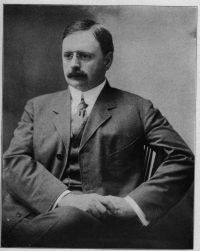
Portrait of Elmer Ernest Southard Elmer Ernest Southard,  Shell-shock and other neuropsychiatric problems

“ Looking backward to our Civil War, one is strongly impressed with the fact that the present volume, one of the earliest works of its kind to appear in book form, deals largely with psychiatry and functional nervous diseases, whereas during and after the American conflict the most important contributions to neurology related to organic disease, especially as illustrated by the work of Weir Mitchell and his collaborators on injuries of nerves. ”
Source: Gutenberg

James Law,  Text book of veterinary medicine… (1902)

“ At the same time it is only logical to conclude that any morbid condition of the cerebral circulation or of the brain or membranes which leads to a corresponding amount of ventricular effusion, or atrophy or destruction of the nerve centres already designated, will produce the symptoms characteristic of this disease. Thus the different forms of meningitis, traumatic injuries to the cranium, chronic encephalitis, cerebral softening or degeneration, sclerosis, neoplasms of all kinds affecting the brain (cysts, cholesteatoma, psammoma, melanoma, etc.) , and parasites may occasion this disease. ”
Source: Gutenberg

A system of practical medicine… (1886)

“ Rarely there is scarcely any atrophy of the cortex. The central portion of the brain may be of leathery consistence, but usually shows marked sclerosis, which also may affect its different portions and the different ganglia very differently. The changes resulting from inflammatory, degenerative, and atrophic processes are general and profound.
An opinion is beginning to obtain that general paralysis is primarily a disease of the small cerebral blood-vessels, functional or vaso-motor
”
Source: Gutenberg

Get perspective with Kwize: daily news enlightened by great literature