Nuclear fusion

Definition and stakes

United States. Arms Control and Disarmament Agency,  Worldwide Effects of Nuclear War…

“ It has now been two decades since the introduction of thermonuclear fusion weapons into the military inventories of the great powers, and more than a decade since the United States, Great Britain, and the Soviet Union ceased to test nuclear weapons in the atmosphere. Today our understanding of the technology of thermonuclear weapons seems highly advanced, but our knowledge of the physical and biological consequences of nuclear war is continuously evolving. ”

Source: Gutenberg

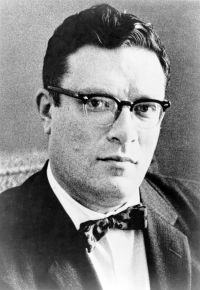
Portrait of Albert L. Latter Albert L. Latter,  Our Nuclear Future: Facts, Dangers and Opportunities

“ Our early nuclear explosives have used fission. In the fission process a great array of radioactive products are formed, some of them intensely poisonous. More recently we have learned how to produce energy by fusion. Fusion produces fewer and very much less dangerous radioactivities. Actually the neutrons which are a by-product of the fusion reaction may be absorbed in almost any material and may again produce an assortment of radioactive nuclei. However, by placing only certain materials near the thermonuclear explosion, one may obtain a weapon in which the radioactivity is harmless. ”
Source: Gutenberg

United States. Arms Control and Disarmament Agency,  Worldwide Effects of Nuclear War…

“ The larger yield nuclear weapons derive a substantial part of their explosive force from the fusion of heavy forms of hydrogen--deuterium and tritium. Since there is virtually no limitation on the volume of fusion materials in a weapon, and the materials are less costly than fissionable materials, the fusion, "thermonuclear," or "hydrogen" bomb brought a radical increase in the explosive power of weapons. However, the fission process is still necessary to achieve the high temperatures and pressures needed to trigger the hydrogen fusion reactions. ”
Source: Gutenberg

Get perspective with Kwize: daily news enlightened by great literature