“ When our mining experts discover a mineral belt containing precious metals or copper, iron, lead, nickel, platinum, cobalt, quicksilver, manganese or any other ore used in manufactures and the arts, the first thing we do is to sink a shaft on the most likely ore chimney and at every one hundred feet in depth we run levels to develop it and if we continue to find ore as we go down and the ground requires drainage, we survey for a drainage tunnel that will drain the mine at the greatest depth, even if we have to run a tunnel ten miles. ”
Ore (mining)
Definition and stakes
The theme of “ore (mining)” has been addressed by authors such as Arthur J. Hoskin, Herbert Hoover, J. C. F. Johnson, C. K. Leith and Henry Smith Munroe. It is often associated with terms like iron, coal, gold, smelting and mineral.
Quotes about “ore (mining)”
 James Oliver Curwood,
The Great Lakes
“ Steam shovels, weighing from sixty to seventy-five tons each, do the work. Like a great hand one of these shovels dips down into the soft mass of ore, buries its great dipper until it holds from four to eight tons, and then, groaning and rumbling, slowly lifts its burden aloft, swings it over a car, and the actual work of mining is done. A thousand times a day it will repeat this operation, lifting from three thousand to eight thousand tons of ore. ”
Henry Smith Munroe, 1911 Encyclopædia Britannica (1911)
“ In mining regions where water transportation is interrupted during certain months of the year the mineral must be stored underground, or in great stock-piles on the surface. In coal mining the market demand varies in different seasons, and surface storage is sometimes necessary to permit regular work at the mines. For coal, iron ore and other cheap minerals, mechanical handling by many different methods is used in loading and unloading railway wagons and vessels, and in forming the stock-piles and reloading the mineral therefrom. ”
Edward Huntington Williams, Every-day Science: Volume 6. The Conquest of Nature
“ This ore is frequently almost as hard as iron itself, many of the pieces thus dislodged being too large for convenient handling, either by the steam shovel or in the chutes at the wharves, and must be still further broken up. This is sometimes done by the men with picks; but in mining on a large scale, where the deposit is all of a very hard nature, crushing machines are used. ”
Arthur J. Hoskin, The Business of Mining
“ An ore must be an aggregate or association of natural [20] minerals, or a single mineral, from which metal may be profitably recovered. Mines are excavations in the earth from which ore, coal or gems are taken. Mining is the art or practice of operating mines.Throughout the subject, we see the inseparable idea of profit. The work of carrying on operations in a railroad tunnel is not mining; the driving of adits through barren rocks to reach ore bodies is not mining; the sinking of shafts through worthless "wash" or rocks with a view of opening avenues for the removal of ore is not mining. ”
Albert Perry Brigham, Cleveland Abbe, David Hale Newland, Alvin Sydney Johnson, Theophilus F. Rodenbough, Lewis Sayre Van Duzer, Isaac J. Cox, James Wilford Garner, Harry A. Cushing, and others, The New International Encyclopædia…
“ The industry has also profited by the improved methods adopted to facilitate the transfer of the ore in transit and especially by the use of machinery and the mining operations themselves. Furthermore, in the principal mining range—Mesabi—the ore is sometimes found so near the surface that with the removal of a few feet of earth it is mined by the open-pit method, the ore being scooped by huge steam shovels directly from the pit to the car. ”
J. C. F. Johnson, Getting Gold: A Gold-Mining Handbook for Practical Men
“ In really successful mining it is in the last degree important that the mode of extraction of metals in the most scientific manner should be thoroughly understood, but as a general rule the science of metallurgy is but very superficially grasped even by those whose special business it is to treat ore bodies in order to extract their metalliferous contents, and whether in quartz crushing mill, lixiviating, or smelting works there is much left to be desired in the method of treating our ores. ”
 Andrew Ure,
A Dictionary of Arts, Manufactures and Mines
“ The smelting-works belong in general to individuals who possess no tin mines, but who purchase at the cheapest rate the ores from the mining proprietors. The ores are appraised according to their contents in metal, and its fineness; conditions which they determine by the following mode of assay. When a certain number of bags of ore, of nearly the same quality, are brought to the works, a small sample is taken from each bag, and the whole are well blended. Two ounces of this average ore are mixed with about 4 per cent. ”
Arthur J. Hoskin, The Business of Mining
“ Thus, in Minnesota, in that wonderful Lake Superior country, that is famous as the world's greatest known producer of iron ore, tremendous tonnages are handled every year by the modern steam shovel, which works in natural light by day and by electric lamps at night. In Utah and Nevada we find similar operations conducted in the excavation of copper ores. In Australia, the famous Mount Morgan mine is using open air methods in the mining of precious metal ore. ”
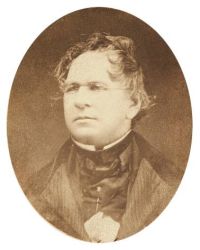 Henry Rowe Schoolcraft,
Scenes and Adventures in the Semi-Alpine Region of the Ozark Mountains of Missouri and Arkansas
“ But it requires different tools, machinery, and works, for mining in rock; the process is also more tedious and expensive, and is considered especially so by those who have been accustomed from their youth to find bodies of ore by a few days' digging in the earth, and who, if they should work a fortnight at one place, and not fall upon a bed of ore, would go away quite disheartened. The principal search has therefore been made in the sub-stratum of clay, where large bodies of ore are sometimes found by a day's, and sometimes by an hour's work. ”
Charles A. Bramble, The A B C of Mining: A Handbook for Prospectors
“ To find the number of cubic feet per fathom of matter in a vein, multiply its thickness in inches by 3. Great care is requisite in estimating the ore in a vein or the amount of mineral in sight. Very clever men often make grave mistakes in such calculations. A MAKE-SHIFT FLUX. Rough smelting may be done with powdered white glass, though either borax or carbonate of soda is better. As soon as the gold is melted and the flux fluid and still, remove the bulk of the flux with an iron spoon, and pour the metal into a clay mould. Crush the flux for gold. ”
Political and commercial geology and the world's mineral resources (1920)
“ The surface outcrops of most manganese deposits give reliable information concerning the size and grade of the deposits, and the most desirable ore occurs in a surface zone scarcely 100 feet deep.2. Except in Russia and Spain, the most productive mines are open-cuts, and mining is quickly and easily accomplished at minimum expense. Extensive operations in advance of production are rarely necessary. ”
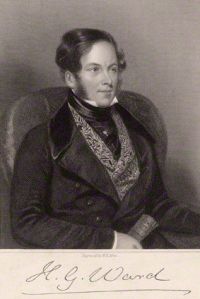 Henry George Ward,
Mexico in 1827/Volume 2
(1828)
“ The ore, on being extracted from the mine, is placed in the hands of "Pĕpĕnădōrĕs," men and women, who break all the larger pieces with hammers, and, after rejecting those in which no metallic particles are contained, divide the rest into three classes, called, in mining language, "Ăzōguĕs," and "Ăpŏlvillādŏs," "Buenos" or "Ordinarios." The "Ăzōguĕs" are the inferior ores, in which the matrix contains but a thin sprinkling of silver. As this increases, it becomes "Apolvillado ordinario," ”
Political and commercial geology and the world's mineral resources (1920)
“ The silicate gangue ore bodies carry rhodonite, garnet and quartz and are richer in zinc and silver than those of calcite gangue.Eight mining companies are now at work. In the order of the importance of their output and ore reserves, these companies are: Broken Hill South Silver Mining Co.; Broken Hill North Mining Co.; Zinc Corporation; Sulphide Corporation; British Broken Hill Proprietary Co.; Broken Hill Proprietary Co., Block 10; and Broken Hill Proprietary Co., Block 14. The estimated ore reserves of all the mines approximate 12,000,000 tons. ”
Herbert Hoover, Principles of Mining: Valuation…
“ The position of openings in relation to secondary alteration. The size of the deposit. The depth to which the mine has already been exhausted. The general experience of the district for continuity and the development of adjoining mines. The Origin and Structural Character of the Deposit.—In a general way, the ore-deposits of the order under discussion originate primarily through the deposition of metals from gases or solutions circulating along avenues in the earth's crust. [*] The original source of metals is a matter of great disagreement, and does not much concern the miner. ”
 William Henry Giles Kingston,
The Mines and its Wonders
“ Passing through the entrance, the mine gradually widens underground to a depth of 1062 feet. The chief mass of ore is 600 feet broad on its upper surface, greatly narrowing as it descends to a depth of 1200 feet. Round it are other similar deposits. As the copper pyrites are deposited generally on the circumference of the outer shell of these masses, which are of a very irregular outline, the mining operations are carried on in a perfect labyrinth of winding passages and galleries, situated at various depths, and supported either by pillars or walls. ”
C. K. Leith, The Economic Aspect of Geology
“ Availability of iron ore is determined by percentage of iron, percentages of impurities, percentages of advantageous or deleterious minor constituents, physical texture, conditions for profitable mining, adaptability to present furnace practice, distance from consuming centers, conditions and costs of transportation, geographical and transportational relation to the coal and fluxes necessary for smelting, trade relations, tariffs and taxes, inertia of invested capital, and other considerations. ”
Henry Rowe Schoolcraft,
Scenes and Adventures in the Semi-Alpine Region of the Ozark Mountains of Missouri and Arkansas
“ Several of the mines in the mineral soil have been traced down into the rock, and have been pursued through apertures, closing and expanding in the manner of true veins. In the numerous cases where the rock has put a stop to further mining, and it has exhibited no signs of ore, it may be supposed that the ore has been moved, by diluvial force, from the original position of the mine, and been finally deposited, with the soil, upon unmetalliferous portions of the rock. ”
J. C. F. Johnson, Getting Gold: A Practical Treatise for Prospectors…
“ Go into any of the great mining works of central Germany, and you may see acres covered by machinery ingeniously constructed to clean, break, and sort, and ultimately deliver the ores into trucks or direct into the furnace, and the whole under the supervision of a youngster or two. When a parcel of ore arrives at any of the works, say Freiberg or Clausthal, it is carefully assayed by three or four different persons and then handed over to practical experts, who are expected to produce the full amount of previous metal according to assay ”
Herbert Hoover, Principles of Mining: Valuation…
“ The ore may present visible metallurgical difficulties which make it unprofitable in any event. A gold ore may contain copper or arsenic, so as to debar cyanidation, where this process is the only hope of sufficiently moderate costs. A lead ore may be an amorphous compound with zinc, and successful concentration or smelting without great penalties may be precluded. ”
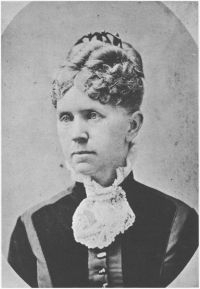 Frances Fuller Victor,
Atlantis Arisen
(1891)
“ The ore as taken from the mine concentrates four tons into one, which has a gross value of one hundred dollars, and with the first concentrator, whose capacity was one hundred and twenty tons daily, returned three thousand dollars per day to the owners. The company employ one hundred and fifty men, and are well equipped for profitable mining. ”
Arthur J. Hoskin, The Business of Mining
“ In veins or lodes, it is not supposed that ore-making minerals could have been precipitated from solutions travelling either upward or downward and obeying chemical laws if the depth were sufficient to furnish great temperature or high rock and hydrostatic pressures. ”
Herbert Hoover, Principles of Mining: Valuation…
“ The cost per ton of development, mining, concentration, management, is to this point say $4 per ton of original crude ore. The smelter buys the concentrate for 95% of the value of the metal, less the smelting charge of $15 per ton, or there is a working cost of a similar sum by home equipment. In this case 4.66 tons of ore are required to produce one ton of concentrates, and therefore each ton of concentrates costs $18.64. ”
Henry Rowe Schoolcraft,
Scenes and Adventures in the Semi-Alpine Region of the Ozark Mountains of Missouri and Arkansas
“ Genevieve, one in Madison, and two in Jefferson. The quantity of lead annually smelted from the crude ore, I have estimated at three million pounds; and the number of hands to whom it furnishes employment, at eleven hundred. A considerable proportion of these are, however, farmers, who only turn their attention to mining a part of the year, when their farms do not require their labor; [Pg 216] the residue are professed smelters and miners, including blacksmiths and others, whose services are constantly required. ”
Arthur J. Hoskin, The Business of Mining
“ The Oroya-Brownhill Mine, in western Australia, has had ore that carried a value of about $22 per ton and from it a profit of about $15 per ton was made. In the Cripple Creek District, ores that run above $30 per ton are considered high grade. This means that [126] the average rich ore shipments of the district have a gold content of about 1-1/2 ounces per ton. The expenses of mining, freight, and treatment will probably total close to one-half the gross value, or about $15 per ton. ”
 Gaston Tissandier,
Popular Scientific Recreations
“ The ores when dug from the mine are generally stamped into powder, then “roasted,”—that is, made hot, and kept so for some time to drive off water, sulphur, or arsenic, which would prevent the “fluxes” acting properly. The fluxes are substances which will mix with, melt, and separate the matters to be got rid of, the chief being charcoal, coke, and limestone. The ore is then mixed with the flux, and the whole raised to a great heat; as the metal is separated it melts, runs to the bottom of the “smelting furnace,” and is drawn off into moulds made of sand ”
William Henry Giles Kingston,
The Mines and its Wonders
“ Neither engine-house nor chimneys such as are seen in other mines are visible, while every detail of the work is exposed to view—indeed, the huge basin has the appearance of a mine completely turned inside out.There are two methods of smelting tin. By the most common, the ore, mixed with culm, is subjected to heat on the hearth of a reverberating furnace, when ordinary coal is employed. By the other method, the ore is fused in a blast furnace, when wood fuel or charcoal is used. ”
 Ernest Ingersoll,
The Crest of the Continent: A Summer's Ramble in the Rocky Mountains and Beyond
“ The smelting of ores is carried on here actively and successfully, the convenience of coal, coke and fluxes, and the hauling of the ores down hill, giving the place marked advantages for this industry. Superior opportunities are likewise presented for a great variety of manufactures, foremost among them being iron and steel productions,—iron ore, limestone and all other necessary ingredients abounding in the locality, and being of easy access. The fall of the stream,—two hundred feet per mile,—supplies a water-power of never failing volume. ”
Harold W. Fairbanks, Old Mines of Southern California
“ The ore deposits are usually discovered by the cherty masses of silicious rock, which, being harder than the limestone, stand out from its weathered surface in bunches and small, vein-like masses. Often in 77 breaking the cherty rocks, stains of copper carbonate are found, and from such rock silver, and sometimes gold, is obtained. Numerous shafts, cuts, and tunnels have been made on these claims, twenty or more in number, and in every one ore of good grade has been found, although the quantity is usually small. ”
Albert Perry Brigham, Cleveland Abbe, David Hale Newland, Alvin Sydney Johnson, Theophilus F. Rodenbough, Lewis Sayre Van Duzer, Isaac J. Cox, James Wilford Garner, Harry A. Cushing, and others, The New International Encyclopædia…
“ The mineral resources also include nearly every variety required for manufacturing industries. In the production of the two minerals which constitute the basis of modern manufactures, coal and iron, the United States ranks foremost, and, indeed, produces nearly a third of the world's output of each. Moreover, the deposits of these minerals, together with deposits of limestone, which is needed in fluxing the iron ore, are frequently found in the same locality. ”
Edward Hazen, Popular Technology; or, Professions and Trades…
“ The hard ore is dug by miners, or, as they are commonly denominated, ore-diggers. In the prosecution of their labor, they sometimes follow a vein into a hill or mountain. When the ore is found in strata or lumps near the surface, they dig down to it. This kind of ore commonly contains sulphur and arsenic, and to free it from those substances, and to render it less compact, it is roasted in kilns, with refuse charcoal, which is too fine to be used for any other purpose. It is then broken to a suitable fineness with a hammer, or in a crushing mill. The bog-ore seldom needs any reduction. ”
Related terms
Authors who wrote about “ore (mining)”
Arthur J. HoskinHerbert HooverJ. C. F. JohnsonC. K. LeithHenry Smith MunroeCharles A. BrambleErnest Ingersoll Henry Marion HoweMay VivienneHenry George WardHarold W. FairbanksNatural History Society of Northumberland…Halka ChronicAndrew UreMary Huston GregoryHenry Rowe SchoolcraftC. BeringerChristopher Evansla Verne W. SpringEdward Hazen
Ernest IngersollHenry Marion HoweMay VivienneHenry George WardHarold W. FairbanksNatural History Society of Northumberland…Halka ChronicAndrew UreMary Huston GregoryHenry Rowe SchoolcraftC. BeringerChristopher Evansla Verne W. SpringEdward Hazen