Paper machine

Definition and stakes

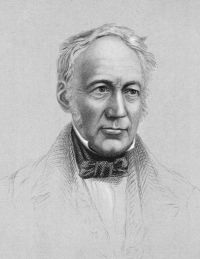
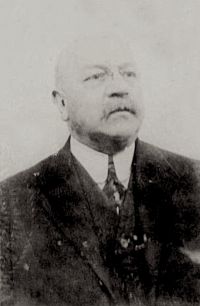
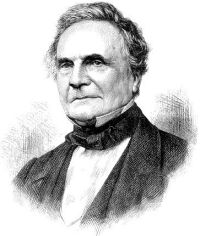
Portrait of Charles Knight Charles Knight,  Knowledge Is Power

“ But the printing machine would have worked feebly and imperfectly without the paper machine. That most complete invention has not only cheapened paper itself, but it has cheapened the subsequent operations of printing, in a remarkable degree. It has enabled one revolution of the cylinder of the printing machine to produce four sheets instead of one, or a surface of print equal to four sheets. ”
Source: Gutenberg

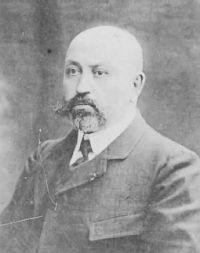
William Edward Garrett Fisher,  1911 Encyclopædia Britannica, Volume 20… (1911)

“ The expense of manufacturing paper in this way is very much greater than by machinery; but the gain in strength, partly owing to the time allowed to the fibres to knit together, and partly to the free expansion and contraction permitted them in drying, still maintains a steady demand for this class of paper.
The paper-machine (fig. 12) consists essentially of an endless mould of fine wire-cloth on which the pulp flows and on which a continuous sheet of paper is formed; the sheet then passes through a series of press rolls and over a number of steam-heated cylinders until it is dry.
”
Source: Wikisource

Theodore Low DeVinne and Charles Shattuck Hill,  The New International Encyclopædia…

“ The Lanston machine by different apparatus casts and composes isolated types with nearly equal speed. Either machine, in the hands of a skilled operator, can produce as much composed type in one hour as was done in a day by the hand compositor. See Type-Setting Machines.
Paper. Improvements in paper-making have been great aids in the development of printing. In 1827 the Fourdrinier paper machine, that produced paper in the so-called endless roll needed for rapid newspaper printing, was introduced in the United States.
”
Source: Wikisource

Get perspective with Kwize: daily news enlightened by great literature